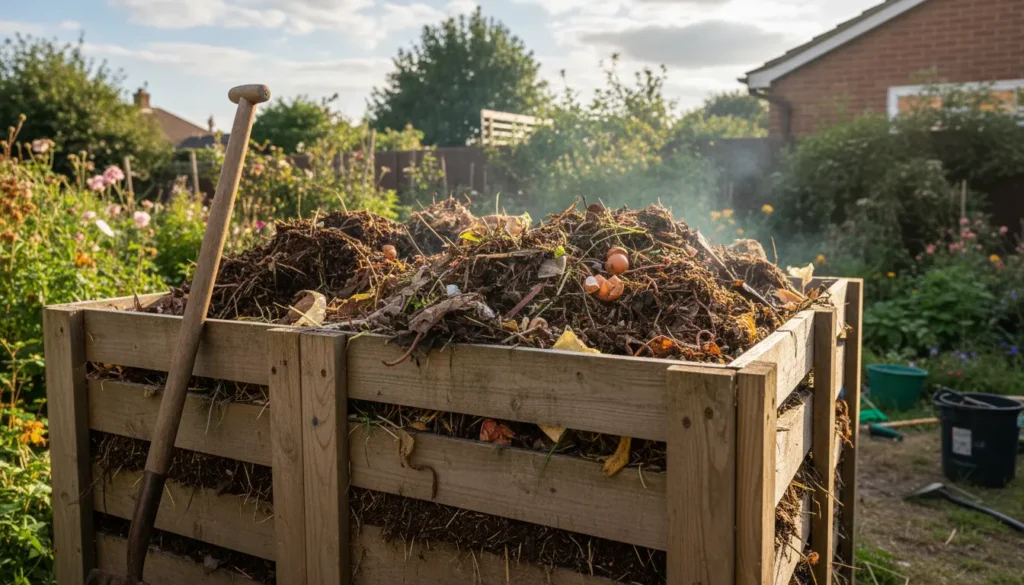
Why start composting at home
Composting at home turns kitchen scraps and yard waste into nutrient-rich soil. It reduces household waste, lowers landfill methane, and improves garden health.
This guide gives clear, practical steps to begin composting at home with minimal time and expense.
Choose a compost method for composting at home

Decide between an open pile, a bin, or a tumbler based on space, budget, and how fast you want compost. Each method works, but they differ in maintenance.
Bins are tidy and beginner-friendly, while tumblers speed up decomposition through easy turning.
Best locations for composting at home
Place your compost on bare soil in a shaded or partly shaded spot. Good drainage is important to prevent soggy or smelly piles.

Keep it accessible from the kitchen to encourage regular use, but at least a few feet from living areas to reduce pests.
What to compost: materials list for composting at home
Successful composting depends on mixing brown and green materials. Browns add carbon; greens add nitrogen.
- Greens: vegetable peels, coffee grounds, tea bags, fresh grass clippings.
- Browns: dry leaves, shredded paper, cardboard, straw.
- Avoid: meat, dairy, diseased plants, oily foods, and pet waste.
A good rule: aim for roughly three parts brown to one part green by volume.
How to build a simple compost bin for composting at home

Build a DIY bin from a plastic garbage can, wooden pallet frame, or wire mesh. The goal is containment with airflow.
Steps to make a basic bin:
- Choose a container about 30–60 gallons for a household of two to four people.
- Drill or leave gaps for ventilation near the bottom and sides.
- Start with a 2–4 inch layer of coarse material like twigs to improve drainage.
- Add alternating layers of green and brown materials, keeping the pile slightly damp like a wrung-out sponge.
Turning and monitoring your compost
Turn the pile every 1–2 weeks to introduce oxygen and speed decomposition. If using a tumbler, rotate according to the manufacturer s recommendation.
Monitor moisture and temperature. A properly active pile will feel warm in the center and smell earthy, not rotten.
Troubleshooting common problems with composting at home
Bad smells usually mean too much green or moisture. Add browns and turn the pile to aerate it.
If decomposition is slow, check particle size and temperature. Shred materials and add more green or a small amount of high-nitrogen source like fresh grass clippings.
- Fruit flies: cover fresh food scraps with a layer of browns and keep the lid closed.
- Rodents: avoid meat and dairy; use a closed bin or hardware cloth to block openings.
- Dry pile: add water and greens; cover to retain moisture.
When is compost ready and how to use it
Compost is ready when it is dark, crumbly, and smells earthy. This typically takes 2–12 months depending on method and conditions.
Use finished compost as a soil amendment, top dressing, or in potting mixes. Mix it into garden beds at a rate of 1–3 inches to improve structure and fertility.
Small real-world example: a household case study
Case study: A family of four started composting at home with a 50-gallon tumbler. They added kitchen scraps and yard waste and turned the tumbler twice weekly.
After six months they produced enough compost to top-dress two garden beds and cut their weekly trash by 30 percent. Their tomato plants showed improved growth and fewer signs of nutrient stress.
Tips to succeed with composting at home
- Keep materials chopped or shredded to speed breakdown.
- Balance greens and browns to avoid odors and pests.
- Record what you add and when to learn what mix works best.
- Be patient: composting is a natural process and benefits grow over time.
Final checklist for starting composting at home
- Choose a method and location.
- Gather a steady supply of browns and greens.
- Build or buy a bin with ventilation and drainage.
- Monitor moisture, temperature, and turn regularly.
- Use finished compost to enrich your soil.
Composting at home is a practical step toward sustainability and healthier gardens. With a simple bin and regular, small efforts you can turn waste into a valuable resource.



