What Is Home Composting and Why It Matters
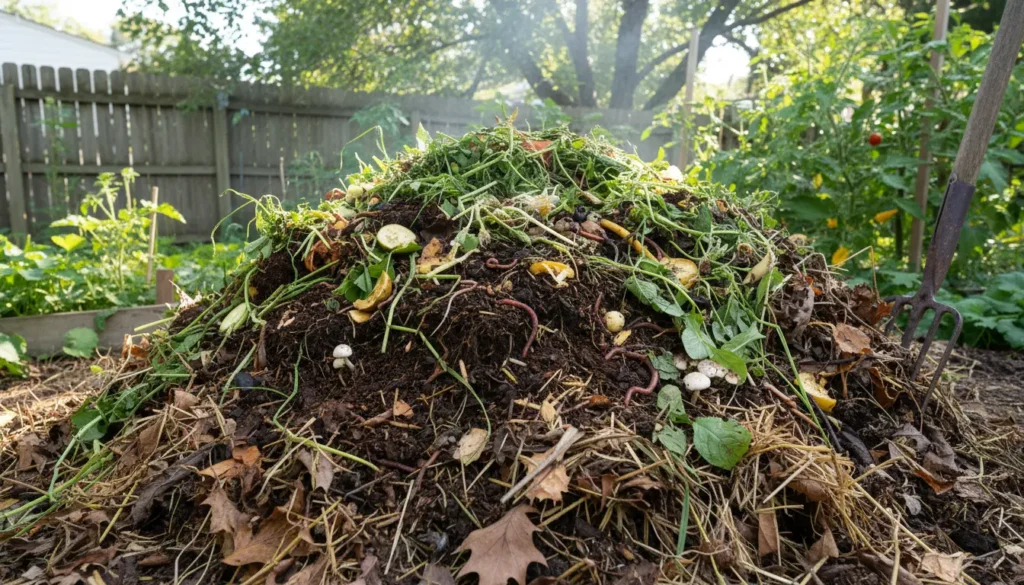
Home composting turns kitchen scraps and yard waste into rich soil amendment. It reduces household waste, lowers landfill contributions, and feeds your garden naturally.
For beginners, composting can seem technical, but basic systems are forgiving and easy to maintain. This guide gives practical steps to start home composting today.
Simple Materials for Home Composting
Start with common materials; no special tools are required. You only need a container, a mix of greens and browns, and basic care.
- Greens — fruit and vegetable scraps, coffee grounds, tea bags, fresh grass clippings.
- Browns — dried leaves, shredded paper, cardboard, straw, small twigs.
- Container — a plastic bin with holes, a purchased tumbler, or a DIY wooden bin.
- Optional — garden fork for turning, thermometer for monitoring, kitchen caddy for scraps.
How to Start Home Composting: Step-by-Step
Follow these practical steps to build a stable compost pile that decomposes efficiently.
1. Choose a Location and Container
Pick a dry, shaded spot near your garden or patio. Good drainage and airflow are important to avoid soggy conditions.
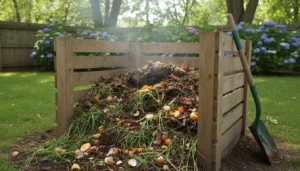
Use a bin that fits your space. Small households often prefer a 20–60 gallon bin or a worm composting tub for apartments.
2. Build the Right Mix
Layering encourages balanced decomposition. Start with a coarse brown layer to improve airflow.
Aim for roughly 2 parts browns to 1 part greens by volume. If the pile smells, add more browns; if it is dry, add more greens or water.
3. Maintain Moisture and Aeration
Compost should be as damp as a wrung-out sponge. Water lightly if dry and cover during heavy rain to prevent saturation.
Turn the pile every 1–2 weeks to add oxygen. Tumbler bins make turning easier and speed up decomposition.
4. Monitor Temperature and Progress
A healthy hot pile reaches 120–160°F (49–71°C) within days. Home piles often stay cooler but will still produce usable compost in months.
Finished compost is dark, crumbly, and earthy-smelling. Smaller systems may take 2–6 months depending on materials and care.
Common Problems and Practical Fixes
Even beginner setups face hiccups. These simple troubleshooting tips resolve most issues quickly.
- Bad odor — add browns, turn the pile, and reduce wet food scraps exposure.
- Pests — avoid meat, dairy, and oily foods. Use a closed bin or bury scraps under browns.
- Too dry — add water and greens; mix to distribute moisture.
- Slow breakdown — chop materials small, increase surface area, and add nitrogen-rich greens.
Advanced Tips for Home Composting
Once you master basics, use these tips to get richer compost faster or adapt to small spaces.
- Use a compost thermometer to monitor heat and know when to turn.
- Shred cardboard and paper before adding to speed decomposition.
- Try hot composting techniques in summer for faster results.
- Consider vermicomposting (worm bins) for apartments and kitchens.
Compost can improve soil water retention by up to 20 percent, reducing irrigation needs and helping plants withstand dry periods.
Using Finished Compost
Apply finished compost as a top dressing, mix into potting soil, or use as a seed-starting amendment. It adds nutrients and improves soil structure.
Typical uses include mixing 20–30% compost into garden beds or adding a 1–2 inch layer around perennials and vegetables.
Case Study: Small-Scale Home Composting Success
Lisa, a household of three in a suburban town, started a 40-gallon tumbling bin. She saved banana peels, coffee grounds, and yard leaves in a counter caddy.
After balancing greens and browns and turning weekly, she produced usable compost in four months. Her household waste volume to landfill dropped by roughly 25 percent.
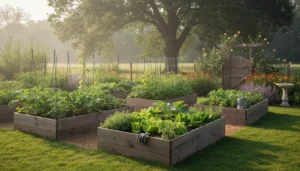
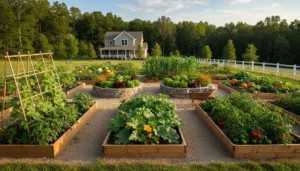
Lisa used the compost to improve her raised vegetable beds and reported stronger tomato growth the following season.
Quick Start Checklist for Composting for Beginners
Use this checklist to begin your composting routine with confidence.
- Choose a suitable bin and location.
- Collect greens and browns separately.
- Layer materials and keep pile moist.
- Turn regularly and watch for odors or pests.
- Harvest dark, crumbly compost and apply to soil.
Final Notes on Home Composting
Home composting is a practical, low-cost way to reduce waste and enrich soil. Start small, be consistent, and adjust your mix based on results.
With a little attention, most beginners can produce useful compost within a few months and enjoy healthier plants and reduced trash loads.