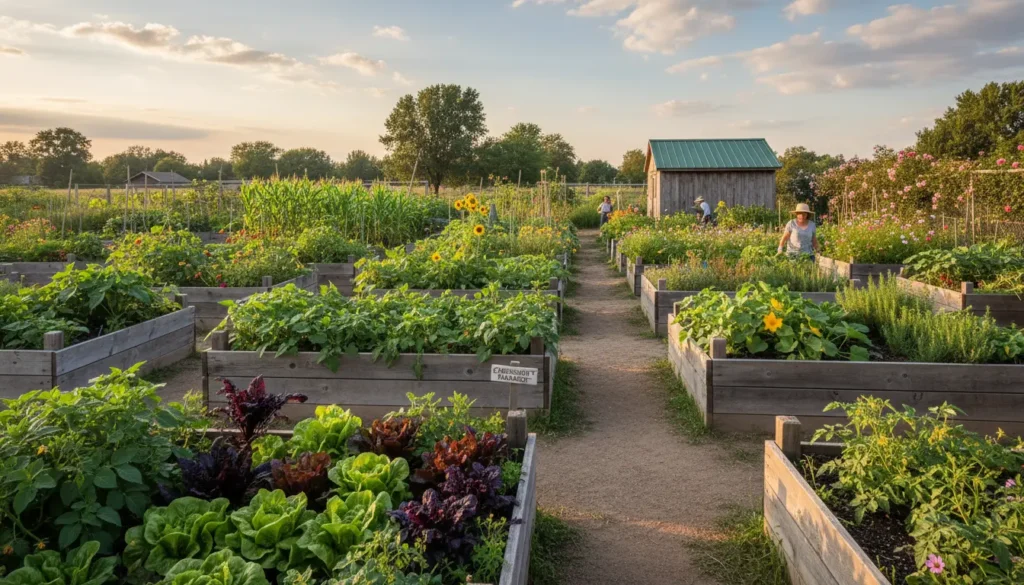
Why choose raised bed vegetable gardening
Raised bed vegetable gardening makes efficient use of space and gives better control over soil, drainage, and fertility. It is ideal for beginners and experienced gardeners who want higher yields in small areas.
Raised beds warm faster in spring and reduce soil compaction, which helps roots develop quickly and improves vegetable health.
Planning your raised bed vegetable gardening layout

Start by picking a sunny spot that gets at least six hours of direct sun daily. Consider access to water and ease of reaching plants from paths without stepping into beds.
Typical raised bed sizes are 4×8 feet or 3×6 feet with a height of 10–12 inches. These sizes balance growing area and reachability for most gardeners.
Raised bed vegetable gardening: site and size checklist
- Sunlight: 6+ hours daily
- Bed width: 3–4 feet for single-sided access or up to 4 feet for double-sided with narrow path
- Length: as long as you can handle; 8 feet is manageable
- Height: at least 10 inches; 12–18 inches for root crops
Soil and compost for raised bed vegetable gardening
Soil mix is the most important factor for raised bed success. A well-balanced mix supports water retention and drainage while supplying nutrients to plants.

A reliable mix: 40% topsoil, 40% compost, 20% coarse sand or perlite. Adjust proportions based on local soil quality and available materials.
Soil preparation steps
- Line the bottom with cardboard if weeds are a problem to suppress regrowth.
- Fill beds with your chosen soil mix and level the surface gently.
- Water the bed thoroughly to settle the mix before planting.
Planting strategies for raised bed vegetable gardening
Plan crops by height and spacing to maximize light and airflow. Put taller plants, like corn or trellised tomatoes, on the north side of beds if you are in the Northern Hemisphere.
Use succession planting and intercropping to keep beds productive across seasons. Fast-growing crops can be rotated between slower ones.
Examples of crop layout
- Front: lettuces and radishes (quick harvest)
- Middle: bush beans and carrots
- Back: trellised cucumbers or tomatoes
Watering and maintenance in raised bed vegetable gardening

Raised beds typically dry faster than in-ground gardens, so consistent watering is crucial. Aim for deep, infrequent watering to encourage strong root systems.
Installing a drip irrigation line or soaker hose simplifies watering and reduces water waste. Mulch with straw or leaf mulch to retain moisture and suppress weeds.
Routine maintenance tips
- Check soil moisture twice a week in warm months.
- Mulch 2–3 inches to reduce evaporation.
- Fertilize with compost tea or a balanced organic fertilizer every 4–6 weeks during the growing season.
Pest control and disease management for raised bed vegetable gardening
Raised beds reduce some pest problems but do not eliminate them. Use integrated pest management (IPM) strategies to keep pest pressure low.
Start with prevention: clean tools, crop rotation, and healthy soil. At first sign of pests, identify the issue and choose targeted controls.
IPM steps
- Monitor weekly for pests and disease symptoms.
- Encourage beneficial insects with flowering plants like calendula or borage.
- Use physical barriers such as mesh covers for brassicas or row covers for insect control.
Small case study: Suburban 4×8 raised bed success
Anna, a beginner gardener in a suburban back yard, built a single 4×8 raised bed filled with a 40/40/20 soil mix. She planted tomatoes, basil, salad greens, and bush beans in the first season.
After adding drip irrigation and 2 inches of straw mulch, Anna harvested continuous salad greens for three months and six healthy tomato plants that produced 20–30 pounds of fruit in midsummer. Regular compost additions improved soil structure and reduced watering frequency over the season.
Common mistakes in raised bed vegetable gardening and how to avoid them
One frequent mistake is using poor-quality fill like just topsoil or garden soil without compost. This leads to compaction and nutrient deficits.
Other mistakes include overwatering, crowding plants too tightly, and skipping crop rotation. Avoid these with planning and regular bed upkeep.
Quick corrective actions
- If soil compacts, top-dress with compost and lightly fork the surface in spring.
- Thin crowded seedlings to recommended spacing for each crop.
- Rotate plant families each season to reduce soil-borne disease buildup.
Tools and materials checklist for raised bed vegetable gardening
Start with a short list of essential tools and supplies to keep setup simple and effective. You can expand tools as your garden grows.
- Raised bed frame materials (cedar, recycled composite, or stone)
- Good-quality compost and topsoil
- Hand trowel, garden fork, and hoe
- Drip irrigation or soaker hose
- Mulch materials and row covers
Conclusion: Getting started with raised bed vegetable gardening
Raised bed vegetable gardening is a practical way to grow more food in less space with better control over soil and water. Start small, focus on soil quality, and use simple irrigation and mulch to reduce maintenance.
With careful planning, a 4×8 raised bed can provide a significant portion of a family’s salad greens and summer vegetables, making it a productive and rewarding gardening method for beginners and experienced gardeners alike.



