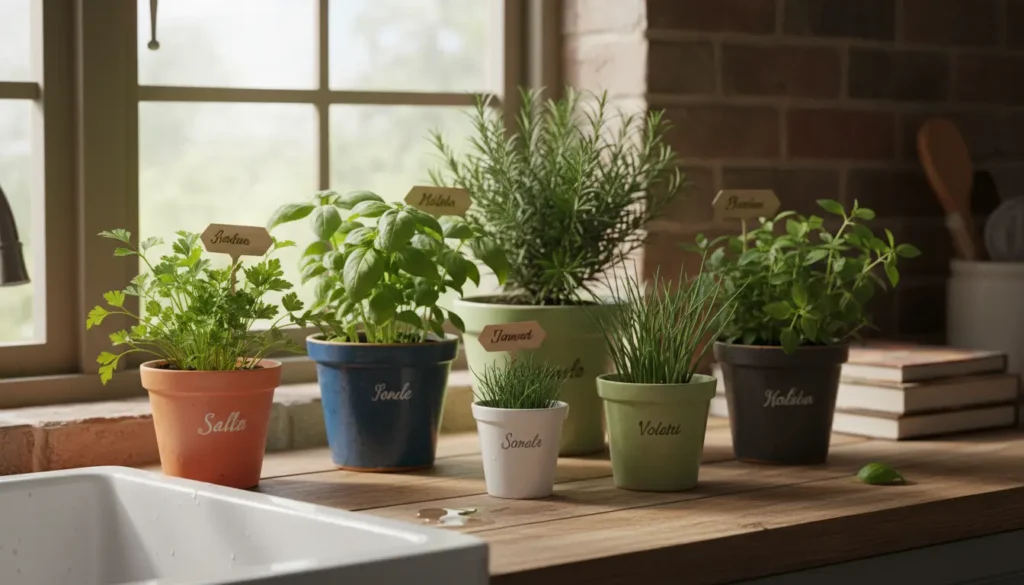
Growing a kitchen herb garden is a simple, practical way to add fresh flavor to meals and improve indoor air quality. This guide explains the essentials so you can start, maintain, and harvest herbs on a windowsill or countertop.
Kitchen Herb Garden Basics
A kitchen herb garden is typically a small collection of culinary herbs grown indoors or in compact outdoor spaces. It focuses on plants you use most often, like basil, parsley, and chives.

Start with a few easy species and learn their needs before expanding. Small containers, good soil, and proper light are the core requirements.
Why Choose a Kitchen Herb Garden
Fresh herbs save money and taste better than store-bought options. They reduce waste because you harvest only what you need. They also make cooking more convenient.
- Immediate access to fresh flavor
- Lower cost than buying packaged herbs weekly
- Educational and therapeutic benefits
Planning Your Kitchen Herb Garden
Good planning increases success. Consider light, space, and how you cook when choosing herbs for your kitchen herb garden.
Choosing Herbs for a Kitchen Herb Garden

Select herbs that match your cooking habits and the conditions in your kitchen. Here are dependable choices for beginners:
- Basil — great for sunny spots and summer cooking
- Parsley — tolerant of partial light and versatile
- Chives — small, hardy, and easy to snip
- Thyme — drought-tolerant and compact
- Mint — vigorous; keep in its own pot
Group herbs with similar light and water needs. For example, basil and thyme need more sun than parsley or mint.
Containers and Soil for a Kitchen Herb Garden
Choose containers with drainage holes to prevent root rot. Saucer trays catch excess water and protect countertops.
- Use 4–8 inch pots for most herbs.
- Opt for lightweight materials like plastic or terracotta for easy handling.
- Use a well-draining potting mix rather than garden soil.

Mix perlite or coarse sand into potting mix to improve drainage. Avoid heavy soils that retain too much moisture.
Light, Water, and Feeding
Light is the most important factor for a kitchen herb garden. Most culinary herbs need 4–6 hours of direct or bright indirect sunlight daily.
Maximizing Light for Your Kitchen Herb Garden
Place your herb pots on a south- or west-facing windowsill when possible. If natural light is limited, use a full-spectrum LED grow light set on a timer.
- South-facing: best for sun-loving herbs
- East- or west-facing: fine for many herbs with partial shade
- North-facing: suitable only for lower-light herbs like cilantro
Watering and Feeding Your Kitchen Herb Garden
Water when the top 1 inch of soil feels dry. Overwatering is a common mistake that causes yellow leaves and root issues.
Feed herbs with a balanced water-soluble fertilizer once a month during the growing season. For leafy herbs, dilute the fertilizer to half strength to avoid forcing weak growth.
Maintenance and Harvesting
Regular maintenance keeps a kitchen herb garden productive. Pruning encourages bushier growth and delays flowering, which can reduce leaf flavor.
Pruning and Harvesting Tips for a Kitchen Herb Garden
Harvest outer leaves first and never remove more than one-third of the plant at a time. Pinch or cut stems above a leaf node to stimulate new growth.
- Pinch basil regularly to prevent flowering.
- Harvest chives by cutting near the base.
- Trim mint frequently to control spread.
Rotate pots periodically to keep plants growing evenly toward the light source.
Many herbs, like basil and mint, release more fragrance and flavor when picked in the morning after the dew evaporates. Morning harvests can improve taste and potency.
Common Problems and Solutions
Pest issues and leggy growth are common in a kitchen herb garden. Address problems quickly to avoid spread between pots.
- Leggy plants: Increase light or prune to encourage bushiness.
- Yellow leaves: Check for overwatering or poor drainage.
- Aphids or spider mites: Rinse leaves with water or use insecticidal soap.
Repot herbs when roots circle the pot or growth slows significantly. Fresh soil adds nutrients and improves drainage.
Small Real-World Example
Case study: Emma, a home cook in Portland, started a three-pot kitchen herb garden on a south-facing sill. She planted basil, parsley, and chives in 6-inch pots with a quality potting mix.
By following a simple routine—daily light checks, watering once the top inch dried, and monthly feeding—Emma harvested fresh herbs for salads and sauces throughout the season. Pruning basil every week kept it bushy and productive.
Her investment of about $40 in pots and soil paid off within two months through reduced grocery trips and more flavorful meals.
Quick Start Checklist for a Kitchen Herb Garden
- Choose 3–5 herbs you use most
- Pick pots with drainage and use potting mix
- Place on a sunny windowsill or use grow lights
- Water when soil is dry an inch deep
- Fertilize lightly once a month
- Harvest regularly and prune to encourage growth
Starting a kitchen herb garden takes minimal space and effort. With a few good decisions about light, soil, and plant selection, you can enjoy fresh herbs year-round. Keep notes on how each herb performs in your kitchen and adjust care over time for the best results.



