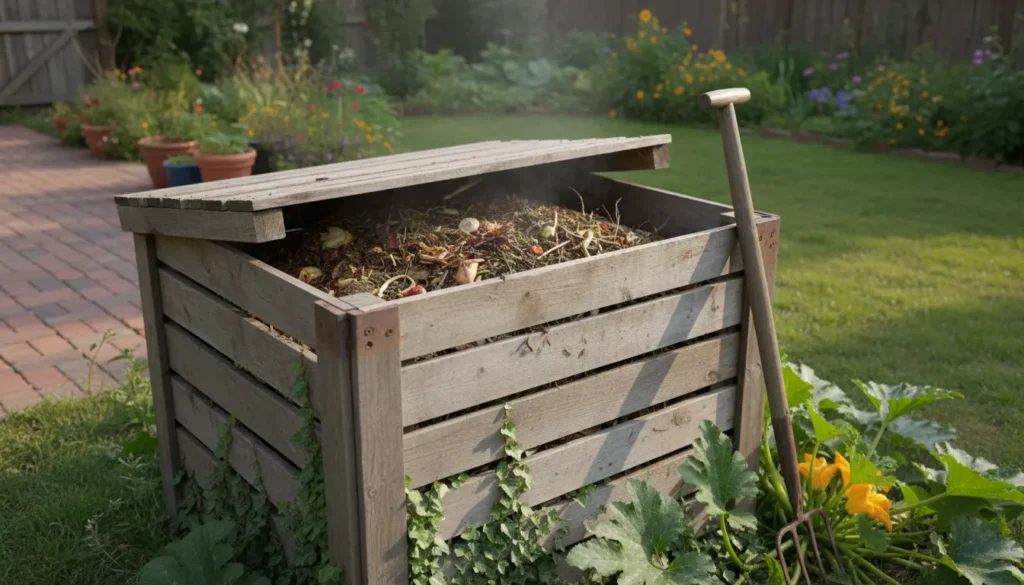
Why Home Composting Matters
Home composting turns kitchen scraps and yard waste into a valuable soil amendment. It reduces landfill waste, cuts methane emissions, and improves garden soil health.
This guide explains simple, practical steps for beginners to start composting at home with minimal cost and effort.
Choose a Home Composting Method

Pick a method that fits your space, time, and comfort level. Each method produces good compost when managed properly.
- Basic pile or bin: Good for yards and slow decomposition.
- Tumbler: Faster decomposition and easier turning, great for small spaces.
- Vermicomposting (worms): Ideal for apartments; uses red worms to break down kitchen waste.
Method selection tips
Consider odors, pests, and available time. Tumblers reduce pest access. Worm bins are low-odor if maintained correctly.
What to Compost: Greens and Browns
Successful home composting balances nitrogen-rich “greens” and carbon-rich “browns.” Aim for roughly a 2:1 ratio by volume of browns to greens for most systems.
- Greens (Nitrogen): Vegetable scraps, fruit peels, coffee grounds, fresh grass clippings.
- Browns (Carbon): Dry leaves, shredded paper, cardboard, straw, wood chips.

Avoid meat, dairy, oils, diseased plants, and pet waste in most home systems to prevent odors and pests.
Step-by-Step Setup for Home Composting
These steps work for a simple bin or pile and can be adapted for tumblers and worm bins.
- Pick a shaded, level spot with good drainage.
- Build or buy a bin about 3 feet x 3 feet x 3 feet for backyard composting.
- Start with a layer of coarse browns for airflow (twigs or straw).
- Add alternating layers of greens and browns, keeping moisture like a wrung-out sponge.
- Turn the pile every 1–2 weeks to add oxygen and speed decomposition.
Simple maintenance checklist
- Monitor moisture: add water if dry, add browns if too wet.
- Turn the pile to prevent compacting and odors.
- Chop large items to speed breakdown.
Compost improves soil water retention by up to 20 percent, which helps plants use water more efficiently during dry spells.
Troubleshooting Common Home Composting Problems

Problems are usually easy to fix once you know the cause. Below are common issues and quick remedies.
- Bad odor: Add more browns and turn the pile. Odor usually means too much nitrogen or poor airflow.
- Slow breakdown: Increase turning, chop materials smaller, and add warm greens to raise temperature.
- Pests: Bury food scraps deeper, use a closed bin or tumbler, and avoid meat/dairy.
- Dry pile: Add water and more greens; cover the pile to retain moisture.
How to Know When Compost Is Ready
Finished compost looks dark, crumbly, and smells earthy. Most backyard systems take 3–12 months depending on management.
Use a screen or sift to separate finished compost from larger pieces, then return unfinished bits to the pile.
Practical uses for finished compost
- Topdress vegetable beds and flower borders.
- Mix into potting soil for container plants.
- Incorporate into lawn soil before reseeding.
Small Real-World Example
Case Study: A townhouse family of three started a 60-gallon tumbler in spring. They added kitchen scraps and shredded leaves and turned the tumbler weekly.
After four months they had enough compost to topdress their vegetable planters. The family reported about 40 percent less kitchen waste sent to the curb and healthier tomato plants the next season.
Beginner Tips and Practical Examples
Start small and scale up. A single tumbler or worm bin can handle most household kitchen scraps for 1–4 people.
Keep a small countertop caddy for scraps and empty it into your compost system every 2–3 days.
- Example: Save coffee grounds and eggshells in a jar; add to compost weekly for extra calcium and nitrogen.
- Example: Shred mail and cardboard to use as browns during high-green seasons like spring.
Next Steps to Start Home Composting Today
Decide on a method, gather simple tools (pitchfork, thermometer optional, greens and browns), and commit a few minutes each week to turning and monitoring.
Join a local gardening group or community composting program if you need support or have limited space.
With consistent, small actions you can convert household waste into a useful soil amendment while reducing your environmental footprint. Start with one bin, learn the balance of greens and browns, and adjust as you go.



