Start Composting at Home Today
Composting turns kitchen and yard waste into nutrient-rich soil you can use in gardens or potted plants.
This guide explains home composting for beginners in simple steps, covering methods, materials, common problems, and a short case study you can follow.
Why Home Composting for Beginners Is Useful

Composting reduces waste sent to landfills and returns organic matter to the soil. It improves soil structure, water retention, and plant health.
Even small-scale composting works well for apartments or houses with yards.
Choose a Method for Home Composting for Beginners
Pick a method that fits your space, time, and comfort level. Each method requires different effort and produces compost at different speeds.
Backyard Bin Composting

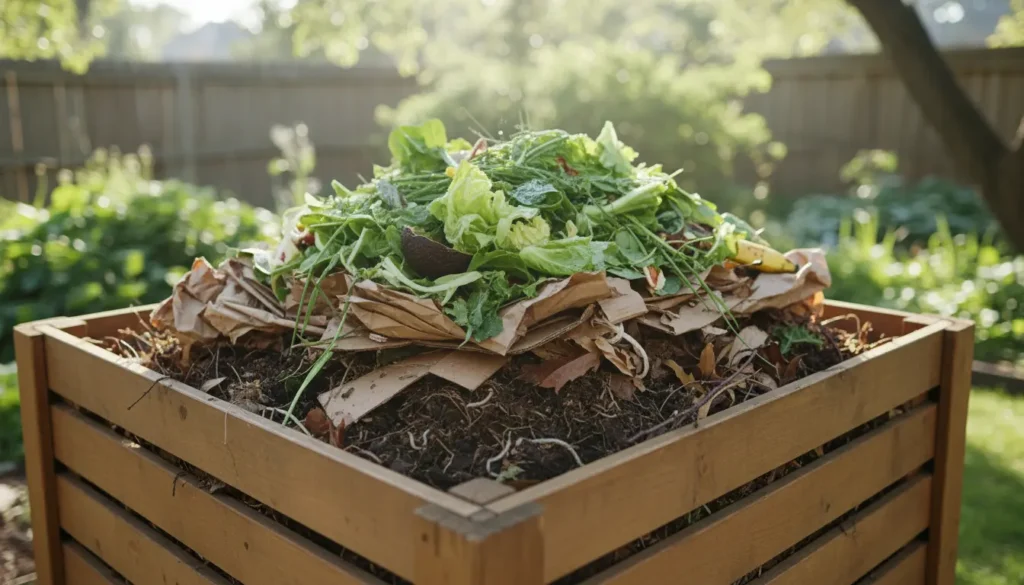
Best for people with a yard and medium amounts of waste. Use a simple tumbling or stationary bin.
- Easy to manage and hide in a corner of the yard.
- Turn the pile every 1–2 weeks for faster composting.
Bokashi Fermentation
Good for small spaces and those who want to compost cooked food and dairy. It is an anaerobic fermentation using bran and microbes.
- Works indoors in a sealed bucket.
- Requires a short follow-up burial or addition to a compost pile.
Vermicomposting (Worm Bins)
Ideal for apartments or limited space. Red worms eat food scraps and produce castings, a potent fertilizer.
- Produces compost in 2–3 months with regular feeding.
- Requires maintaining moisture and avoiding excess citrus or oily foods.
Materials to Use and Avoid

Home composting for beginners follows a simple rule: mix ‘greens’ and ‘browns’. Greens are nitrogen-rich, browns are carbon-rich.
Greens (Nitrogen)
- Kitchen scraps (vegetable peels, fruit scraps)
- Fresh grass clippings
- Coffee grounds and tea leaves
Browns (Carbon)
- Dry leaves and straw
- Shredded paper and cardboard (non-glossy)
- Wood chips and sawdust (small amounts)
Avoid
- Meat, fish, bones, and dairy in open piles (unless using Bokashi)
- Diseased plants or seeds you don’t want to spread
- Oily or greasy food waste
Basic Step-by-Step Process
- Choose a bin or area for your compost and add a 4–6 inch base of browns for aeration.
- Add greens and browns in layers or mixed batches in roughly a 1:3 green-to-brown volume ratio.
- Keep the pile moist like a wrung-out sponge; add water if dry or more browns if too wet.
- Turn or aerate the pile weekly for faster decomposition (less often for worm bins).
- Harvest finished compost when it smells earthy and looks crumbly—usually 2–12 months depending on method.
Troubleshooting Common Problems
Beginners often face simple issues that are easy to fix. Check moisture, balance, and aeration first.
Bad Odor
Smells indicate too much moisture or insufficient browns. Add dry leaves or shredded paper and turn the pile to introduce air.
Pests or Flies
Avoid meat and dairy. Bury food scraps under a layer of browns or use a closed bin. For fruit flies, store fruit scraps in a freezer until adding to the bin.
Slow Decomposition
Increase surface area by chopping materials, add more greens for nitrogen, and ensure the pile stays warm and moist.
Food scraps and yard waste make up about 28% of household trash on average. Composting at home can cut that share and return nutrients to your garden.
Simple Maintenance Schedule
- Daily: Add kitchen scraps to a small covered container; transfer to the main bin weekly.
- Weekly: Turn the pile or check worm bin conditions and moisture.
- Monthly: Monitor compost temperature (optional) and adjust ratios if needed.
Real-World Example: A Small Case Study
Case study: The Millers, a family of four, started backyard bin composting in spring.
They used a 3-bin system, layered yard leaves (browns) and kitchen scraps (greens), and turned the active bin every 10 days.
After six months they produced about 0.4 cubic meters of finished compost. They used it on vegetable beds and cut their grocery soil amendment budget by 60% the next season.
Tips to Succeed with Home Composting for Beginners
- Start small and scale up as you learn what works.
- Keep a small countertop container with a tight lid for daily scraps.
- Shred or chop materials to speed breakdown.
- Record what you add and how often you turn to troubleshoot faster.
Next Steps
Choose a method, gather a bin, and begin collecting kitchen and yard waste. Expect a learning curve but steady progress within weeks.
With regular attention, home composting for beginners becomes an easy and rewarding habit that improves soil and cuts household waste.



