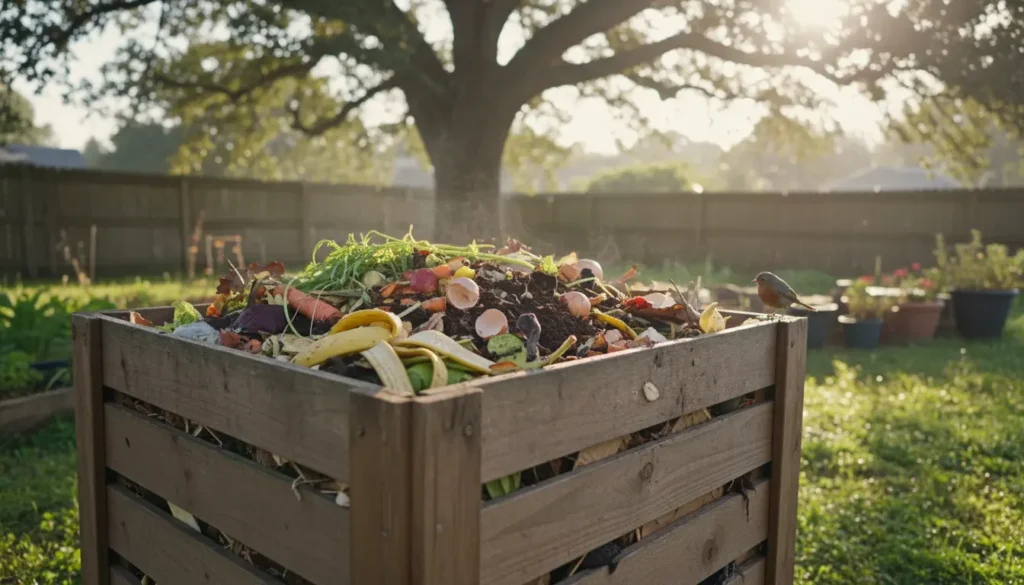
Why Home Composting Matters
Home composting turns kitchen and yard waste into a useful soil amendment. It reduces trash, lowers methane from landfills, and improves garden soil structure and fertility.
Anyone with a backyard, balcony, or small indoor space can start composting with simple steps and minimal tools.
Home Composting: Getting Started
Choose a method that fits your space and lifestyle. Common options are a simple compost pile, a bin, a tumbler, or a worm bin for indoor composting.
- Backyard bin: Best for larger volumes and straightforward turning.
- Tumbler: Easier turning, faster results, good for small yards.
- Worm bin (vermicompost): Ideal for apartments and indoor use.
Where to Place Your Compost
Pick a spot with good drainage and partial shade to keep moisture consistent. For balcony or indoor setups, place containers near ventilation and away from extreme heat.
Home Composting Materials: Greens and Browns
Successful compost mixes balance nitrogen-rich “greens” and carbon-rich “browns.” Aim for roughly a 1:2 ratio by volume of greens to browns.
- Greens (nitrogen): fruit and vegetable scraps, coffee grounds, fresh grass clippings.
- Browns (carbon): dry leaves, straw, shredded paper, cardboard.
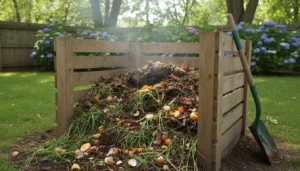
Avoid meat, dairy, diseased plants, and oils to reduce pests and odors.
Adding Materials: Practical Tips
- Chop or shred large pieces to speed decomposition.
- Layer materials—start with browns, add greens, cover with browns to reduce smell and flies.
- Keep the pile moist like a wrung-out sponge; add water during dry spells.
Maintaining Your Compost
Active maintenance helps compost finish faster. The three key factors are oxygen, moisture, and particle size.
- Turn the pile every 1–2 weeks to add oxygen and distribute microbes.
- Monitor moisture; too wet causes smell, too dry stops decomposition.
- Smaller pieces decompose faster—use a shredder or chop scraps.
Troubleshooting Common Problems
Smelly compost usually means too many greens or poor aeration. Add browns and turn the pile.

If decomposition is slow, check moisture and particle size; a cold pile often needs more nitrogen or smaller pieces.
Compost can reach temperatures of 130–160°F (54–71°C) in well-managed piles, which helps kill weed seeds and pathogens.
Home Composting Timeline and What to Expect
Compost can be ready in 2–4 months with active management or 6–12 months if left to break down slowly. Finished compost is dark, crumbly, and earthy-smelling.
How to Use Finished Compost
- Top-dress garden beds with 1–2 inches to improve structure and nutrients.
- Mix into potting soil at a ratio of up to 25% compost for container plants.
- Use as mulch around trees and shrubs, keeping it a few inches from stems.
Small Case Study: Apartment Balcony Composting
Maria, a city renter, started a 20-liter worm bin on her balcony. She collected vegetable scraps and coffee grounds daily and added shredded cardboard for balance.
Within three months she harvested rich worm castings and reduced household waste by about 30%. Her balcony herbs grew noticeably faster with a light top-dressing of the compost.
Simple Example: Weekly Routine for Home Composting
- Collect kitchen scraps in a small counter pail.
- Every 2–3 days, add scraps to the bin and cover with a handful of shredded paper or dry leaves.
- Turn the compost weekly or rotate the tumbler.
- Check moisture and add water or dry material as needed.
Safety and Local Rules
Check local regulations for backyard composting if you live in a community with rules about bins and odors. Use gloves when handling raw compost and avoid adding pet waste to garden compost.
Final Checklist for Successful Home Composting
- Choose a suitable bin or method for your space.
- Balance greens and browns and chop materials when possible.
- Maintain moisture and aeration with regular turning.
- Monitor and troubleshoot odors, pests, and slow breakdown.
- Use finished compost to feed soil and reduce fertilizer needs.
Home composting is a low-cost way to turn waste into a valuable resource. Start small, learn from each batch, and scale up as you gain confidence.