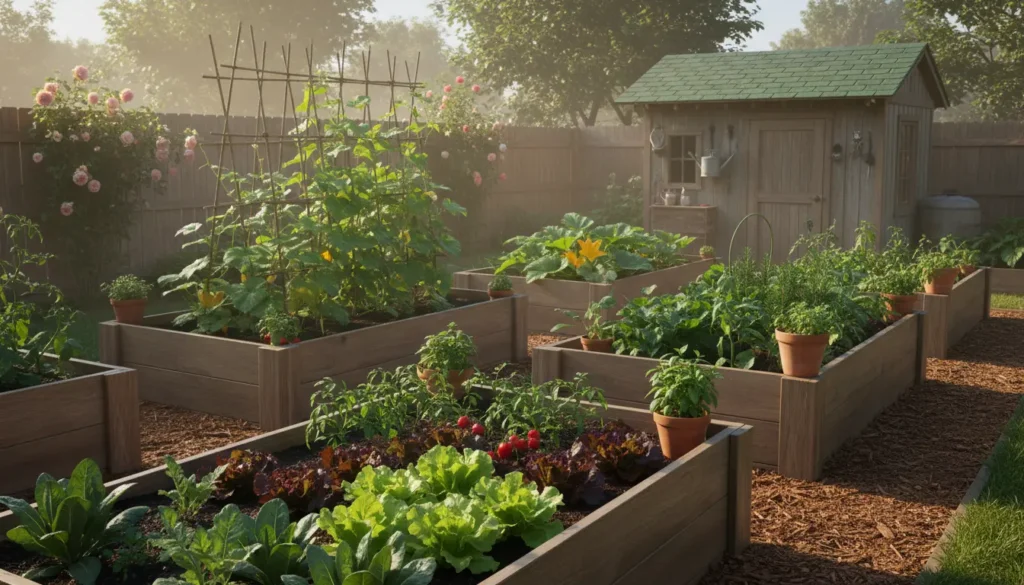
Starting a vegetable garden at home can be simple and rewarding. This guide gives clear, practical steps to plan, plant, and maintain a productive vegetable garden.
Plan Your Vegetable Garden
Good planning sets the foundation for success. Decide what you want to grow and how much time you can commit each week.
Choose What to Grow

Pick vegetables that you and your family will eat and that match your climate. For beginners, choose fast-growing and forgiving crops like lettuce, radishes, bush beans, and tomatoes.
- Easy starters: Lettuce, radishes, spinach
- High value: Tomatoes, peppers, cucumbers
- Space savers: Bush beans, dwarf varieties
Decide Garden Type and Size
Common options include in-ground beds, raised beds, and containers. Raised beds are forgiving on soil and drainage and work well for small backyards.
Start small—one or two 4×8 foot raised beds provides a manageable learning area and good harvests without overwhelming maintenance.
Choose a Location for Your Vegetable Garden

Location affects sunlight, drainage, and convenience. Most vegetables need at least six hours of direct sun per day.
Sunlight and Protection
Place your garden where it receives morning sun and some afternoon sun. Avoid low spots that collect water or areas shaded by trees and buildings.
Water Access and Visibility
Choose a spot near a water source to make watering easier. Make the garden visible from the house to encourage regular checks and timely care.
Prepare Soil for a Healthy Vegetable Garden

Soil is the most important factor. Good soil holds moisture, drains well, and supplies nutrients to plants.
Test and Improve Soil
Do a simple soil test to check pH and basic nutrient levels. Most vegetables prefer slightly acidic to neutral soil (pH 6.0 to 7.0).
Improve soil with organic matter: compost, well-rotted manure, or leaf mold. Work 2–4 inches of compost into the top 6–8 inches of soil.
Use Raised Beds or Containers
Raised beds let you control soil mix and warm earlier in spring. A typical mix: 50% topsoil, 30% compost, 20% coarse sand or fine gravel for drainage.
Planting Your Vegetable Garden
Follow seed packet instructions for spacing and depth. Planting at the right time of year helps seeds and seedlings thrive.
Succession Planting and Companion Choices
Use succession planting to get continuous harvests. After harvesting early crops, replace them with a new planting.
- Succession example: Lettuce early, then bush beans midseason.
- Companion planting: Basil near tomatoes may help flavor and deter pests.
Watering and Maintenance of a Vegetable Garden
Consistent watering is essential. Deep, infrequent watering encourages strong roots, while light, frequent watering produces shallow roots and stress.
Watering Tips
- Water early in the morning to reduce evaporation.
- Aim for 1 to 1.5 inches of water per week, depending on weather and crop.
- Use drip irrigation or soaker hoses to deliver water to roots and reduce disease.
Pest and Disease Management
Monitor plants weekly for pests and signs of disease. Remove affected leaves, use physical barriers like row covers, and encourage beneficial insects.
For common problems, try these practical steps:
- Powdery mildew: Improve air circulation and remove infected leaves.
- Aphids: Blast with water or introduce ladybugs.
- Slugs: Use traps or diatomaceous earth around plants.
Planting diverse crops can reduce pests and improve soil health. Crop rotation in a small backyard helps break pest cycles and improves yields.
Harvesting and Storage from Your Vegetable Garden
Harvest at peak ripeness for best flavor. Some crops like lettuce and spinach can be harvested leaf-by-leaf, while others like tomatoes should be picked whole when fully colored.
- Leafy greens: Harvest early morning for crispness.
- Tomatoes and peppers: Pick when fully colored and slightly soft to the touch.
- Root crops: Harvest when roots reach expected size on seed packet.
Storing Your Harvest
Store vegetables in cool, dry conditions. Use refrigeration for many crops, and root cellars or cool basements for root vegetables.
Case Study: Small Back Yard Vegetable Garden
Sarah converted a 10×10 foot patch into two raised beds and started with lettuce, tomatoes, peppers, and bush beans. She spent one hour every other day tending the beds.
By mid-summer she harvested weekly lettuce salads, several trays of tomatoes, and a steady supply of beans. Her key actions were regular watering, mulching to conserve moisture, and rotating where beans and tomatoes were planted the next season.
Result: A consistent supply of fresh vegetables and lower grocery bills, achieved without advanced tools or large time investment.
Quick Checklist to Start Your Vegetable Garden
- Choose 3–5 easy vegetables you like to eat.
- Select a sunny, accessible location with water nearby.
- Prepare soil with compost or build raised beds.
- Plant at the correct season and follow spacing instructions.
- Water deeply, mulch, and monitor pests weekly.
Starting a vegetable garden at home is achievable for most people with a bit of planning and regular care. Begin small, learn by doing, and expand as you gain confidence and harvests.



