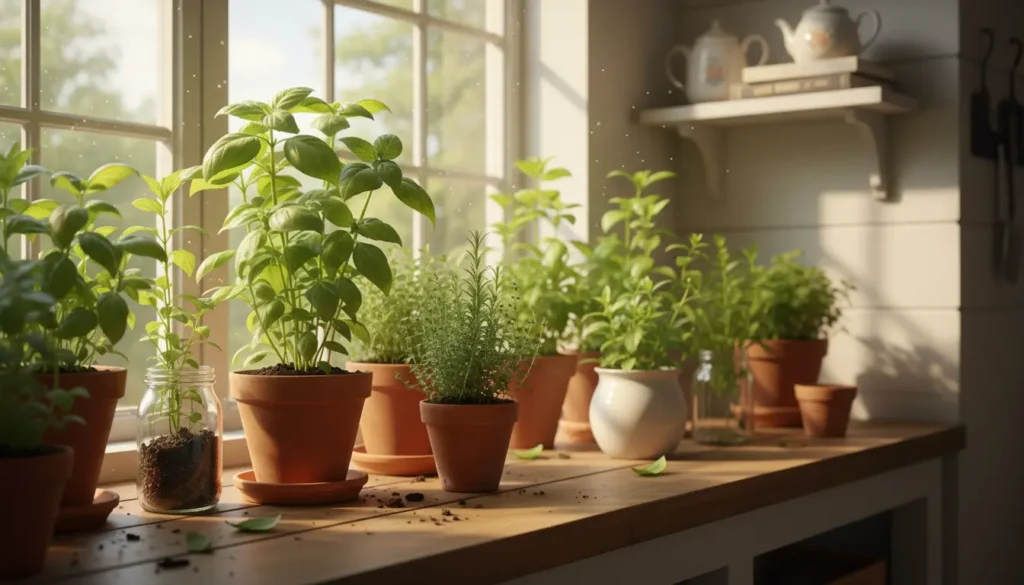
Growing herbs indoors is an easy way to add fresh flavor to cooking, improve air quality, and enjoy gardening year-round. This guide explains the core steps, common pitfalls, and simple tips to get reliable harvests from a small indoor space.
Why grow herbs indoors
Herbs are compact, fast-growing, and forgiving, making them ideal for small spaces and beginners. Indoor herbs reduce trips to the store and give you freshest ingredients within arm’s reach.
Benefits of growing herbs indoors
- Fresh flavor and aroma for cooking
- Control over pesticide use and growing conditions
- Suitable for apartments, balconies, or windowsills
- Low maintenance compared with many houseplants
Best herbs to grow indoors

Start with herbs that tolerate container life and lower light. These options recover quickly after harvest and are easy to manage.
- Basil — warm and bright, great for kitchens
- Mint — hardy and spreads quickly; use a separate pot
- Parsley — moderate light, slow to start but reliable
- Chives — compact and forgiving, regular harvests
- Thyme and Oregano — low-water herbs that like bright light
How to grow herbs indoors step by step
The following steps cover site selection, containers, soil, planting, and basic care. Follow them for consistent results.
1. Choose the right location
Place herbs where they receive at least 4–6 hours of bright light per day. South- or west-facing windows are usually best.

If natural light is limited, add a full-spectrum LED grow light positioned about 6–12 inches above the plants.
2. Pick containers and soil
Use pots with drainage holes and choose a well-draining potting mix designed for containers. Avoid garden soil, which compacts and holds too much moisture.
Smaller herbs like chives can use 4–6 inch pots, while basil and parsley do better in 8–10 inch pots for root space.
3. Planting seeds or transplants

Seeds are cost-effective but require more time and care. Transplants (seedlings) give faster results and make it easier to manage light and watering needs early on.
Plant seeds at the depth specified on the packet, and keep the soil evenly moist until germination. For seedlings, loosen roots gently and set at the same soil level they grew at in the tray.
4. Watering and feeding
Water when the top inch of soil feels dry. Water thoroughly until it drains from the bottom, then let excess run off. Overwatering is the most common indoor herb problem.
Fertilize lightly every 4–6 weeks with a balanced liquid fertilizer at half the recommended strength to avoid overly rapid, weak growth.
Basil prefers slightly moist soil and will bolt (flower and go to seed) faster if it gets stressed by inconsistent watering or cold drafts.
Common problems when growing herbs indoors
Recognizing problems early helps rescue plants before damage is severe. Below are common issues and practical fixes.
- Leggy growth: Move plants to brighter light or prune regularly to encourage bushy growth.
- Yellow leaves: Check watering—yellowing often means overwatering or poor drainage.
- Pests: Inspect leaves for aphids or spider mites. Rinse leaves or use insecticidal soap when needed.
- Cold drafts: Keep herbs away from doors or vents during cold seasons to avoid shock.
Harvesting and using herbs grown indoors
Harvest regularly to encourage new growth. Pick the top leaves first and never remove more than one third of the plant at a time.
Use fresh herbs in salads, sauces, and garnishes. To preserve excess, chop and freeze in oil or dry by hanging small bunches in a warm, dry place.
Pruning tips
- Pinch back basil tips weekly to prevent flowering.
- Harvest mint leaves from the outer stems to allow inner growth.
- Trim parsley and chives at the base to renew foliage.
Real-world example: A windowsill basil success
Case: Maria, an apartment cook, started three basil seedlings on a south-facing windowsill in 8-inch pots. She used good potting mix and a saucer for drainage.
Within six weeks she harvested the first handfuls. By pruning weekly and watering only when the top inch was dry, each plant produced enough leaves for pesto every three weeks for four months.
Quick troubleshooting checklist
- Light: 4–6 hours minimum or add LED grow light
- Water: Allow top inch to dry, avoid standing water
- Soil: Use a light, well-draining potting mix
- Fertilizer: Weak solution every 4–6 weeks
- Pests: Inspect weekly and treat early
Growing herbs indoors is accessible and rewarding with a little planning. Start with easy varieties, match light and water to plant needs, and harvest often to keep plants productive. Within a single season you can move from seed or seedling to fresh meals and homemade herb blends.
Try one pot per herb type to control spread, and add a grow light if your window is dim. With these straightforward steps, most cooks can successfully grow herbs indoors and enjoy several harvests each year.



