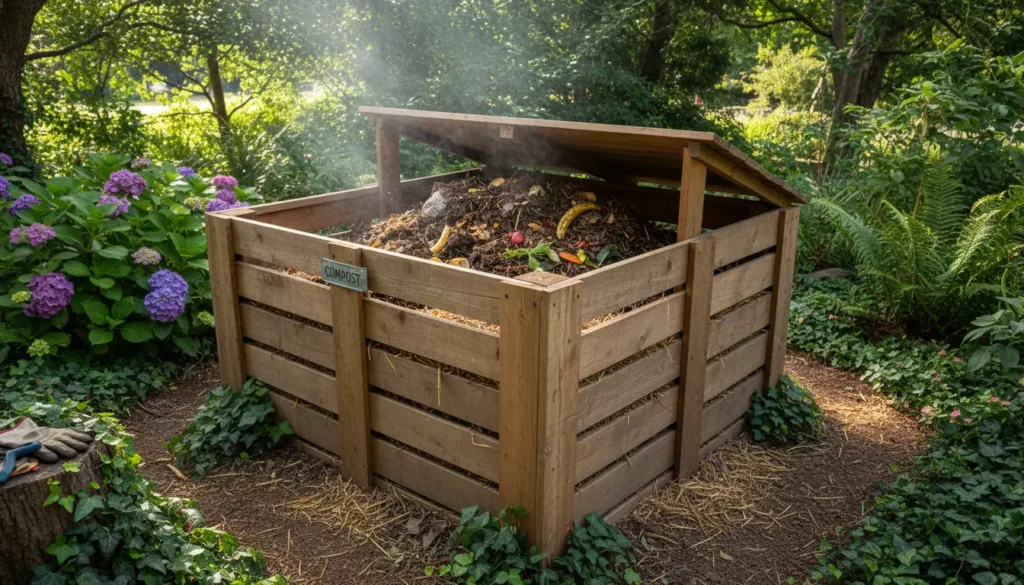
Why composting at home matters
Composting at home turns kitchen and garden waste into nutrient-rich soil. It reduces landfill volume and lowers your household carbon footprint.
This guide gives practical steps to start composting at home, what to include, common problems, and a small real-world example you can replicate.
Benefits of composting at home

Home composting provides free soil amendment for potted plants and gardens. It also reduces trash pickup costs and cuts methane emissions from landfills.
Other benefits include improved soil structure, water retention, and healthier plants without chemical fertilizers.
How to start composting at home
Choose a method that fits your space and lifestyle. Common options are a backyard compost pile, a tumbling bin, or a small indoor worm bin.

Consider these quick factors when selecting a system:
- Available space (balcony, yard, garage)
- Volume of kitchen and yard waste
- Time you can spend maintaining the bin
- Local regulations and wildlife concerns
Step 1: Pick a composting method
Backyard piles are low-cost and simple for homeowners with yard space. Tumblers speed up decomposition and reduce pests. Worm bins (vermicomposting) work well indoors for apartments.
Choose one that matches your comfort level and waste stream.
Step 2: Set up the bin and location

Place outdoor bins in partial shade on soil for drainage and access by microbes. For indoor bins, pick a ventilated spot near the kitchen.
Provide a stable base, and if using a bin with a lid, ensure it seals to keep pests out while allowing airflow.
Step 3: Balance greens and browns
Compost needs a balance of nitrogen-rich greens and carbon-rich browns. A common rule is roughly 2–3 parts browns to 1 part greens by volume.
- Greens: vegetable scraps, fruit peels, coffee grounds, fresh grass clippings
- Browns: dry leaves, shredded paper, cardboard, straw
Layer materials and avoid large chunks; chop or shred material to speed decomposition.
Step 4: Maintain moisture and aeration
Compost should be as damp as a wrung-out sponge. Too dry and microbes slow down; too wet and the pile can smell.
Turn the pile every 1–2 weeks to add oxygen. Tumblers make turning easier, while static piles need a pitchfork or aeration tool.
What you should and should not compost at home
Knowing what to include avoids pests and odors. Use this quick checklist as a starter.
- Do compost: fruit and vegetable scraps, coffee grounds, tea bags (without staples), eggshells, yard waste
- Do not compost: meat, dairy, fats, bones, diseased plants, pet waste from carnivores
- Optional with care: citrus peels and onion skins in small amounts; avoid large quantities in small bins
Common problems and quick fixes
Some issues are easy to correct once you spot the cause. Use the checklist below to diagnose problems.
- Bad smell: Add more browns and turn the pile to aerate.
- Slow decomposition: Chop material finer and ensure moisture and warmth.
- Pests: Use a sealed bin or bury food scraps under a layer of browns.
- Too wet: Add dry browns and mix to improve drainage.
How to tell when compost is ready
Finished compost is dark, crumbly, and earthy-smelling. The original materials should be unrecognizable and the pile will have shrunk significantly.
Depending on method and conditions, compost can be ready in 2 months (hot composting) to 12 months (slow pile).
One household can divert up to 200–300 kg of organic waste from the landfill each year by composting food scraps and yard waste.
Case study: Simple apartment composting example
Maria lives in a two-bedroom apartment and wanted to compost without outdoor space. She chose a 20-liter worm bin kept on her balcony.
She collected kitchen scraps in a covered container, adding shredded paper for browns. After 6 months she harvested rich vermicompost and used it on balcony herbs and houseplants.
Key takeaways from Maria’s approach:
- Choose a space-appropriate system (worm bin for small spaces).
- Keep a small countertop container to collect scraps and prevent convenience barriers.
- Balance greens and browns and monitor moisture for steady results.
Practical tips to make composting at home stick
Small habits make composting sustainable: keep a labeled bin, set weekly reminders to turn or check moisture, and involve family members in sorting scraps.
Start small—commit to composting certain waste streams first, like coffee grounds and vegetable peels, then expand as you gain confidence.
Final checklist to start composting at home
- Choose method: pile, tumbler, or worm bin
- Set location: shaded and accessible
- Collect greens and browns and layer them
- Maintain moisture and turn regularly
- Harvest finished compost and use it in soil
Composting at home is a low-cost, effective way to reduce waste and improve soil. With a simple system and a few routine tasks, anyone can turn everyday scraps into valuable compost.



