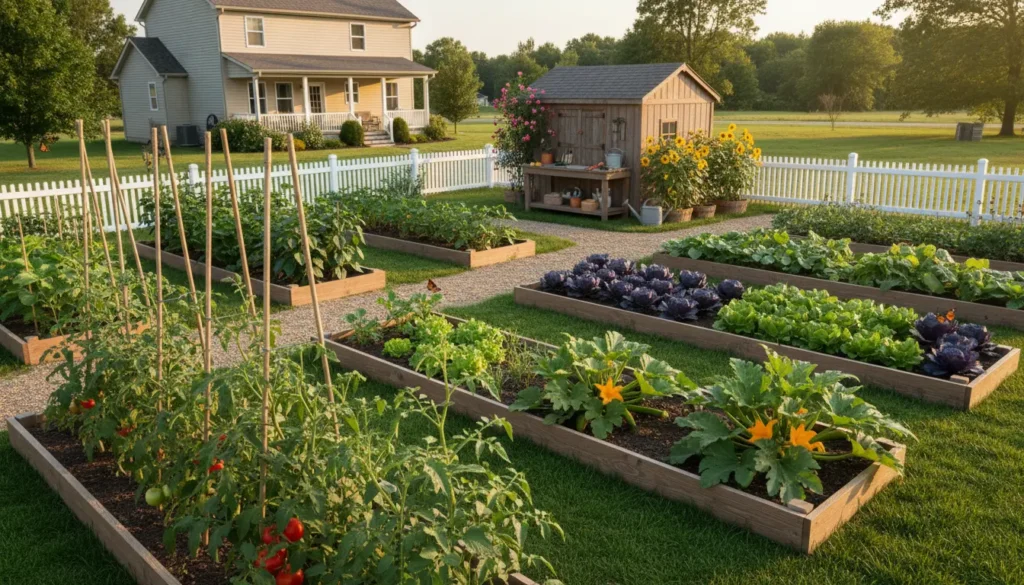
Starting a small vegetable garden is practical and achievable for most homeowners and renters. This guide covers planning, soil, planting, and simple maintenance so you can grow fresh produce even in limited space.
Why a small vegetable garden makes sense
A small vegetable garden reduces grocery costs and gives control over how food is grown. It is lower maintenance than a large plot and can fit patios, balconies, or small backyards.
Beginners can see results faster with compact, productive layouts. Small gardens also let you experiment without a big time or money commitment.
Planning your small vegetable garden
Good planning prevents common mistakes and increases success. Start by assessing light, space, and goals.
Choose the best location for a small vegetable garden
Most vegetables need 6–8 hours of direct sunlight. Observe the chosen spot across a day to confirm morning and midday sun.
Consider access to water and proximity to your kitchen for convenient harvesting.
Decide on containers, raised beds, or in-ground
Options for a small vegetable garden include containers, raised beds, and small in-ground plots. Each has trade-offs in soil control, cost, and longevity.
- Containers: Good for balconies and patios; pick large pots for root crops.
- Raised beds: Improve drainage and soil warmth; easier on the back.
- In-ground: Lower initial cost but may need more soil improvement.
Preparing soil for a small vegetable garden
Soil is the foundation of any productive garden. Test and improve it before planting.
Use a simple soil test kit to check pH and nutrients. Most vegetables prefer pH 6.0–7.0.
How to improve garden soil
Add organic matter to increase fertility and water retention. Mix in compost, well-rotted manure, or commercial soil amendments.
- Spread 2–4 inches of compost over the bed and mix into the top 6–8 inches of soil.
- For raised beds or containers, use a quality potting mix blended with compost.
Choosing crops for a small vegetable garden
Choose high-value, compact, and easy-to-grow crops to maximize yield in limited space.
Good beginner-friendly choices include lettuce, spinach, radishes, cherry tomatoes, bush beans, and herbs.
Use succession planting and vertical space
Succession planting replaces harvested crops with new ones to extend the harvest. Plant quick crops like radishes between slower ones.
Use vertical supports for vining plants such as peas and cucumbers to save ground space.
Planting and season planning for a small vegetable garden
Know your local frost dates and plan crops by season. Start cool-season crops early and warm-season crops after the last frost.
Seed packets and plant tags provide spacing and timing information. Follow those as a baseline and adjust for your microclimate.
Watering and care for a small vegetable garden
Consistent watering is more important than frequent shallow watering. Aim for deep, even moisture to encourage strong roots.
- Water early morning to reduce evaporation and leaf disease risk.
- Mulch around plants to retain moisture and suppress weeds.
Pest and disease basics
Inspect plants weekly for pests and signs of disease. Handpick large pests and use barriers like row cover to protect young crops.
Rotate crops and avoid planting the same family in the same spot year after year to reduce disease buildup.
Easy maintenance routine for a small vegetable garden
A short weekly routine keeps effort low and yields high. Spend 30–60 minutes per week checking soil moisture, removing weeds, and harvesting.
Keep a simple garden journal to note planting dates, varieties, and problems. This helps improve planning next season.
Small vegetable garden example: Sarah’s 10×10 raised bed
Sarah converted a 10×10 foot corner of her yard into a raised-bed small vegetable garden. She built two 4×8 beds filled with a mix of topsoil and compost.
She planted bush tomatoes, lettuce, carrots, and bush beans in successive rows. With weekly 45-minute maintenance and drip irrigation, she harvested salad greens within five weeks and tomatoes by mid-summer.
Her results: consistent summer salads, fewer grocery store visits, and improved confidence to try peppers next year.
Planting marigolds near vegetables can reduce some soil nematodes and attract beneficial insects that prey on pests.
Quick checklist to start your small vegetable garden
- Pick a sunny location with water access.
- Choose containers, raised beds, or in-ground setup.
- Test soil and add compost to improve fertility.
- Select compact, easy crops and plan succession plantings.
- Water deeply, mulch, and inspect weekly for pests.
Final tips for success with a small vegetable garden
Start small and expand after you gain experience. Focus on a few reliable crops you enjoy eating.
Keep learning from each season. Small adjustments in timing, spacing, or soil care can significantly increase productivity.
With planning and simple weekly care, a small vegetable garden can yield fresh produce, reduce food miles, and make gardening an enjoyable hobby.