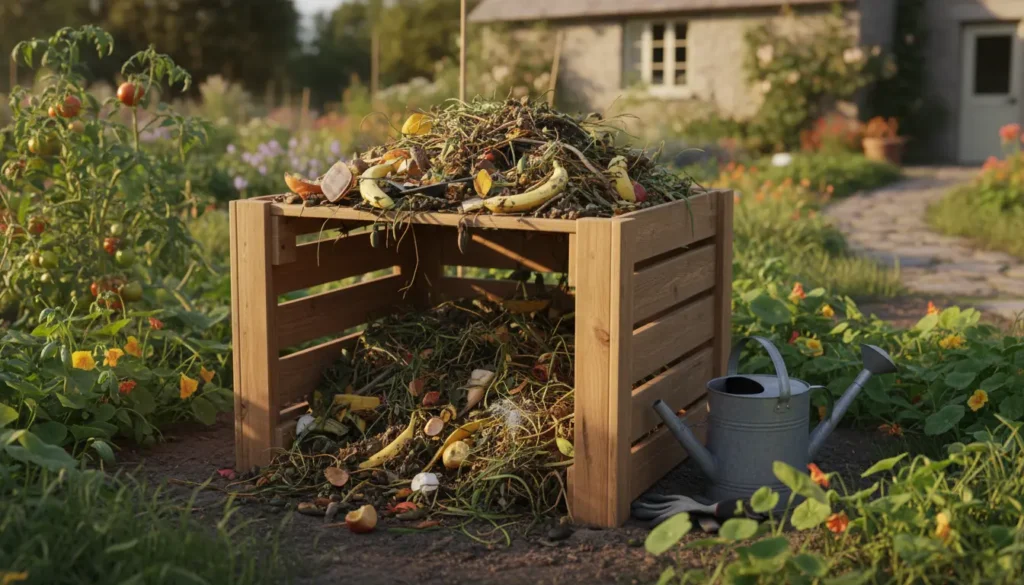
Composting at home turns kitchen and garden waste into nutrient rich soil for plants. This guide explains simple, practical steps to set up, run, and troubleshoot a home composting system. It is aimed at beginners who want clear instructions and realistic expectations.
Home Composting Basics
Home composting relies on natural decomposition by microbes and other organisms. The process needs a balance of carbon rich materials, nitrogen rich materials, moisture, and airflow.

Understanding the balance helps you speed up decomposition and avoid common problems like odors or pests.
Why Home Composting Matters
Composting reduces household waste, lowers methane emissions from landfills, and returns nutrients to soil. It improves soil structure, water retention, and supports healthier plants.
Small changes at home can cut weekly trash volume and create free, high quality soil amendment.
Choosing a Compost Bin for Home Composting

Select a bin based on available space, budget, and how quickly you want finished compost. Options include tumblers, stationary bins, and simple open piles.
- Tumbler: Faster turning, contained, good for small yards.
- Stationary bin: Affordable, simple, can be homemade from pallets or wire.
- Open pile: Lowest cost, works for large yards but looks less tidy.
Place the bin on soil or a base that allows drainage and access for worms and microbes.
What to Compost in Home Composting
Mix carbon rich materials (browns) with nitrogen rich materials (greens) for a balanced pile. Aim for roughly a 3:1 ratio by volume of browns to greens.
- Browns: Dry leaves, shredded paper, cardboard, straw.
- Greens: Vegetable scraps, coffee grounds, fresh grass clippings.
- Avoid: Meat, dairy, oily foods, diseased plants, and pet waste for most home systems.
Examples of Good Combinations

If you have a lot of fresh grass clippings, add more shredded paper or dry leaves to balance moisture and carbon. For kitchen scraps, add a layer of dry leaves or cardboard to reduce flies and odors.
How to Start Home Composting Step by Step
Follow these simple steps to start composting at home without guesswork:
- Choose a location with partial shade and good drainage.
- Assemble or buy a bin sized for your household waste volume.
- Begin with a 3 to 4 inch base of coarse browns like twigs for airflow.
- Add alternating layers of greens and browns, keeping the 3:1 ratio.
- Moisten as you build the pile; it should feel like a damp sponge.
- Turn or mix the pile every 1 to 2 weeks to add oxygen and speed decomposition.
Within a few months you will see dark, crumbly compost if conditions stay balanced.
Maintaining Home Composting
Maintenance is simple but important. Monitor moisture, temperature, and the balance of materials. Regular turning prevents odor and compaction.
Tools that help include a pitchfork, a compost thermometer, and a shredder or scissors for cutting large items.
Troubleshooting Home Composting
If the pile smells bad, it is likely too wet or contains too many greens. Add more browns and turn the pile to introduce air.
If decomposition is slow, check that the pile is moist and has enough nitrogen. Chop large pieces and mix more green material.
- Problem: Flies or fruit flies — Solution: Bury food scraps under browns and cover the top with dry material.
- Problem: Rodents — Solution: Avoid meat and dairy, use a closed bin or hardware cloth, and keep the bin sealed.
- Problem: Pile too dry — Solution: Add water while turning and add more greens.
Well managed compost can reach temperatures of 120 to 160 degrees Fahrenheit, killing many weed seeds and pathogens. Smaller, cool composting still produces great soil but takes longer.
Home Composting Case Study
Case study: A two person household in a small yard started with a 65 gallon tumbler. They used coffee grounds, vegetable scraps, and shredded cardboard. They turned the tumbler twice weekly and added dry leaves in autumn.
Within 4 months they had usable compost that replaced half the purchased potting mix for container vegetables. Weekly trash volume dropped noticeably during the first season.
Tips from the Case Study
- Consistency matters more than perfect ratios. Add some browns with greens each time.
- Small appliances like a hand shredder speed up decomposition by reducing particle size.
- Mark a calendar reminder to turn the pile to build a simple routine.
Advanced Home Composting Options
Once comfortable, try vermicomposting with worms for indoor or balcony composting. Bokashi systems ferment kitchen waste for later burial in soil or a traditional pile.
These methods fit different lifestyles and space limits, and they can be combined with outdoor composting.
Final Checklist for Successful Home Composting
- Choose the right bin for your space and volume.
- Balance browns and greens, keep the pile moist and aerated.
- Turn regularly and monitor for pests or odors.
- Use finished compost to enrich garden beds, pots, and lawns.
Home composting is a practical step toward reducing waste and improving garden health. Start small, keep the system simple, and adjust as you learn what works for your household.



