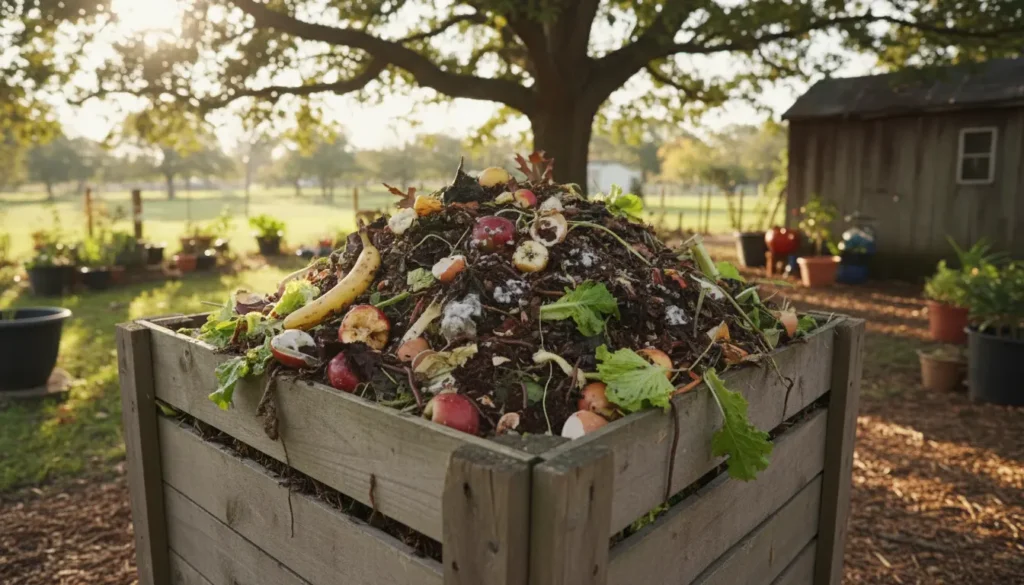
Why Start Composting at Home
Composting at home reduces waste, improves garden soil, and saves money on fertilizer. It transforms kitchen and yard scraps into a valuable soil amendment.
This guide explains simple steps to start composting at home and maintain a healthy pile without complicated tools or experience.
Choose a Compost System for Your Home

Pick a system that fits your space and lifestyle. Common options include open piles, tumblers, and stationary bins.
- Open pile: Low cost, needs a dedicated outdoor spot and occasional turning.
- Compost bin: Neat and contained; good for small yards.
- Tumbler: Faster decomposition and easy turning, ideal for households that want quick results.
Placement and Size
Place your compost on bare soil if possible to allow organisms to move in. Choose a size between 3×3 feet and 5×5 feet for balanced microbial activity.
A bin should be accessible year-round and close to the kitchen for convenience.
What to Compost at Home

Compost works best when you balance green and brown materials. Greens provide nitrogen and browns provide carbon.
- Greens: vegetable scraps, fruit peels, coffee grounds, fresh grass clippings.
- Browns: dry leaves, shredded paper, cardboard, straw, small wood chips.
Aim for roughly a 2 to 1 ratio of browns to greens by volume. Too many greens cause odor; too many browns slow decomposition.
How to Start Composting at Home
Starting is mostly about layering and moisture control. Follow these steps to get a balanced pile.
- Start with a layer of coarse browns like small branches for airflow.
- Add alternating layers of greens and browns, aiming for a 2:1 brown to green ratio.
- Moisten each layer so it feels like a wrung-out sponge.
- Turn the pile every 1 to 2 weeks with a pitchfork or tumbler to aerate it.
- After several weeks to months, the compost will darken and smell earthy when ready.
Kitchen Routine

Keep a small covered container for scraps in your kitchen and empty it daily into the outdoor bin. Freezing meat scraps is possible, but avoid adding meat or dairy to small backyard piles to reduce pests.
Compost can reduce household waste by up to 30 percent. Finished compost improves soil water retention and can reduce the need for chemical fertilizers.
Maintenance Tips for Healthy Compost
Regular checks and small adjustments keep your compost active. Focus on moisture, aeration, and particle size.
- Moisture: Keep the pile damp but not soggy. Add water in dry periods and add dry browns if too wet.
- Aeration: Turn the pile to introduce oxygen. A lack of oxygen causes bad smells.
- Particle size: Chop large pieces so microbes can break them down faster.
- Temperature: A hot center indicates active decomposition; cold piles decompose slowly.
Speeding Up Composting
To accelerate composting, shred materials, maintain the brown to green balance, and turn more often. Compost accelerators or mature compost as inoculant can help but are not required.
Troubleshooting Common Problems
Many issues have simple fixes. Identify the symptom and apply the right correction.
- Bad odor: Add more browns and turn the pile to add air.
- Fruit flies: Bury food scraps under a layer of browns or cover the bin lid.
- Pile too dry: Add water and fresh greens, then turn to distribute moisture.
- Pile too wet and slimy: Add dry browns and increase turning frequency.
Real-World Example: Small Urban Household Case Study
Case study: A two-person apartment household used a 50-liter tumbler on a balcony. They stored kitchen scraps in a sealed container and emptied it every other day.
Within four months, they produced usable compost by maintaining a 2:1 brown to green ratio and turning the tumbler weekly. They used the finished compost to feed potted herbs and vegetables, reducing store-bought soil amendments.
Using Finished Compost at Home
Finished compost is dark, crumbly, and smells earthy. Use it as a soil amendment, potting mix additive, or mulch top layer.
- Mix 10 to 25 percent compost into garden beds to improve structure.
- Top-dress lawns or plants with a thin layer of compost for gradual nutrient release.
- Make compost tea by steeping compost in water for a foliar feed or soil drench.
Final Checklist to Start Composting at Home
- Choose a bin type that fits your space and lifestyle.
- Balance greens and browns and keep the pile moist.
- Turn the pile regularly to maintain aeration.
- Monitor and troubleshoot odors, pests, and moisture.
- Harvest and use finished compost in your garden or containers.
Composting at home is accessible and rewarding. With a simple routine and a few checks each week, beginners can turn waste into a resource that benefits plants and the planet.



