Why start a vegetable garden
Starting a vegetable garden gives you fresh produce, saves money, and improves mental well-being. It also lets you control how food is grown and reduces grocery trips.
This guide explains how to start a vegetable garden with clear, practical steps you can follow in a weekend or over a season.
How to Start a Vegetable Garden: Step-by-Step

These steps focus on small spaces and containers as well as ground beds. Follow them in order to avoid common beginner mistakes.
1. Choose a good site to start a vegetable garden
Pick a location that gets at least 6 hours of direct sun per day. Vegetables need sunlight for leaf and fruit growth.
Check soil drainage: dig a small hole and fill with water. If it drains within a few hours, drainage is good. If it stays soggy, consider raised beds.
2. Decide bed type and size

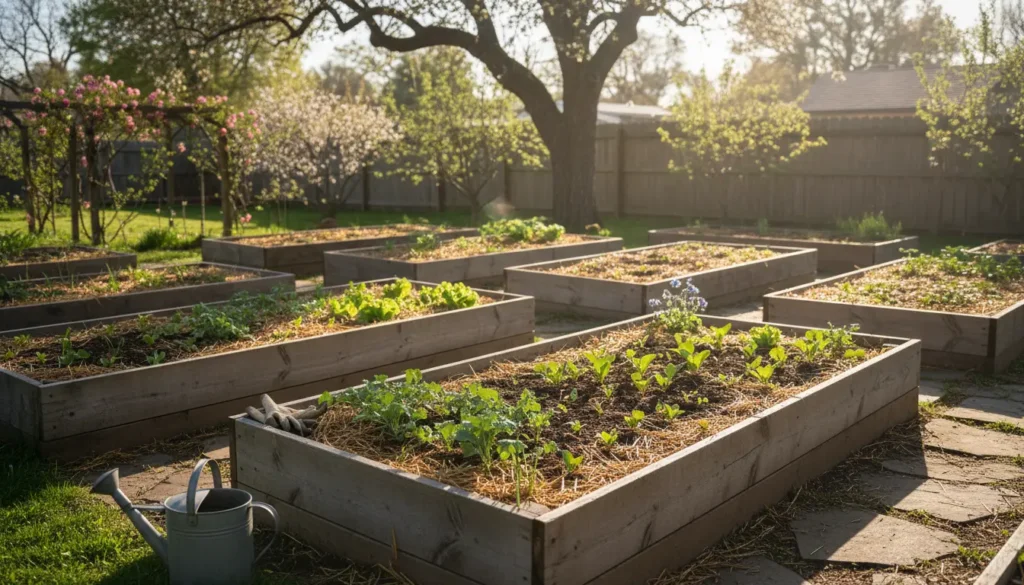
Options include in-ground beds, raised beds, and containers. Raised beds warm earlier and give better drainage for many soils.
- Small yard: one or two 4×8 ft raised beds.
- Balcony or patio: containers 12–18 inches deep for most vegetables.
- Large area: multiple beds or rows spaced for access.
3. Test and improve soil
Test soil pH with a kit or local extension service. Most vegetables prefer pH 6.0–7.0.
Improve soil by adding organic matter: compost, aged manure, or leaf mold. Mix 2–3 inches of compost into the top 6–8 inches of soil.
4. Choose the right crops to start a vegetable garden

Pick crops that match your climate, space, and experience level. Fast, reliable choices for beginners include lettuce, radishes, green beans, tomatoes, and herbs.
Start small: focus on 4–6 types of vegetables the first season to learn care and timing.
5. Plan planting schedule and layout
Use seed packets or plant tags to find planting dates for your zone. Plan succession plantings for continuous harvests.
Layout tips:
- Place tall plants (tomatoes, corn) on the north side of beds to avoid shading smaller crops.
- Use companion planting and spacing guidelines from seed suppliers.
6. Planting: seeds vs transplants
Some crops are easy from seed (carrots, beans, peas), while others are simpler as transplants (tomatoes, peppers).
Follow depth and spacing instructions closely. Firm soil gently after planting and water to settle roots.
7. Watering and mulching
Water deeply and less often to encourage strong roots. Aim for even soil moisture rather than frequent light sprinkling.
Mulch with straw, shredded leaves, or wood chips to conserve moisture, suppress weeds, and moderate soil temperature.
8. Feeding and ongoing care
Monitor plant health and add balanced fertilizer or compost tea when plants need a boost. Avoid overfeeding leafy crops right before harvest.
Keep an eye out for pests and disease; handpick pests, use row covers, or apply organic controls as needed.
Maintenance Checklist to Keep Your Garden Productive
- Water deeply 2–3 times per week depending on weather.
- Mulch and replenish as organic matter decomposes.
- Harvest regularly to encourage production.
- Rotate crops each year to reduce pests and nutrient depletion.
Tomato plants can produce fruit within 60–90 days from transplant in warm conditions. Proper pruning and support can increase yields and reduce disease risk.
Real-World Example: A Small Raised Bed Case Study
Maria had a 4×8 ft raised bed and started her vegetable garden in spring. She planted three tomato plants, two rows of lettuce, a row of bush beans, and herbs along the edge.
By mid-summer she harvested salad greens weekly and tomatoes from July through September. Her initial investment in soil and seedlings paid off with reduced grocery lettuce purchases and fresh summer tomatoes.
Key numbers from Maria’s first season:
- Raised bed cost (materials and soil): $150 one-time
- Estimated produce value saved: $200–$300 over the season
- Time commitment: 3–4 hours per week at peak season
Troubleshooting Common Problems When You Start a Vegetable Garden
Slow growth
Check soil fertility and water. Add compost and ensure plants get adequate sunlight.
Yellow leaves
Possible causes include nutrient deficiency, overwatering, or disease. Test soil and adjust watering.
Pests
Identify the pest before acting. Use netting, traps, or organic sprays when necessary. Encourage beneficial insects with flowers like marigolds or alyssum.
Simple Seasonal Timeline to Start a Vegetable Garden
- Early spring: prepare beds and sow cool-season crops (peas, radishes, lettuce).
- Late spring: transplant warm-season crops (tomatoes, peppers).
- Summer: maintain watering, harvest, and succession plant fall crops.
- Fall: clean up, add compost, and plan crop rotation.
Final Tips to Start a Vegetable Garden Successfully
- Start small and expand after one season.
- Keep a simple journal with planting dates and yields to learn for next year.
- Use local resources such as extension services for region-specific advice.
With modest planning and regular care, you can start a vegetable garden that supplies fresh produce and becomes easier each year. Use these steps, adjust for your climate, and treat the first season as a learning experience.



