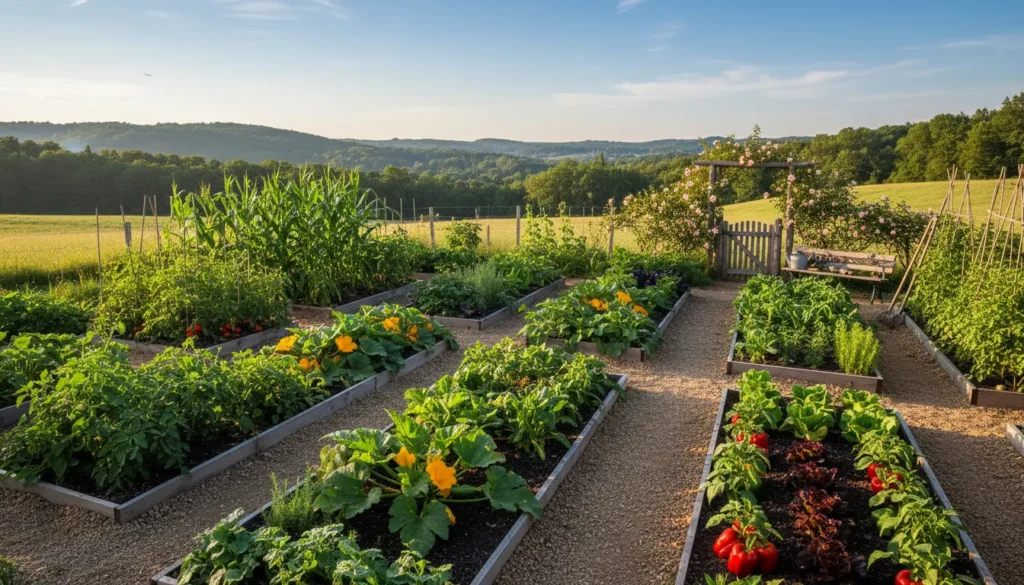
What Is Companion Planting in Vegetable Gardens?
Companion planting is the practice of growing specific plants together to improve growth, reduce pests, and make efficient use of space. It relies on plant interactions—chemical, physical, and ecological—to benefit the garden as a whole.
This method is practical for small and large vegetable gardens because it focuses on plant behavior rather than chemical inputs. Companion planting can be integrated into crop rotation and organic pest control routines.
Benefits of Companion Planting for Vegetable Gardens

Companion planting offers several measurable benefits for vegetable gardeners. These advantages are most visible over multiple seasons when plant relationships become established.
- Pest reduction: Some plants repel or confuse pests naturally.
- Improved pollination: Flowering companions attract bees and beneficial insects.
- Soil health: Legumes fix nitrogen, benefiting neighboring crops.
- Space efficiency: Tall and low plants can share beds to maximize yield.
How to Plan Companion Planting for Your Vegetable Garden
Start with a simple layout and expand once you see results. Use these steps to plan companion planting effectively.
1. Define garden goals
Decide whether your priority is higher yield, pest control, or biodiversity. Clear goals help you select the right companion combinations.
2. Map plant needs

Create a small chart with sunlight, water, and feeding requirements for every vegetable. Only pair plants with similar basic needs to avoid creating stress.
3. Choose proven pairings
Start with well-documented companions before experimenting. This reduces risk and gives visible early wins.
4. Maintain rotation and diversity
Rotate families each season and include a variety of plant types—roots, leafy greens, legumes, and flowers—to keep pests and diseases in check.
Common Companion Planting Pairs for Vegetable Gardens

Below are practical pairings that work in many climates. Use them as building blocks for bed designs.
- Tomatoes + Basil: Basil can deter tomato pests and may improve flavor.
- Carrots + Onions: Onions help repel carrot fly while taking little space.
- Corn + Beans + Squash (Three Sisters): Corn provides support, beans fix nitrogen, and squash suppresses weeds.
- Lettuce + Chives: Chives may deter aphids and take minimal space near lettuce rows.
- Peppers + Marigolds: Marigolds attract beneficial insects and can reduce nematodes.
Practical Layout Examples
Arrange rows and blocks based on plant height and root depth. Here are two simple layouts suitable for small plots.
- Row mix: Alternate tall and short crops (e.g., tomato row with interplants of basil and marigold).
- Block mix: Group by family and include a flowering edge to attract pollinators (e.g., beans, carrots, lettuce together with a marigold border).
Real-World Example: Small Backyard Case Study
Case: A 10 by 12 foot backyard bed in USDA Zone 7 used companion planting for one season. The gardener planted three tomato plants with basil and marigold interplants, a side bed for carrots and onions, and a small patch of beans climbing a corn stalk.
Results: Tomatoes produced 20% more marketable fruit than the previous season without chemical pest control. Carrot losses to carrot fly dropped from about 30% to 10% after adding alternating rows of onions. Bean yields matched expectations and helped reduce the need for synthetic fertilizer.
Takeaway: Small, intentional changes—like adding basil around tomatoes and planting onions near carrots—produced measurable gains in yield and pest reduction in one season.
Troubleshooting and Tips for Companion Planting
Companion planting is not a one-size-fits-all solution. Use these tips to refine your approach.
- Monitor and record: Keep a garden log of plant pairings and outcomes each season.
- Avoid incompatible neighbours: For example, keep potatoes away from tomatoes to reduce disease risk.
- Use flowers strategically: Planting strips of calendula or nasturtium can attract beneficials and distract pests.
- Start small: Test one bed or a few blocks before converting your entire garden plan.
Seasonal Adjustments for Companion Planting
Adjust companions as seasons change. Fast-growing greens can be planted early between slower starters like tomatoes.
Mulch and drip irrigation help maintain consistent soil moisture for mixed plantings. Consider succession planting to keep beds productive all season.
Some companion plants release volatile compounds that repel pests up to several feet away. For example, strong-scented herbs like rosemary and mint can reduce insect damage when planted near vulnerable crops.
Simple Example Planting Plan (4 x 4 Bed)
This compact plan fits a 4×4 raised bed and demonstrates companion principles.
- Corner 1: Cherry tomato + basil between plants.
- Corner 2: Leaf lettuce in shade of tomato (early season).
- Corner 3: Carrots with onions on the edge.
- Corner 4: Bush beans with marigolds as border.
This mix provides pest confusion, pollinator flowers, nitrogen fixation, and efficient use of vertical and horizontal space.
Final Thoughts on Companion Planting in Vegetable Gardens
Companion planting is a practical, low-cost approach to improving vegetable garden health and yields. It works best when combined with good soil management and observation-based adjustments.
Start with a few proven pairings, keep records, and scale up as you learn what works in your microclimate. Over time, companion planting can become a reliable part of a resilient, productive garden system.



