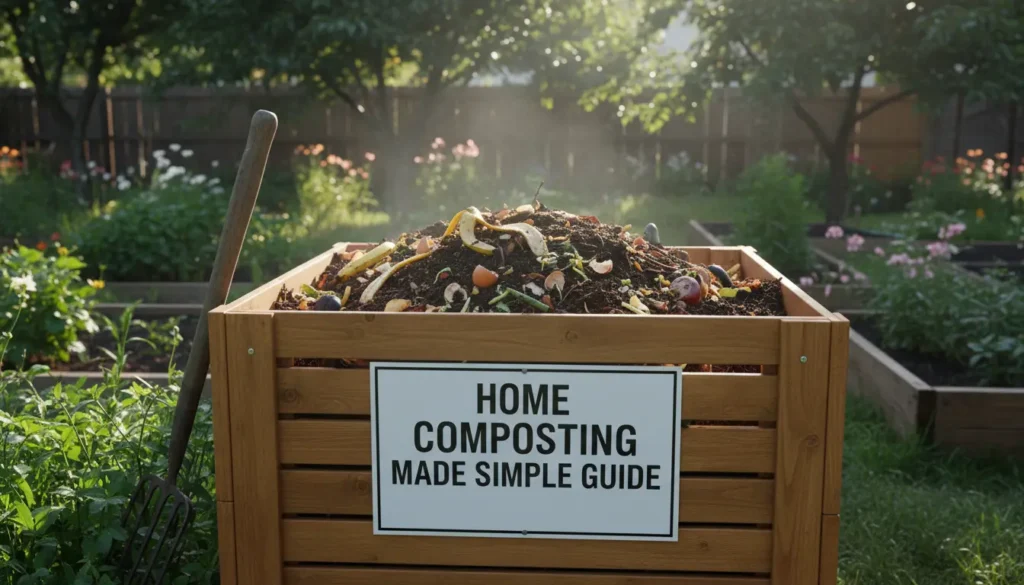
Home composting turns kitchen scraps and yard waste into nutrient-rich soil. This guide explains simple, practical steps to start composting at home and keep the process working well.
Why Home Composting Matters
Composting reduces landfill waste and lowers household carbon footprint. It also produces free soil amendment that improves garden health and water retention.
Even small households can compost effectively with the right approach and tools.
How to Start Home Composting
Choose a method that fits your space and lifestyle before collecting materials. Options include a backyard bin, tumbler, worm bin, or a small bokashi system for kitchens.
Place the bin in a partly shaded area with good drainage. Accessibility matters—put the bin where you will use it and add scraps regularly.
Collecting Materials for Home Composting
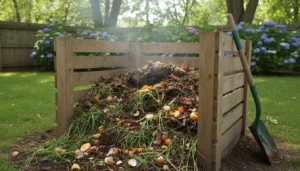
Compost works best when you balance “greens” and “browns.” Greens provide nitrogen and browns provide carbon.
- Greens: fruit and vegetable scraps, coffee grounds, fresh grass clippings
- Browns: dry leaves, shredded paper, cardboard, straw
- Do not add: meat, dairy, oily foods, diseased plant material, or pet waste
Layering and Maintenance
Start with a layer of coarse browns for airflow, then alternate greens and browns in 2–6 inch layers. Aim for a roughly 1:2 ratio of greens to browns by volume.
Turn or aerate the pile every 1–2 weeks to supply oxygen and speed decomposition. Keep the pile as moist as a wrung-out sponge.
Troubleshooting Common Home Composting Problems
Bad odors usually mean too much moisture or too many greens. Add more browns and turn the pile to introduce air.
Slow decomposition can be solved by adding smaller pieces, increasing moisture slightly, or adding a scoop of finished compost to introduce microbes.
Pests and Flies
To reduce pests, bury food scraps in the center of the pile and avoid meat and fatty foods. Use a closed tumbler or a securely sealed bin in urban areas.
Fine mesh or a layer of straw on top can deter flies from laying eggs in the compost surface.
Composting diverts up to 30% of household waste from landfills and can cut your kitchen waste by half within three months of consistent use.
Home Composting Systems Compared
Choose a system based on space, effort, and speed needs. Each has pros and cons worth considering.
- Open bin: Low cost, works well in large yards, requires regular turning.
- Tumbler: Faster, easier to turn, more contained, usually smaller capacity.
- Vermicompost (worms): Great for apartments, produces rich castings, needs warm stable conditions.
- Bokashi: Fermentation system that handles cooked and dairy scraps, requires secondary composting in soil.
Which One Should You Pick?
If you have a small yard, a tumbling bin is convenient and tidy. If you live in an apartment, vermicomposting is efficient and low-odor.
Consider how much time you will spend maintaining the system and how quickly you want finished compost.
Real-World Example: A Small Urban Household Case Study
Case study: A two-person apartment in San Diego started vermicomposting with a stacked worm bin and a small countertop collection container.
Within three months they diverted about 60 pounds of kitchen waste from the trash and produced enough worm castings to enrich their potted herbs. They report minimal odor, weekly maintenance of 10–15 minutes, and healthier plants.
Using Finished Compost from Home Composting
Finished compost is dark, crumbly, and smells like earth. Use it as a top dressing, mix into potting soil, or work into garden beds in spring and fall.
Apply a thin layer around plants or mix 1 part compost to 3 parts soil for container gardens.
Tips to Speed Up Compost Maturation
- Chop or shred materials before adding them.
- Keep the pile warm and moist but not soggy.
- Turn the pile regularly and maintain a balance of greens and browns.
Final Checklist to Start Home Composting Today
- Choose a compost system that fits your space and lifestyle.
- Collect greens and browns and keep a small countertop bin with a lid.
- Monitor moisture, turn the pile, and troubleshoot odors or pests.
- Harvest finished compost when it looks dark and crumbly and use it in your garden.
Home composting is a low-cost, high-impact habit that benefits your garden and the planet. Start small, keep it simple, and adjust as you learn what works for your home.