Starting a vegetable garden can seem overwhelming, but small steps make steady progress. This guide gives practical, actionable steps to plan, plant, and maintain a productive vegetable garden for beginners.
Why Start a Vegetable Garden
A vegetable garden provides fresh produce, exercise, and a chance to learn seasonal cycles. It can lower grocery costs and improve meal quality when planned thoughtfully.

Even a small plot or container garden can produce enough greens, herbs, and a few vegetables to make a difference. The key is consistent care and simple planning.
Planning Your Vegetable Garden
Good planning sets the stage for success in your vegetable garden. Start by choosing a location, deciding the garden size, and selecting crops that match your climate and taste.
Choose the Right Location for Your Vegetable Garden
Select a spot that gets at least 6 hours of direct sunlight for most vegetables. If sunlight is limited, choose leafy greens and herbs that tolerate partial shade.

Consider water access and visibility; a garden closer to the house is easier to monitor and maintain.
Select Vegetables for Beginners
Start with easy, fast-yielding crops that tolerate some mistakes. Good beginner choices include:
- Tomatoes (bush varieties)
- Lettuce and salad greens
- Radishes
- Zucchini or summer squash
- Herbs: basil, parsley, chives
Pick 3–6 crops for your first season to keep the workload manageable.
Soil, Water, and Sunlight for a Healthy Vegetable Garden
Soil quality is the foundation of a productive vegetable garden. Invest time in improving soil texture and fertility before planting.
Soil Preparation
Test your soil pH if possible; most vegetables prefer slightly acidic to neutral soil (pH 6.0–7.0). Add compost to boost organic matter and structure.
For heavy clay or sandy soils, mix in well-rotted compost and a balanced organic fertilizer to improve drainage and nutrient holding capacity.
Watering and Irrigation
Vegetables need consistent moisture. Water deeply and less frequently to encourage strong roots rather than shallow, frequent watering.
Use drip irrigation or soaker hoses where possible; they conserve water and keep foliage drier, reducing disease risk.
Planting and Maintenance in Your Vegetable Garden
Planting at the right time and following basic maintenance routines keeps the vegetable garden productive. Use seeds or young transplants depending on the crop.
Planting Tips
Follow spacing and depth instructions on seed packets or plant labels. Crowded plants increase disease pressure and reduce yields.
Stagger plantings (succession planting) for continuous harvests—plant small batches every 2–3 weeks for lettuces and radishes.
Weeding, Mulching, and Feeding
Mulch around plants with straw, leaves, or wood chips to suppress weeds, retain moisture, and moderate soil temperature. Keep mulch a couple inches away from stems.
Side-dress with compost or a balanced fertilizer mid-season for heavy feeders like tomatoes and squash. Monitor plant vigor and adjust feeding accordingly.
Pest and Disease Control
Start with prevention: rotate crops, remove debris in fall, and encourage beneficial insects with flowers and diverse plantings. Inspect plants weekly for early signs of pests.
Use physical controls first—hand-picking, row covers, and traps. Choose organic sprays as a last resort and follow label directions carefully.
Harvesting and Crop Rotation in Your Vegetable Garden
Harvesting at the right time improves flavor and encourages continued production. Check seed packets for harvest windows and sample produce often.
Practice simple crop rotation: avoid planting the same family (e.g., nightshades) in the same spot each year to reduce disease buildup and nutrient depletion.
Companion planting—like growing basil near tomatoes—can improve flavor and reduce some pests naturally. Even small plant pairings make a difference.
Simple Calendar for a Beginner Vegetable Garden
- Early spring: Prepare soil, plant peas, radishes, and spinach.
- Late spring: Transplant tomatoes, peppers, and squash after frost risk.
- Summer: Mulch, water deeply, and harvest continuously.
- Fall: Plant fall greens and remove spent crops; add compost for winter.
Small Real-World Example: A Raised Bed Garden Case Study
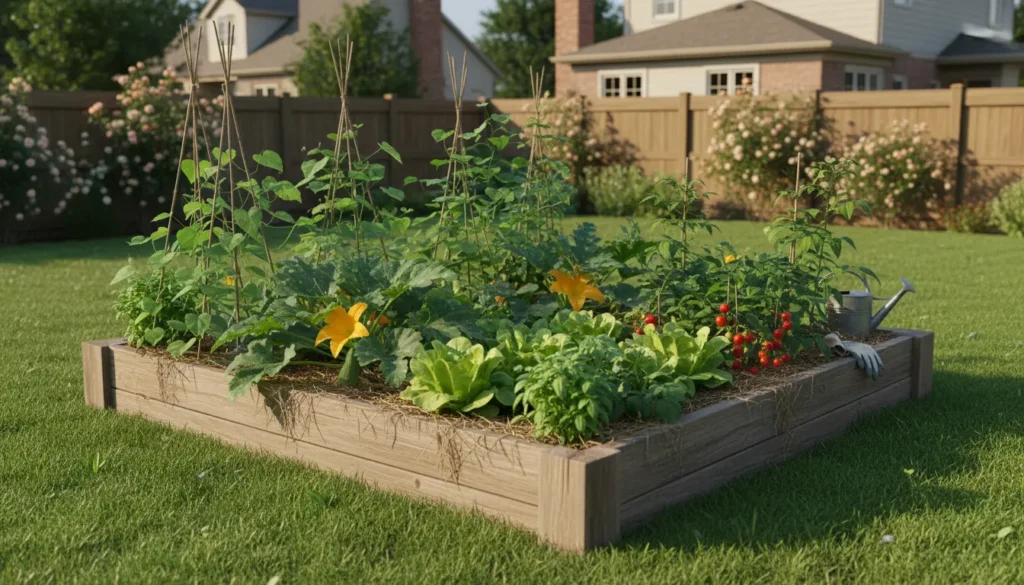
Sarah, a city renter, started a 4×4 ft raised bed on her balcony. She filled it with a store-bought vegetable mix and planted cherry tomatoes, basil, and lettuce.
Within eight weeks she harvested continuous salad greens and later a dozen cherry tomato harvests. Regular watering, weekly trimming of spent leaves, and a layer of straw mulch kept pests low.
Her key lessons: start small, choose compact varieties, and keep a simple maintenance routine.
Quick Checklist Before You Start Your Vegetable Garden
- Pick a sunny spot with water access.
- Decide bed size and prepare soil with compost.
- Choose easy crops for your climate and space.
- Plan a watering schedule and get basic tools.
- Monitor, mulch, and harvest regularly.
Starting a vegetable garden is a learning process that rewards patience and observation. Begin with a small, well-planned area and expand as you gain confidence. With basic soil care, regular watering, and simple pest management, a beginner can enjoy fresh, homegrown vegetables in a single season.



