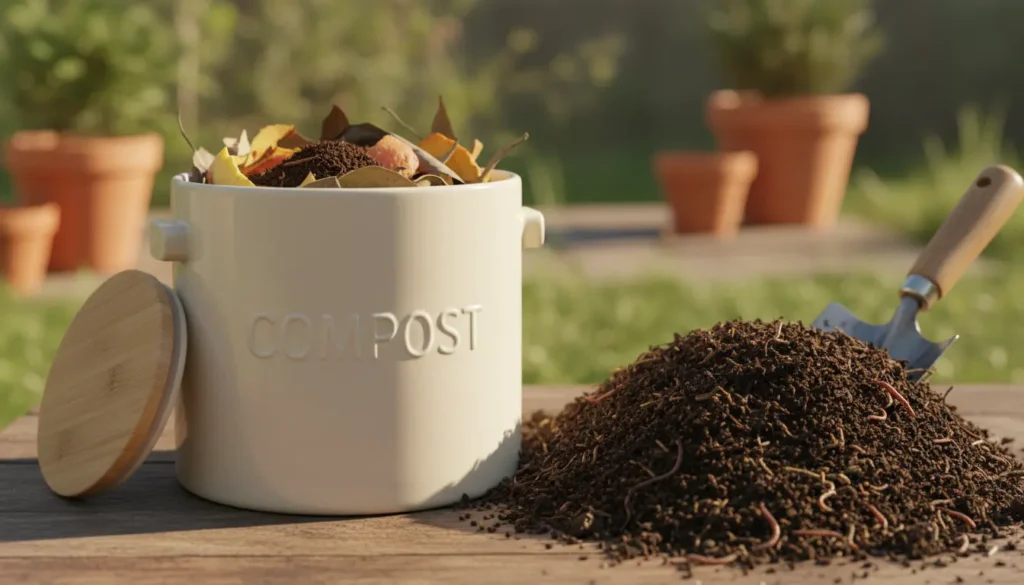
Home Composting for Beginners: What You Need to Know
Home composting turns kitchen scraps and yard waste into nutrient-rich soil. It reduces garbage, saves money, and improves garden health. This guide explains simple steps to start composting at home.
Why Start Home Composting
Composting reduces the amount of organic waste sent to landfills, where it produces methane. It also creates compost you can use to enrich soil, retain moisture, and support plant growth. These benefits make composting practical and sustainable.
Basic Materials for Home Composting

To compost successfully you need three things: organic materials, air, and moisture. Collect a mix of green and brown materials and a container to hold the pile.
- Green materials: fruit and vegetable scraps, coffee grounds, grass clippings.
- Brown materials: dry leaves, shredded paper, cardboard, straw.
- Optional: a compost bin or tumbler for tidy composting, a pitchfork or aerator for turning.
Setting Up Your Compost Bin
Choose a bin size that fits your space. Small bins work for balconies and apartments, while larger bins suit backyards. Place the bin on soil or a well-draining surface to allow worms and microbes to enter.
Where to Place the Bin
Place the bin in a partly shaded area to avoid drying out or overheating. Good airflow and easy access are important. If using an indoor kitchen bin, empty it into the outdoor bin at least twice a week.
How to Start a Compost Pile

Start with a layer of coarse brown materials like small branches or straw to improve drainage. Then alternate layers of green and brown materials. Aim for roughly a 2:1 ratio of brown to green by volume.
- Layer 1: 2–3 inches of brown material
- Layer 2: 1–2 inches of green material
- Repeat until the bin is full
Keep the pile moist like a wrung-out sponge. If it looks dry, add water. If it smells, add more brown material and turn the pile.
Turning and Maintaining the Pile
Turning introduces oxygen to speed up decomposition. For a hot, fast compost, turn the pile every 1–2 weeks. For slower, low-maintenance composting, turn monthly.

Keep the pile balanced and monitor temperature if you want faster results. Hot compost reaches 130–150°F (55–65°C) and breaks down materials quickly. Home piles can also decompose well at lower temperatures with more time.
Troubleshooting Common Problems
- Bad smell: Too much green material or too wet. Add brown materials and turn the pile.
- Pile too dry: Add water and more green material to rehydrate microbes.
- Pests: Use a closed bin, bury food scraps under a brown layer, and avoid meat or dairy.
- Slow breakdown: Chop materials smaller, increase turning, and check moisture.
Household food scraps and yard waste make up nearly 30% of municipal solid waste. Composting these materials keeps them out of landfills and returns nutrients to the soil.
Using Your Finished Compost
Finished compost looks dark, crumbly, and smells earthy. Sift out any large pieces and use the compost in garden beds, pots, or as a top dressing for lawns. Compost improves soil structure and provides slow-release nutrients.
- Mix compost into garden beds at a rate of 1–3 inches before planting.
- Top-dress houseplants with a thin layer once or twice a year.
- Use as part of potting mixes to improve moisture retention.
Case Study: Small Apartment Composting Success
Anna, a city renter, used a 5-gallon kitchen bin and a small outdoor compost tumbler. She kept a 2:1 brown-to-green ratio and turned the tumbler weekly. After six months she reduced her kitchen waste by 40% and produced enough compost to refresh three potted herbs.
Her key actions were collecting coffee grounds and veggie scraps daily, shredding cardboard, and layering with dry leaves. The small changes made composting manageable in a small space.
Tips for Composting Success
- Chop or shred large pieces to speed decomposition.
- Keep a kitchen caddy to collect scraps and reduce trips outside.
- Avoid meat, dairy, and oily foods to discourage pests.
- Record what you add and how often you turn to learn what works for your setup.
Final Checklist for Home Composting Beginners
- Choose an appropriate bin for your space.
- Collect a steady supply of brown and green materials.
- Maintain moisture and turn to add air.
- Monitor and adjust to prevent odors and pests.
- Use finished compost in gardens and pots.
Starting home composting is a small habit that yields lasting benefits. With a simple setup and a little attention, anyone can transform kitchen and yard waste into valuable soil amendment.



