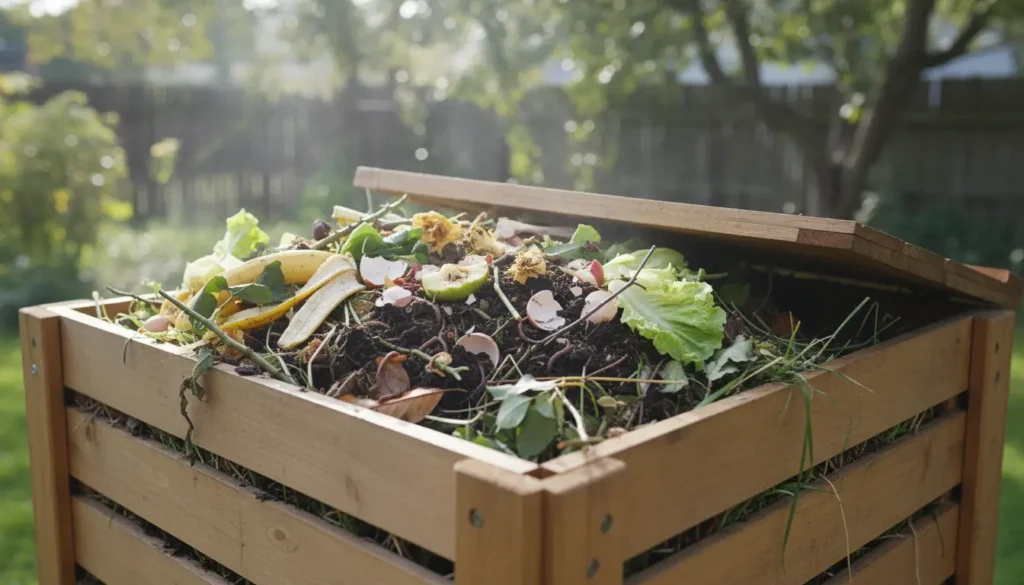
Home composting is a simple, low-cost way to recycle kitchen scraps and yard waste into nutrient-rich material for your garden. This guide gives practical, step-by-step instructions for beginners so you can start composting with confidence.
Why Home Composting Matters
Composting reduces household waste and lowers methane emissions from landfills. It returns valuable nutrients to soil and improves water retention and structure in garden beds.

For many households, composting cuts trash volume by up to 30 percent. That means fewer pickups and a smaller environmental footprint.
Food scraps and yard waste make up nearly 30 percent of residential trash. Composting these materials can greatly reduce landfill burden and create valuable soil amendment.
How to Start Home Composting
Starting home composting requires three basic decisions: the system, what you will compost, and how you will manage the pile. Follow these practical steps.
Choose a Compost System for Home Composting

Select a method that fits your space and routine. Popular options include open piles, tumblers, and stationary bins.
- Open pile: low cost, ideal for larger yards, requires turning.
- Compost bin: tidy and contained, comes in plastic or wooden models.
- Tumbler: easy to turn, faster decomposition, good for small spaces.
What to Compost: Green and Brown Materials
Balance is key. Combine nitrogen-rich greens with carbon-rich browns for efficient decomposition.
- Greens (nitrogen): fruit and vegetable scraps, coffee grounds, fresh grass clippings.
- Browns (carbon): dry leaves, straw, shredded paper, cardboard.
- Do not add: meat, dairy, fats, diseased plants, or pet waste.
How to Layer and Turn Your Compost
Start with a coarse base of twigs for airflow. Alternate layers of greens and browns about 3 to 4 inches thick.

Turning introduces oxygen and speeds up decomposition. For active systems, turn the pile every 1 to 2 weeks. For passive piles, turning every month is adequate.
Maintain Moisture and Temperature for Home Composting
Compost should feel like a wrung-out sponge: damp but not soaking. Add water when dry and cover during heavy rain to prevent saturation.
Temperature matters. A hot pile (130–160°F) breaks down material quickly. Cooler piles decompose slower but still produce quality compost.
Common Problems and Troubleshooting Home Composting
Beginners often encounter odors, pests, or slow breakdown. Here are targeted fixes.
- Smelly compost: add more browns and turn the pile to aerate.
- Pests like rodents: avoid meat and dairy, use a closed bin, and bury food scraps in the pile.
- Slow decomposition: chop materials smaller, keep moisture balanced, and maintain a 25–30:1 carbon-to-nitrogen ratio.
When Is Compost Ready?
Finished compost is dark, crumbly, and earthy-smelling. Most home systems produce usable compost in 2–6 months, depending on management and season.
Using Your Finished Compost
Incorporate finished compost into garden beds, mix with potting soil, or use as a top dressing around trees and shrubs. Aim for a 1–3 inch layer when topdressing, and mix 10–30 percent compost into garden soil for planting.
Small Real-World Example: A Two-Person Household Case Study
Anna and Marcus started composting in a 65-gallon tumbler behind their townhouse. They added kitchen scraps and shredded leaves, aiming for balanced layers.
After three months of turning twice weekly, their tumbler produced dark, crumbly compost. They used it to topdress potted vegetables and noticed improved plant vigor within a season.
Key takeaways: choose a manageable bin, maintain moisture, and turn regularly for faster results.
Tips to Succeed at Home Composting
- Shred or chop large items to speed decomposition.
- Keep a small kitchen bin with a lid for daily scraps and empty into the main system every few days.
- Record additions and turning schedule to track progress and troubleshoot.
- Use a thermometer to monitor temperature for active hot composting.
Final Checklist for Home Composting Beginners
- Pick a suitable compost system for your space.
- Balance greens and browns, and avoid prohibited items.
- Maintain moisture and aeration.
- Turn regularly and harvest finished compost when ready.
Home composting is an easy, practical step toward reducing waste and improving garden soil. Start small, be consistent, and adjust as you learn what works in your climate and household.



