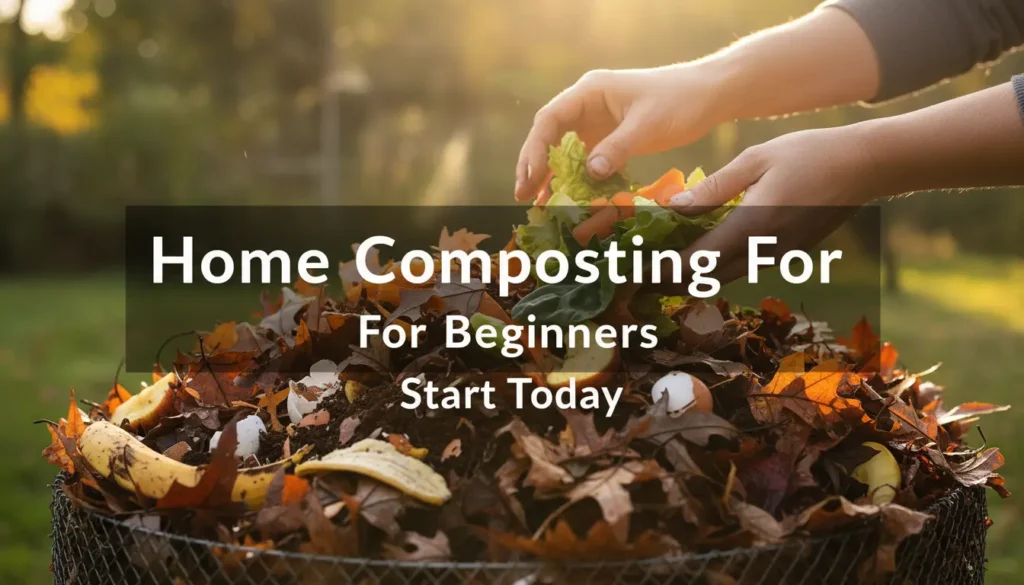
Why Start Home Composting
Home composting reduces kitchen and yard waste while producing nutrient-rich soil for plants. It cuts landfill waste and can improve garden productivity.
Beginners find composting practical because it needs little space, low cost, and delivers visible results within months.
What You Need for Home Composting
Start with a simple setup: a bin or pile, a mix of materials, and basic tools. You do not need specialized equipment to begin.
Essential items include a compost bin or DIY container, a garden fork or pitchfork, and a place with good drainage and partial shade.
Materials to Add
- Greens: fruit and vegetable scraps, coffee grounds, fresh grass clippings.
- Browns: dried leaves, shredded paper, straw, cardboard pieces.
- Water: enough moisture to feel like a wrung-out sponge.
Materials to Avoid
- Meat, dairy, oily foods, and bones (attract pests).
- Diseased plants, invasive weeds with seeds, and pet waste.
- Large woody branches without chipping.
Step-by-Step Home Composting Guide
Follow these clear steps to build and maintain a healthy compost pile. Each step helps balance decomposition and control odor.
1. Choose a Composting Method
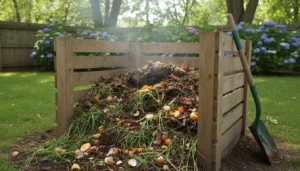
Options include a simple backyard pile, a turned bin, a tumbler, or vermicomposting with worms. Choose based on space and how fast you want finished compost.
Backyard piles are easy and low-cost; tumblers speed up turning; worm bins work well indoors or on patios.
2. Build Your Pile or Bin
Start with a layer of coarse browns like small branches or straw for airflow. Add alternating layers of greens and browns about 2–4 inches thick.
Keep the pile at least 3 feet wide and 3 feet tall when possible to maintain heat for faster decomposition.
3. Balance Greens and Browns
Aim for a carbon-to-nitrogen balance by mixing roughly 2–3 parts browns to 1 part greens by volume. Too many greens cause odors; too many browns slow decomposition.
If the pile smells, add more browns. If it is dry and slow, add water and more greens.
4. Turn and Monitor
Turn the pile every 1–3 weeks to add oxygen and speed up composting. Use a fork to mix outer material into the center.
Monitor temperature: a warm pile (100–140°F or 40–60°C) indicates active composting. If it cools, turning and adding greens can revive it.
5. Harvest and Use Your Compost
Finished compost is dark, crumbly, and smells earthy. Sift out larger undecomposed pieces and return them to the pile.
Use finished compost as a soil amendment, top dressing, or mix into potting soil. It improves structure, water retention, and nutrient content.
Composting can reduce household waste by up to 30 percent and cut methane emissions from landfills. Even small amounts of kitchen scraps make a difference.
Common Problems and Quick Fixes for Home Composting
Problems are usually easy to fix with small adjustments to moisture, airflow, or material mix. Here are common issues and solutions.
- Bad odor: Add dry browns, turn the pile, and reduce fresh food scraps until balanced.
- Slow decomposition: Chop materials smaller, increase moisture slightly, and add more greens or a nitrogen boost.
- Pests or rodents: Avoid meat and dairy, bury food scraps inside the pile, or use a closed bin or tumbler.
- Too dry: Water the pile lightly and cover with a tarp or add green material.
Small Real-World Example
Case study: A two-person household started a 3×3 foot compost bin in spring. They added weekly kitchen scraps and yard trimmings, turning the pile every two weeks.
After four months they harvested 45 liters of dark compost and used it to top-dress garden beds. Their house waste to landfill dropped noticeably and plants showed improved growth the next season.
Practical Tips for Home Composting Success
- Chop or shred materials to speed decomposition.
- Keep a small countertop bin with a tight lid for collecting kitchen scraps.
- Layer materials rather than dumping large amounts of one type.
- Use finished compost as a mulch or soil conditioner, not as straight potting mix for seedlings.
Final Thoughts on Home Composting
Home composting is a low-effort, high-impact habit. It reduces waste, improves soil health, and connects you to natural cycles.
Start small, monitor your pile, and adjust as you learn. Over time you will produce steady compost to support a healthier garden and household.