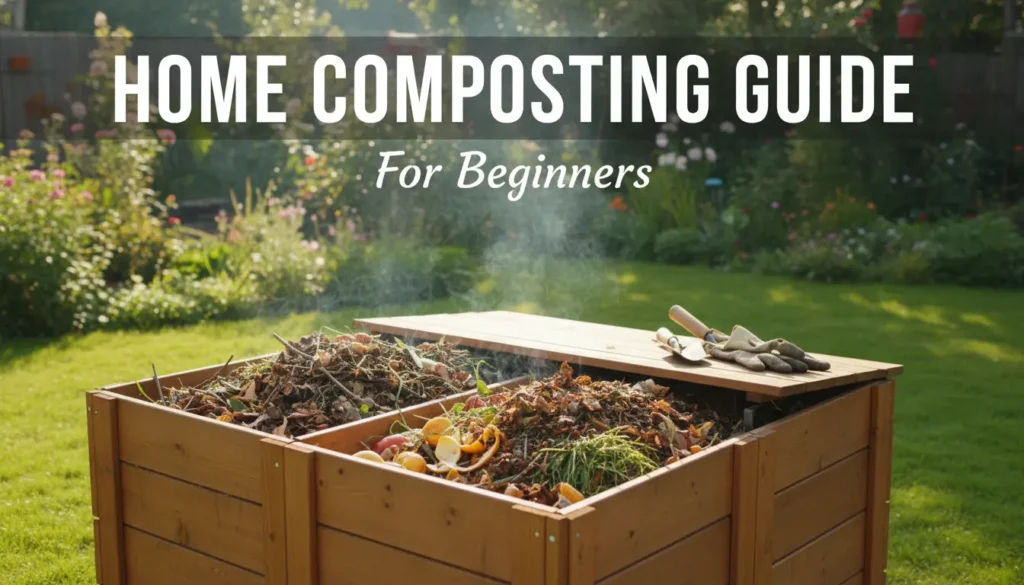
Why Home Composting Matters
Home composting reduces household waste, improves soil, and returns nutrients to your garden. It also lowers the methane emissions from landfills and saves money on fertilizers.
This guide gives clear, actionable steps to start and maintain a compost system at home, whether you have a backyard or a small balcony.
Choose the Right Compost Method
Pick a compost method that fits your space and lifestyle. The two common options are a traditional compost bin and vermicomposting (worm composting).
- Traditional bin: Good for yards and larger volumes of yard and kitchen waste.
- Vermicompost (worms): Ideal for indoor or small-space composting and faster results for smaller amounts.
Where to Place Your Compost
Place the bin on bare soil if possible to allow beneficial organisms to move freely. If using a container, ensure drainage and airflow. Partial shade helps keep moisture balanced in hot climates.
What to Compost: Browns and Greens
Compost works best when you balance carbon-rich “browns” and nitrogen-rich “greens.” A good rule is roughly 3 parts browns to 1 part greens by volume.
- Greens (nitrogen): vegetable scraps, coffee grounds, fresh grass clippings, tea bags.
- Browns (carbon): dry leaves, straw, shredded paper, cardboard, sawdust (small amounts).
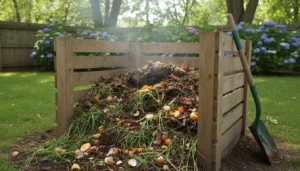
Avoid meat, dairy, diseased plants, and oily foods in standard backyard compost. These attract pests and slow decomposition.
Step-by-Step: Starting Your Compost Pile
Follow these steps to build a compost pile that breaks down efficiently and avoids odors.
- Prepare the base: Lay coarse material like twigs to aid drainage.
- Add layers: Alternate thin layers of greens and thicker layers of browns.
- Moisten: The pile should be as damp as a wrung-out sponge.
- Turn: Aerate the pile every 1–2 weeks to speed decomposition.
- Monitor: Check temperature and moisture; adjust as needed.
Temperature and Time
Active compost piles heat up to 120–150°F (49–66°C) and break down faster. Smaller, cooler piles decompose more slowly but still produce good compost in several months.
Maintenance: Turning, Moisture, and Troubleshooting
Regular maintenance keeps the process healthy. Turning the pile every 1–2 weeks preserves oxygen flow and reduces odors.
Maintain moisture like a squeezed sponge. If too dry, add water and greens; if too wet, add browns and increase turning.
Common Problems and Fixes
- Foul odor: Add more browns and turn the pile to increase airflow.
- Slow decomposition: Chop material smaller and add nitrogen-rich greens.
- Pests: Avoid meat and dairy; use a closed bin and bury kitchen scraps under browns.
Using Finished Compost
Finished compost is dark, crumbly, and earthy-smelling. Use it to improve garden soil, as a top dressing for lawns, or mixed into potting soil.
- Vegetable beds: Mix 1–3 inches of compost into the top 6–8 inches of soil.
- Potted plants: Use up to one-third compost in potting mixes.
- Mulch: Apply a thin layer around established plants to conserve moisture.
Small-Space Options and Vermicomposting
For apartments, vermicomposting uses red wiggler worms in a shallow bin to turn kitchen scraps into nutrient-rich castings. It needs minimal space and is odor-free when managed properly.
Key tips for vermicompost: keep the bedding moist, add small chopped scraps, and avoid citrus and oily foods in large amounts.
Case Study: A Six-Month Backyard Compost Project
Maria, a city homeowner, started a 3×3 ft compost bin with a mix of leaves and kitchen scraps. She turned the pile every 10 days and monitored moisture.
After six months she produced about 4 cubic feet of finished compost. Her garden beds showed improved water retention and healthier plants the following season.
Outcome highlights:
- Reduced weekly trash by one small bag.
- Used compost on vegetable beds to improve yield.
- Minimal time commitment: about 10–20 minutes per week.
Quick Checklist to Start Composting
- Choose a bin or worm box suitable for your space.
- Collect both browns and greens before starting.
- Keep pile moist and turn regularly.
- Watch for pests and odors; adjust materials as needed.
- Harvest finished compost when it is dark and crumbly.
Final Tips for Successful Home Composting
Start small and learn by doing. Keep materials varied and chopped to speed breakdown. Join a local gardening group or online forum to share tips and troubleshoot problems.
With a little routine maintenance, home composting becomes an easy habit that benefits both your garden and the environment.