Why start a microgreens business
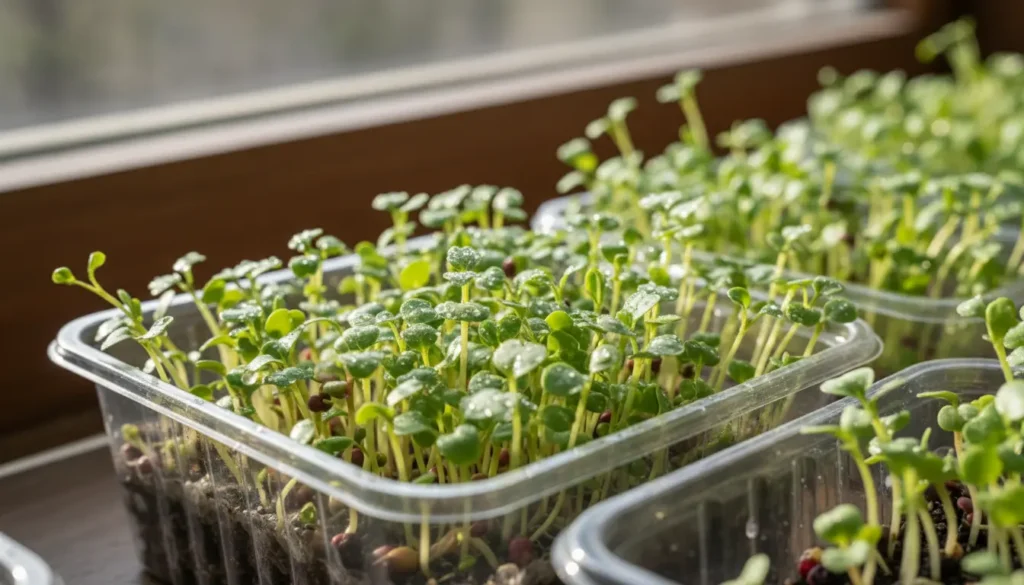
Microgreens are young vegetable greens harvested just after the first true leaves develop. They need little space and fast turnaround, making a microgreens business a low-cost option for new food entrepreneurs.
Demand is steady from restaurants, grocery stores, farmers markets, and direct-to-customer sales. With good systems, growers can see profit within a few months.
How to plan your microgreens business
Planning reduces trial-and-error and speeds profitability. Start with a simple business plan that covers production scale, customer channels, and basic finances.
Choose the right microgreens crops
Crop choice affects growth time, yield, and margin. Popular varieties include sunflower, pea shoots, radish, arugula, and basil.
- Fast growers (7–10 days): radish, mustard
- High yield and popular (8–12 days): sunflower, peas
- Premium flavor crops (10–18 days): basil, cilantro
Set up a growing area for a microgreens business
You can use a small room, garage, or closet. Key needs are clean shelving, stable light, and ventilation.
- Shelving or racks to maximize vertical space
- LED grow lights on timers for consistent light
- Trays, growing medium (coconut coir, hemp mats), and seeds
Supply sourcing and startup costs
Initial costs are mainly lights, racks, trays, seeds, and a small workspace. Budget carefully and buy quality seeds to reduce crop failure.
- Low-cost starter setup: $500–$1,500
- Scaled setup for small wholesale: $2,000–$10,000
Growing process for a microgreens business
Consistency is everything. A repeatable workflow shortens learning time and improves quality.
Step-by-step growing routine
- Prepare trays with media and broadcast seeds evenly.
- Cover seeds (if needed) for germination, then expose to light after 2–4 days.
- Water from the bottom or mist carefully to avoid mold.
- Harvest when first true leaves appear, usually 7–18 days.
Quality control tips
Check trays daily for moisture and signs of mold. Keep records of planting dates, germination rates, and yields to improve processes.
Microgreens can contain up to 40 times more nutrients by weight than mature leaves of the same plant, making them attractive to health-focused buyers.
Harvest, packaging, and storage for a microgreens business
Harvesting and presentation impact perceived value. Use clean scissors or knives and handle greens gently.
- Package in ventilated clamshells or resealable bags with absorbent liners.
- Label with harvest date, variety, and storage instructions.
- Store refrigerated at 34–40°F (1–4°C) to extend shelf life to 7–14 days, depending on variety.
Marketing and sales channels for a microgreens business
Diversify sales to reduce risk. Start local and expand as capacity allows.
- Farmers markets for direct customer feedback
- Local restaurants and chefs for steady orders and larger quantities
- Subscription boxes or CSA add-ons for recurring revenue
- Online direct sales or local delivery for consumer convenience
Pricing strategy
Price by weight or package. Consider cost per tray, labor, packaging, and delivery when setting margins. Many microgreens sell between $20–$60 per pound retail, but local markets vary.
Regulations and food safety for a microgreens business
Check local food regulations for selling fresh produce. Some jurisdictions require a food handler permit, commercial kitchen access, or labeling standards.
Implement simple food safety practices: clean tools, sanitized trays, and separate storage for harvested greens.
Small case study: Backyard microgreens to weekly farmers market
Maria started growing microgreens in a 6-foot shelving unit in her garage. She planted small batches three times a week and sold them in 4-oz clamshells at a nearby farmers market.
Within three months she built a regular customer base of home cooks and one local café. Her startup cost was about $800 and she reached break-even in the fourth week after consistent sales and improved yields.
Key lessons from Maria’s run: focus on two reliable varieties, maintain strict cleanliness, and use samples to introduce new customers to more unusual flavors.
Tips to scale a microgreens business
- Standardize trays and planting density to predict yields.
- Record labor hours to price labor accurately.
- Build relationships with chefs; they will give repeat orders and feedback.
- Consider contracting a co-packer or shared commercial kitchen when demand exceeds home capacity.
Starting a microgreens business requires planning, consistent growing practices, and attention to quality. With low startup costs and fast crop cycles, it’s an attractive option for small-scale entrepreneurs who want to enter the fresh produce market.