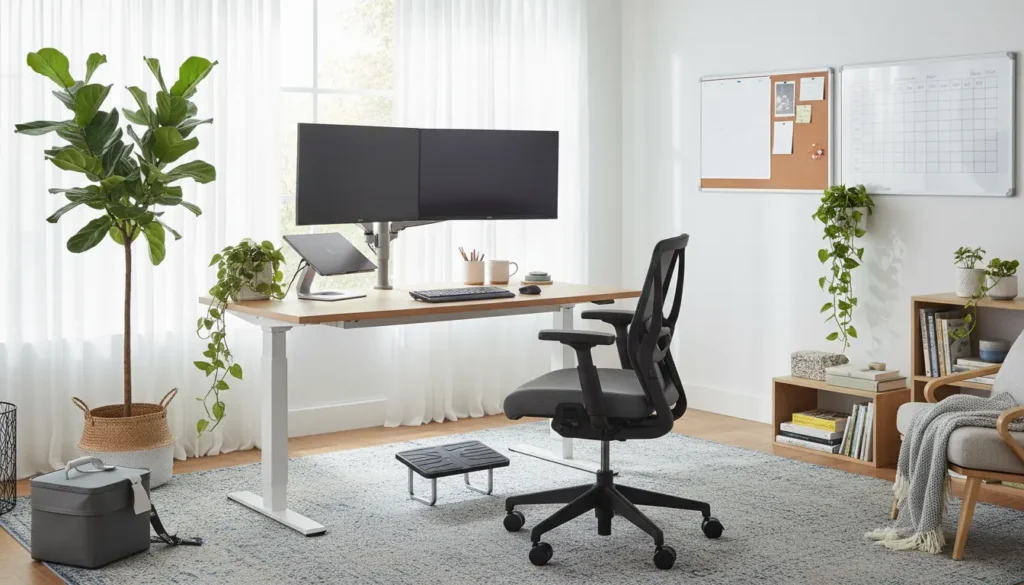
Why Home Office Ergonomics Matters
Many people working from home report neck, shoulder, and lower back pain within weeks of switching locations. Proper home office ergonomics reduces discomfort and improves focus over long workdays.
This guide gives clear, practical steps you can use right away to set up a healthier workspace. Follow the checklist and the short routines to feel the benefits quickly.
Home Office Ergonomics Basics

Ergonomics is about fitting your workspace to your body. Small changes to desk height, monitor position, and chair support make a big difference.
Start with three priorities: neutral spine, comfortable viewing angle, and easy reach for commonly used items.
Setting Up Your Desk for Home Office Ergonomics
Desk height affects wrist position and shoulder tension. Aim for elbows at roughly a 90-degree angle while typing.
- Adjust desk or keyboard tray so forearms are parallel to the floor.
- Keep frequently used objects within 18 inches to avoid reaching.
- Use a stable surface; avoid makeshift desks that wobble or slope.
Monitor and Screen Placement for Home Office Ergonomics

Position your monitor so the top of the screen is at or slightly below eye level. This helps maintain a neutral neck position.
Place the monitor about an arm’s length away; adjust distance for comfortable reading without leaning forward.
Chair and Seating for Home Office Ergonomics
Choose a chair that supports the natural curve of your lower back. Lumbar support is critical to prevent slouching.
- Seat height: feet flat on the floor or on a footrest.
- Seat depth: 2–4 inches between the edge of the seat and the back of your knees.
- Armrests: set so shoulders are relaxed and elbows rest lightly.
Movement and Breaks for Home Office Ergonomics

Sitting still for long periods undermines any ergonomic setup. Movement is part of good ergonomics.
Use simple micro-breaks and posture checks to reduce stiffness and improve circulation.
Simple Movement Routine for Home Office Ergonomics
- Every 30 minutes: stand and stretch for 30–60 seconds.
- Every 60–90 minutes: take a 5-minute walk or do light exercises.
- Perform a quick posture check: ears over shoulders, shoulders over hips.
Accessories That Support Home Office Ergonomics
Some affordable accessories can solve common problems fast. Invest in items that match your pain points and budget.
- External keyboard and mouse to avoid hunching over a laptop.
- Adjustable monitor stand or laptop riser for proper screen height.
- Footrest if your feet do not reach the floor comfortably.
- Document holder to reduce neck twisting when referencing papers.
Did You Know? Short, regular breaks and a few ergonomic adjustments can reduce musculoskeletal pain by over 50% for many remote workers.
Simple Checklist for Home Office Ergonomics
Use this checklist to audit your workspace in under 10 minutes. Make one change at a time and test for comfort.
- Monitor top at eye level and an arm’s length away.
- Elbows at 90 degrees while typing; wrists neutral.
- Lower back supported; seat height allows feet flat on the floor.
- Items you use often are within easy reach.
- Sufficient lighting to reduce eye strain; avoid glare on screens.
- Planned movement breaks every 30–90 minutes.
Real-World Example: Small Changes, Big Results
Case study: A marketing manager working from home reported daily neck pain after three months. She followed a structured ergonomic audit.
She raised her laptop to eye level, added an external keyboard, and set a timer to stand every 30 minutes. Within two weeks her neck pain decreased markedly and focus improved.
Her setup changes were low cost but consistent: a laptop riser, wireless keyboard, and a supportive chair cushion. The result was measurable comfort and fewer breaks from pain.
Troubleshooting Common Home Office Ergonomics Problems
If pain continues after adjustments, pay attention to patterns and tasks that trigger discomfort. Small task changes may be needed.
For persistent pain, consult a physical therapist or ergonomist who can recommend personalized changes.
Quick fixes for common issues
- Wrist pain: try a negative-tilt keyboard tray or reset wrist posture.
- Upper back tension: add mini-breaks for shoulder rolls and neck stretches.
- Eye strain: increase font size, reduce screen glare, and follow 20-20-20 rule (every 20 minutes look 20 feet away for 20 seconds).
Conclusion: Maintain and Improve Your Home Office Ergonomics
Good ergonomics is an ongoing process, not a one-time fix. Regularly reassess your setup and adjust as tasks or equipment change.
Use the checklist, follow short movement routines, and prioritize small changes. Those steps will deliver measurable improvements in comfort and productivity.



