Why Start a Home Vegetable Garden
Growing vegetables at home saves money and gives you fresh produce. A home vegetable garden also reduces food miles and lets you control growing methods.
This guide covers planning, soil, planting, watering, pest control and a short case study you can copy.
Plan Your Home Vegetable Garden

Choosing the right spot is the first step. Most vegetables need 6–8 hours of direct sun, good drainage and easy access to water.
Assess space and light
Check sunlight at different times of day for a week before planting. Note shady spots and areas that collect water.
Decide the layout
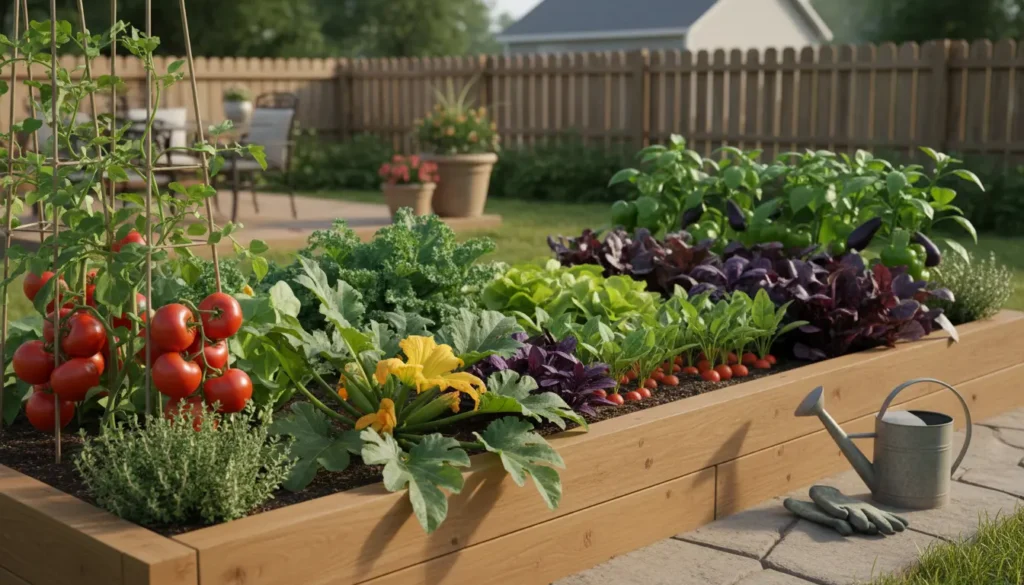
Use raised beds, containers or in-ground rows depending on space. Raised beds warm earlier in spring and offer easier soil control.
- Small balconies: containers or vertical planters.
- Medium yards: 2–4 raised beds, 3–4 feet wide for easy access.
- Large yards: dedicated rows with crop rotation planning.
Prepare Soil and Beds for a Home Vegetable Garden

Good soil is the foundation of a productive garden. Aim for loose, fertile soil with plenty of organic matter.
Test and improve soil
Do a simple pH and nutrient test using a home kit or local extension service. Most vegetables prefer pH 6.0–7.0.
If soil is heavy clay or sandy, add compost, aged manure, or coconut coir to improve texture and nutrient retention.
Build raised beds or amend in-ground soil

Raised beds need 6–12 inches of good soil mix at minimum. For in-ground gardens, dig in 2–4 inches of compost before planting.
Choose Vegetables and Planting Schedule
Select vegetables suited to your climate and the season. Check frost dates for your area and plan around them.
Easy starter vegetables
- Lettuce and spinach – fast, cool-season crops.
- Tomatoes and peppers – warm-season favorites in containers or beds.
- Radishes and carrots – good for succession planting.
- Zucchini and bush beans – high yield, low effort.
Use a simple planting calendar: cool-season crops in early spring or late summer, warm-season crops after the last frost.
Watering and Maintenance for a Home Vegetable Garden
Consistent watering encourages steady growth and reduces disease. Aim for even moisture rather than frequent shallow watering.
Watering rules
- Water early in the morning to reduce evaporation and fungal risk.
- Use drip irrigation or soaker hoses to deliver water to roots.
- Mulch with straw or wood chips to retain moisture and suppress weeds.
Routine care
Check beds weekly for weeds, pests and nutrient needs. Pinch or prune leggy seedlings to encourage bushier growth.
Pest Control and Disease Prevention
Start with prevention: healthy plants are less susceptible to pests and disease. Use integrated pest management (IPM) to keep problems small.
IPM basics
- Monitor plants regularly and remove affected leaves immediately.
- Encourage beneficial insects like ladybugs and lacewings with flowers.
- Use physical barriers such as row covers for brassicas and early season pests.
- Apply organic treatments like insecticidal soap or neem oil only when needed.
Harvesting and Storage
Harvest vegetables at their peak for best flavor. Regular harvesting can also encourage more production, especially with crops like beans and zucchini.
Simple storage tips
- Leafy greens: wash, spin dry, and store in a sealed container with a paper towel.
- Tomatoes: ripen on the counter; refrigerate only when fully ripe to extend life.
- Root vegetables: remove greens and store roots in a cool, dark place.
Small Case Study: Sarah’s Balcony Home Vegetable Garden
Sarah had 6 square feet of balcony space and wanted fresh salad greens. She chose container gardening and started with lettuce, cherry tomatoes and herbs.
She used a high-quality potting mix, placed containers where they received morning sun, and installed a small drip line. Within six weeks she had regular salad harvests and reduced store-bought lettuce purchases by half.
Key takeaways: choose the right containers, start with easy crops and water consistently.
Quick Troubleshooting for Your Home Vegetable Garden
Yellow leaves can indicate nutrient deficiency or overwatering. Check soil moisture and consider a balanced organic fertilizer if needed.
Stunted growth may be due to compacted soil or root crowding. Thin crowded seedlings and loosen soil around young plants.
When to ask for help
- If pests appear in large numbers despite controls.
- If diseases spread quickly across several plants.
- When yields are consistently poor despite proper care.
Final Checklist to Start Your Home Vegetable Garden
- Choose a sunny spot and plan your layout.
- Test and improve soil or use quality potting mix for containers.
- Select easy vegetables suited to your season and space.
- Water consistently, mulch, and monitor for pests.
- Harvest regularly and store produce properly.
Starting a home vegetable garden takes planning and routine care, but the rewards include fresher food and a satisfying hobby. Begin small, learn from each season, and expand as you gain confidence.



