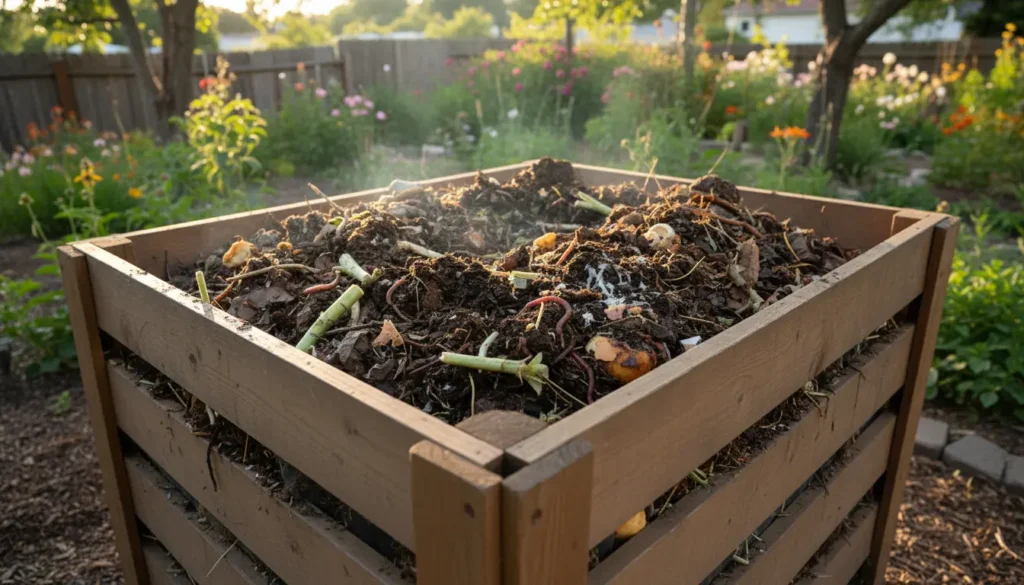
Why Home Composting for Beginners Matters
Composting turns kitchen and yard waste into valuable soil. For beginners, composting reduces trash, improves garden soil, and saves money on fertilizers.
This guide gives clear, practical steps you can follow regardless of space or experience. No jargon, just actions you can take today.
Choosing a Method: Home Composting for Beginners

Select a method that fits your space and time. Common choices include a simple pile, a closed tumbler, or a small bin for patios.
- Compost pile: Best for larger yards and when you have plenty of material.
- Compost bin: Contained, tidy, and good for small yards.
- Tumbler: Faster decomposition and easier turning, but higher cost.
Basic Supplies for Home Composting for Beginners
You need a bin or designated area, a pitchfork or turning tool, and a container for kitchen scraps. Start simple and improve as you go.
What to Compost: Green and Brown Materials
Composting works by mixing nitrogen-rich “greens” and carbon-rich “browns.” Balance is the key to a healthy pile.
- Greens (nitrogen): Fruit and vegetable scraps, coffee grounds, fresh grass clippings.
- Browns (carbon): Dry leaves, straw, shredded paper, cardboard.

A good rule is about 3 parts browns to 1 part greens by volume. Adjust if the pile smells or is too dry.
Starting Your Pile: Step-by-Step
Follow these simple steps to build a productive compost pile.
- Choose a spot with good drainage and partial sun.
- Start with a 4–6 inch layer of coarse browns (twigs or straw) to help airflow.
- Add alternating layers of greens and browns, aiming for the 3:1 ratio of browns to greens.
- Moisten each layer so it feels like a wrung-out sponge — not soggy, not dry.
- Cover the pile with a lid or tarp if rain is heavy to avoid waterlogging.
Turning and Maintenance
Turning introduces oxygen and mixes materials, speeding decomposition. For a bin, turn every 1–2 weeks. For a pile, turn monthly.

Watch moisture and odor. A healthy pile smells earthy. If it smells rotten, add more browns and turn. If it is dry, add water and some greens.
Troubleshooting Common Issues for Home Composting for Beginners
- Bad smell: Too much green or too wet. Add browns and turn the pile.
- Slow breakdown: Pile too dry or lacking nitrogen. Add greens and water.
- Pests: Avoid meat, dairy, and oily foods. Use a closed bin or bury scraps in the center.
- Flies: Cover fresh scraps with browns or soil and keep the pile covered.
How Long Until Compost Is Ready?
Compost can be ready in 2–6 months depending on method and maintenance. Frequent turning and optimal moisture shorten the time.
Finished compost is dark, crumbly, and smells earthy. Large unbroken pieces of material indicate it needs more time.
Using Finished Compost
Use finished compost to enrich garden beds, topdress lawns, or mix into potting soil. It improves soil structure, water retention, and microbial life.
- Vegetable beds: Mix 1–2 inches of compost into the top 6 inches of soil before planting.
- Mulch: Apply a 1–2 inch layer around established plants to conserve moisture.
- Potting mix booster: Blend 10–20% compost into potting mixes for seedlings.
Small Real-World Example
Case study: A city apartment dweller started a 20-gallon compost bin on their balcony. They collected fruit and vegetable scraps and mixed shredded paper as browns.
After four months of weekly turning and regular moisture checks, they produced enough compost to refresh two balcony planters. They cut their kitchen waste by half and saw healthier tomato plants the next season.
Composting can reduce household waste by up to 30 percent and lower methane emissions from landfills. Even small bins make a measurable difference.
Quick Tips for Success in Home Composting for Beginners
- Chop larger items to speed decomposition.
- Keep a small container with a lid for kitchen scraps to avoid pests.
- Add a handful of garden soil to introduce microbes to your pile.
- Record when you add layers so you can track progress and timing.
What Not to Compost
Avoid meat, dairy, pet waste, diseased plants, and oils. These items attract pests or create odors.
Final Steps to Get Started Today
Decide on a bin type, gather brown and green materials, and pick a spot. Begin by building a small layered pile and monitor moisture and smell.
Composting is forgiving. Start small, learn by doing, and adjust as you gain experience. Within months you’ll turn waste into garden gold.



