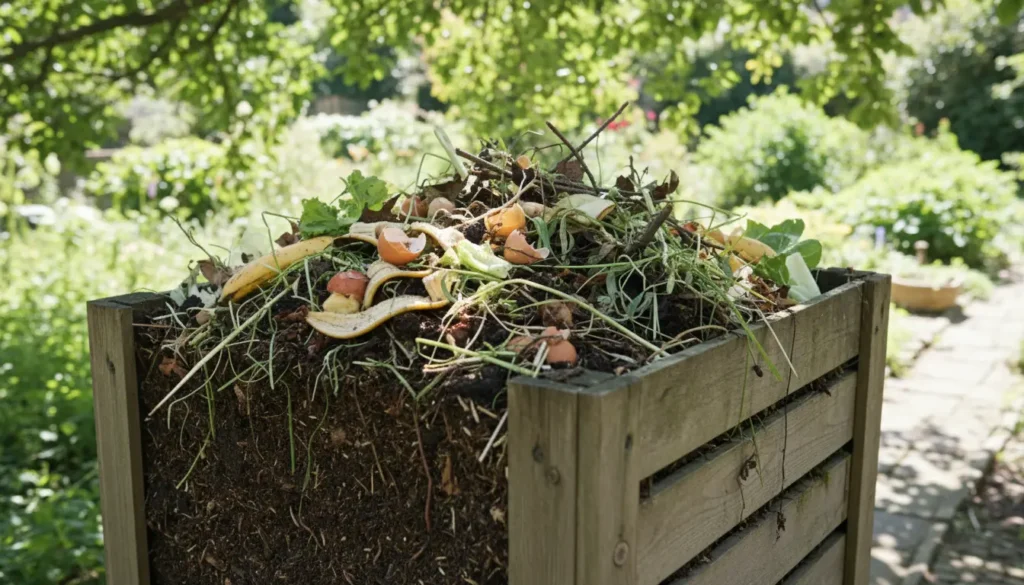
Why Home Composting Matters
Home composting turns kitchen scraps and yard waste into a valuable soil amendment. It reduces landfill trash and improves garden health without expensive inputs.
This guide explains simple steps to start and maintain a home composting system that works for apartments, small yards, and family gardens.
Basic Principles of Home Composting

Composting is the controlled breakdown of organic matter by microbes. To keep that process healthy you balance four elements: carbon, nitrogen, oxygen, and moisture.
- Carbon rich materials (browns): dry leaves, cardboard, straw.
- Nitrogen rich materials (greens): vegetable scraps, coffee grounds, fresh grass clippings.
- Oxygen: turn or aerate the pile periodically.
- Moisture: keep the pile damp but not soggy.
Choosing a Compost System
Choose a system that matches your space and routine. Most systems fall into three categories based on space and effort.
Home Composting Bin Options
- Open pile: low cost, best for yards with space.
- Enclosed bin: tidy and faster, good for suburban yards.
- Tumbler or Bokashi: compact and faster breakdown; tumblers need turning, Bokashi uses fermentation for indoor use.
Step by Step Start for Home Composting
Follow these steps to start a basic backyard or balcony compost bin.
- Pick a location with partial shade and good drainage.
- Start with a 4 to 6 inch base of coarse browns like twigs for airflow.
- Add kitchen scraps and greens in small layers, then cover with browns to reduce odors.
- Keep the mix roughly 2 parts brown to 1 part green by volume.
- Maintain moisture similar to a wrung-out sponge.
- Turn the pile every 1 to 3 weeks to add oxygen and speed composting.
Routine Maintenance for Healthy Compost

Simple maintenance keeps the process steady and prevents common problems.
- Turn regularly. Use a pitchfork or rotate a tumbler every 1 to 3 weeks.
- Monitor moisture. Add water if dry, add dry brown material if too wet.
- Watch temperature. A hot center near 130 to 140 F indicates active decomposition for larger piles.
- Chop or shred large materials to speed breakdown.
Troubleshooting Common Problems in Home Composting
Bad Odor
Bad smells usually mean too much green material or poor aeration. Add dry browns and turn the pile to introduce air.
Pests
To reduce pests avoid adding meat, dairy, or oily foods. Bury food scraps under a layer of browns and use sealed bins if necessary.
Slow Decomposition

Slow breakdown can result from a lack of nitrogen, moisture, or surface area. Add greens, water, and chop materials finer to accelerate composting.
Compost can hold up to 20 times its weight in water, helping soil retain moisture during dry spells while adding nutrients over time.
How to Know When Compost Is Ready
Finished compost looks dark and crumbly and has an earthy smell. Most systems produce usable compost in 2 to 12 months depending on method and maintenance.
Use a sieve or screen if you want fine compost, and return larger pieces to the bin to finish decomposing.
Using Compost in the Garden
Incorporate finished compost into garden beds or use as a top dressing for lawns and container plants. Typical application rates:
- Vegetable beds: 1 to 3 inches mixed into topsoil.
- New flower beds: 20 to 30 percent compost mixed with native soil.
- Container plants: replace up to 20 percent of potting mix with compost.
Small Case Study: One Family’s Backyard Compost Success
A suburban family of four started an enclosed 3 bin system. They sorted kitchen scraps into a countertop caddy and added yard waste weekly.
Within six months they produced a steady supply of compost, reduced weekly trash by 40 percent, and noticed healthier tomato plants the next season.
Key actions they took were regular turning, balancing browns and greens, and chopping materials. The system required about 15 minutes of effort weekly.
Quick Tips for Apartment Dwellers
- Use a Bokashi bucket for indoor fermentation of food scraps and then bury fermented material in a community garden bin.
- Try worm composting in a small bin to handle kitchen scraps efficiently and produce nutrient rich worm castings.
- Join local compost drop off points if home composting is not possible.
Final Checklist for Starting Home Composting
- Choose a bin type that matches your space and effort level.
- Balance browns and greens and maintain moisture and aeration.
- Monitor and troubleshoot odors, pests, and moisture promptly.
- Use finished compost to improve soil structure and plant health.
With a little setup and steady routine, home composting is an achievable way to reduce waste and enrich soil. Start small, learn from the process, and scale up as you get comfortable.



