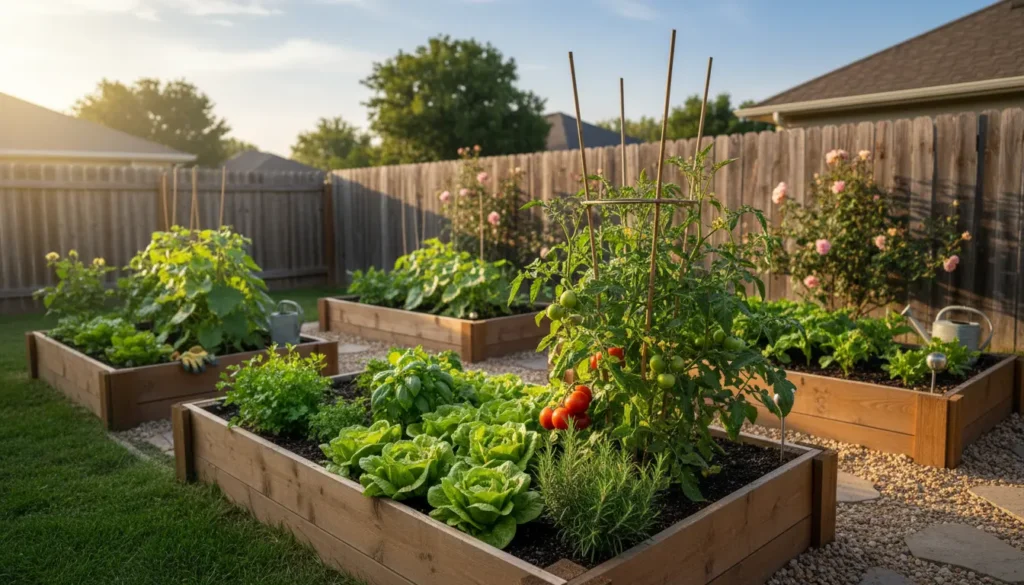
Starting a vegetable garden at home is an achievable project for small yards, balconies, or backyards. This guide gives clear, practical steps to plan, prepare, plant, and care for a productive home vegetable garden.
Planning to Start a Vegetable Garden at Home
Good planning reduces wasted time and money. Begin by deciding what you want to grow and how much space you can dedicate to a vegetable garden at home.

Consider the crops you and your household eat most often. Start with a few easy vegetables to build confidence, such as lettuce, radishes, tomatoes, and herbs.
Set realistic goals
Small, consistent production is better than an overwhelming project. Aim for containers or one raised bed if you are a beginner.
Choose the Right Location for Your Vegetable Garden
Vegetables need sunlight, good soil, and access to water. Choose a spot that receives at least 6 hours of direct sun daily for most crops.

Also ensure the location has good drainage and is near a water source to make watering easy.
Sunlight and microclimates
Observe your site over a few days to map sun and shade patterns. South- or west-facing areas usually give the best light.
Note any wind exposure or heat-reflecting walls that create microclimates; these can help or harm certain crops.
Soil and Containers: Key to a Healthy Vegetable Garden at Home

Soil quality determines plant health. For in-ground beds, loosen soil to a depth of 8–12 inches and mix in compost.
For patios or balconies, choose containers at least 12 inches deep for most vegetables and use a quality potting mix with compost added.
- Use well-draining potting mix for containers.
- Add 25–30% compost to garden soil for nutrients and structure.
- Test soil pH if possible; most vegetables prefer pH 6.0–7.0.
What to Plant First in a Vegetable Garden at Home
Begin with fast, forgiving crops that give quick results. Leafy greens, radishes, bush beans, and herbs are good choices for first-time gardeners.
Stagger planting times (succession planting) to extend your harvest rather than planting everything at once.
Seed vs. seedlings
Seeds are cheaper and offer more variety, while seedlings (transplants) give quicker results. Choose seeds for carrots and radishes; choose seedlings for tomatoes and peppers.
Watering, Feeding, and Basic Care
Water consistently. Most vegetables need about 1 inch of water per week, more in hot weather. Deep, infrequent watering encourages strong roots.
Fertilize lightly if your soil lacks nutrients. Use a balanced organic fertilizer or side-dress with compost during the season.
- Water at the base to reduce leaf diseases.
- Mulch with straw or wood chips to conserve moisture and suppress weeds.
- Inspect plants weekly for pests and signs of disease.
Pest Control and Common Problems in a Vegetable Garden at Home
Start with non-chemical methods: hand-pick pests, use row covers, and encourage beneficial insects with flowers and herbs.
If necessary, use targeted organic controls such as insecticidal soap or Bacillus thuringiensis (Bt) for caterpillars.
Diagnosing issues
Yellowing leaves can mean overwatering, nutrient deficiency, or root problems. Holes in leaves often indicate slugs or beetles.
Keep a growth journal for your garden to spot patterns and make faster corrections next season.
Companion planting—like growing basil near tomatoes—can improve flavor and reduce some pests. Many common herbs attract pollinators and beneficial insects.
Harvesting and Storage Tips
Harvest vegetables at peak ripeness for best flavor. Leafy greens are best cut when young, while tomatoes should be fully colored and slightly soft.
Store produce properly: cool and dry for root crops, refrigerated for most leafy greens and herbs wrapped in damp paper towel.
Small Real-World Example: Balcony Case Study
Sarah, a city renter, started a vegetable garden at home on a small balcony. She used three 12-inch containers and one 4×2 foot raised trough.
She planted cherry tomatoes, a head of lettuce, two basil plants, and a row of radishes. Within three months she harvested weekly salads and continued planting lettuce for succession.
- Containers used: 12-inch pots and 4×2 foot trough
- Soil mix: commercial potting mix plus 20% compost
- Watering: every 2–3 days, deep soak for 15 minutes
- Result: fresh greens and tomatoes for two people most of summer
This shows that even limited space can deliver steady produce when you pick appropriate crops and care routines.
Next Steps to Grow a Better Vegetable Garden at Home
Keep notes each week: what you planted, how much you watered, and pest observations. Adjust your plan season by season.
Expand gradually: add another bed or more containers as you learn local microclimates and crop needs.
Starting a vegetable garden at home is mostly about consistent care and small improvements. With basic planning, the right location, and simple maintenance, you can produce fresh vegetables even in limited space.



