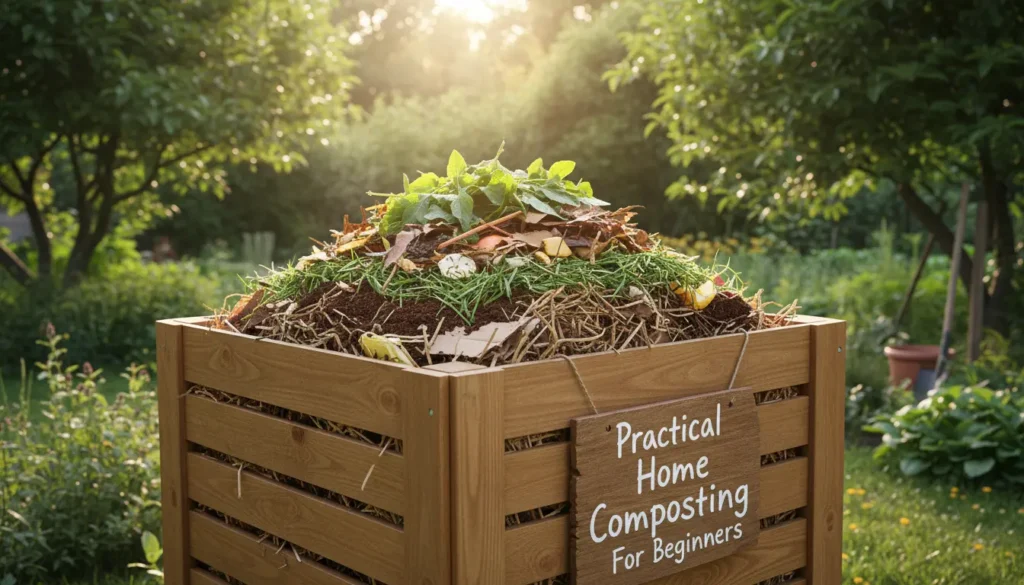
Why Home Composting Matters
Home composting reduces household waste, returns nutrients to soil, and lowers your environmental footprint. It is a low-cost way to create a rich soil amendment for gardens and potted plants.
This guide explains simple, actionable steps to start and maintain compost at home. No advanced gear or experience is required.
Basics of Home Composting

Compost is the result of organic materials breaking down under the right balance of carbon, nitrogen, moisture, and air. Understanding these basics helps you avoid common problems.
- Carbon materials (browns): dry leaves, cardboard, paper.
- Nitrogen materials (greens): vegetable scraps, grass clippings, coffee grounds.
- Water: keeps microbes active without drowning the pile.
- Air: oxygen is needed for aerobic decomposition; turning helps.
Choosing a System for Home Composting
Pick a compost system that fits your space and needs. Common options are open piles, bins, tumblers, and vermicomposting (worms).
- Open pile: Low cost, suitable for yards with space.
- Bin: Neater and helps contain pests and odors.
- Tumbler: Faster mixing and faster results with minimal effort.
- Vermicompost: Best for apartments or indoor situations using worms.
Step-by-Step: How to Start Home Composting
Follow these practical steps to establish a working compost system in weeks, not years.
- Choose the location: a well-drained spot with partial shade works best.
- Assemble your materials: aim for a mix of 2–3 parts carbon to 1 part nitrogen by volume.
- Create layers: start with coarse browns, then add greens and a light sprinkling of soil.
- Keep it moist: the pile should feel like a wrung-out sponge.
- Turn regularly: every 1–2 weeks for faster compost, or less often for low-maintenance systems.
Practical Tips for Balancing the Pile

If decomposition slows, add more greens or water. If the pile smells, add more browns and turn to increase airflow. Small adjustments keep the process steady.
Troubleshooting Common Problems in Home Composting
Problems are often due to imbalance or lack of airflow. Here are quick fixes for common issues.
- Bad odor: Add dry browns, mix the pile, and check moisture.
- Slow breakdown: Increase surface area by chopping materials and turn the pile.
- Pests: Use a closed bin or bury food scraps under browns and soil.
- Dry pile: Add water and more greens to rehydrate microbes.
Using Finished Compost
Finished compost is dark, crumbly, and earthy-smelling. Use it to improve soil structure and fertility in gardens, lawns, and containers.
- Top-dress: Spread 1–2 inches around plants and lightly work it into the topsoil.
- Potting mix: Blend 1 part compost with 2–3 parts potting soil for containers.
- Seedbeds: Mix a thin layer into the bed to boost seedling growth.
Case Study: Small Urban Garden Turns Food Waste into Soil
Mark, a city apartment dweller, started a vermicompost bin on his balcony. He collected kitchen scraps for six months and produced about 25 liters of compost.
Results: healthier container tomatoes and a 40 percent reduction in his weekly trash volume. Regular harvesting of worm castings improved plant vigor and reduced the need for synthetic fertilizer.
What Worked for Mark
- Consistent food scrap collection in a sealed container.
- Weekly feeding and moisture checks to keep worms active.
- Using finished castings as a top-dress for potted plants.
Tools and Supplies for Home Composting
You don’t need expensive tools. Basic items make the process easier and cleaner.
- Pitchfork or garden fork for turning piles.
- Compost thermometer to monitor internal temperature (optional).
- Kitchen scrap container with a lid for collecting food waste.
- Tumbler or bin if you want a compact, contained system.
Simple Rules to Remember
Keep these practical guidelines front of mind to maintain a healthy compost system.
- Balance browns and greens rather than obsessing over exact ratios.
- Chop or shred large items to speed decomposition.
- Avoid meat, dairy, and oily foods in open compost to deter pests.
- Be patient: full composting cycles typically take 2–6 months depending on method and conditions.
Home composting is a simple, scalable practice that benefits your garden and the environment. Start small, learn by doing, and adjust your routine to match the space and materials you have available.



