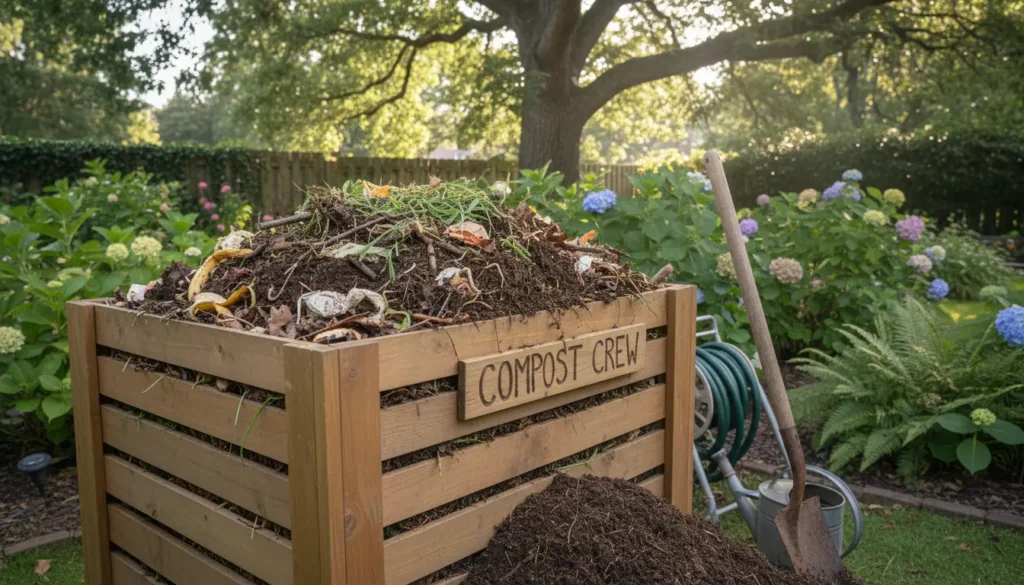
Home Composting for Beginners: Why Start
Home composting turns kitchen scraps and yard waste into a useful soil amendment. It reduces waste sent to landfills and improves garden soil quality.
This guide gives clear, practical steps for setting up and maintaining a small compost system at home. No jargon, just what you need to get started and succeed.
Basic Principles for Home Composting for Beginners

Composting is a controlled natural process where organic material breaks down into humus. The three keys are balance, air, and moisture.
Keep these points in mind:
- Balance carbon (browns) and nitrogen (greens).
- Provide oxygen by turning or aerating the pile.
- Keep moisture similar to a wrung-out sponge.
Choosing a Bin for Home Composting for Beginners
Select a bin that fits your space and maintenance comfort. Options include backyard bins, tumblers, and small indoor bokashi units.

Consider these factors:
- Available space: balcony, backyard, or kitchen counter.
- Amount of waste: larger households need larger bins.
- Maintenance level: tumblers reduce turning effort but cost more.
What to Compost and What to Avoid
Good materials:
- Greens: fruit and vegetable scraps, coffee grounds, fresh grass clippings.
- Browns: dry leaves, shredded paper, straw, cardboard.
Avoid these items:
- Meat, dairy, oils, and bones (attract pests and slow composting).
- Diseased plant material and invasive weeds with seeds.
Step-by-Step Setup for Home Composting for Beginners

Follow these steps to create a working compost pile or bin.
- Choose a spot with partial sun and good drainage.
- Start with a 4–6 inch base of coarse browns to aid drainage.
- Add alternating layers of greens and browns (2:1 ratio by volume of browns to greens is common).
- Keep the pile moist but not soggy; add water as needed.
- Turn the pile every 1–2 weeks to add oxygen and speed decomposition.
Monitoring Progress and Troubleshooting
Watch the pile temperature and smell. A working hot compost pile will warm to 130–160°F (55–70°C) and smell earthy.
Common problems and fixes:
- Bad odor: add more browns and turn to add air.
- Pile too dry: add water and some greens.
- Slow decomposition: chop materials smaller and turn more often.
Practical Tips for Busy Beginners
Make composting easy with these habits. Small changes keep the system working without adding chore time.
- Collect kitchen scraps in a sealed container and empty daily.
- Chop or shred larger items to speed breakdown.
- Keep a layer of browns on top to control flies and smells.
- Use a simple garden fork to turn rather than a full aeration routine.
Using Finished Compost
Compost is ready when it looks dark, crumbly, and smells earthy. Typical time ranges from 2 months (hot composting) to 6–12 months (cold composting).
Apply finished compost to improve soil structure, retain moisture, and add nutrients. Use it as a top dressing, mix into potting soil, or blend into garden beds.
Composting at home can reduce household waste by up to 30 percent. Garden soil amended with compost can require less watering and fewer chemical fertilizers.
Small Case Study: Balcony Compost Success
Sarah, a city renter, started a 30-liter tumbler on her balcony. She added kitchen scraps and shredded cardboard, turning the tumbler once a week.
Within four months, she produced enough compost to top-dress three potted herbs. Her weekly trash volume fell by about 40 percent, and she used no special equipment beyond the tumbler and a small hand pruner.
Quick Checklist for Home Composting for Beginners
- Choose an appropriate bin for your space.
- Maintain a balance of browns and greens.
- Monitor moisture and aerate regularly.
- Avoid contaminating materials like meat and dairy.
- Use finished compost to improve soil and reduce fertilizer use.
Home composting is a straightforward way to turn waste into value. Start small, follow the basics, and adjust as you learn what works for your space and routine.



