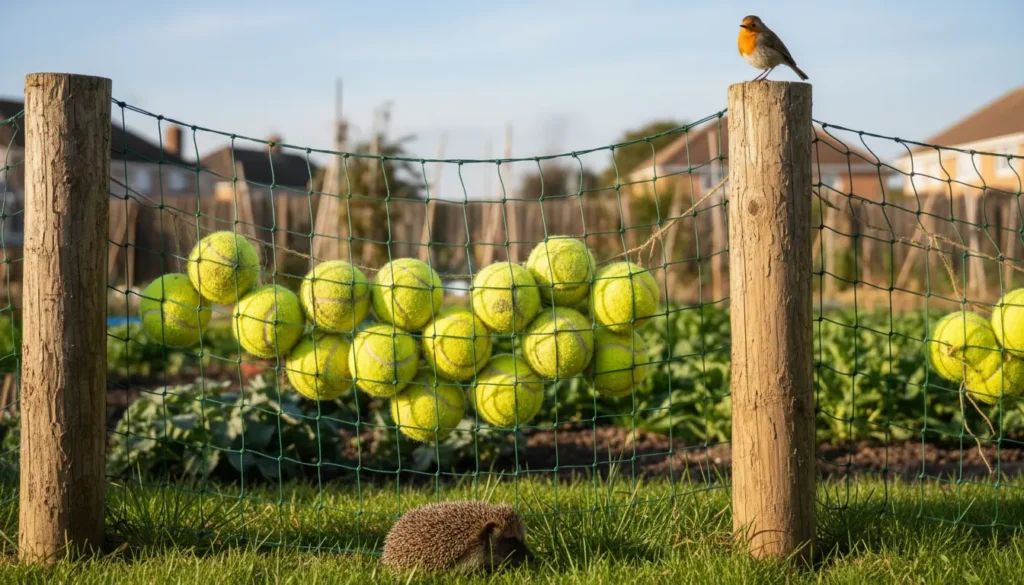
Simple household items can make a big difference for wildlife. The tennis ball hack is an easy, low-cost way to make garden hazards more visible and reduce accidental entanglements of birds and hedgehogs. This article explains what the hack is, why it works, and how to install it safely.
What is the Tennis Ball Hack and why it helps
The tennis ball hack uses bright tennis balls as visual markers on garden netting, pond covers, and fence lines to prevent birds and hedgehogs from getting trapped or falling into hazards. The bright color and round shape increase visibility at close range, helping people and animals spot potential danger.

Netting, loose plastic sheets, and poorly marked pond edges are common sources of accidental harm. Adding tennis balls highlights these hazards without expensive equipment or permanent alterations to the garden.
Where to use this Tennis Ball Hack
- Garden bird netting over fruit bushes or vegetable frames
- Pond covers, floating safety mesh, and lines across ponds
- Fence tops and posts near hedgehog runways
- Plastic sheeting and tarps used temporarily in gardens
Tennis Ball Hack for bird netting
Birds can become entangled in loose netting, especially during migration or feeding seasons. Tennis balls tied along the netting edge make the mesh edge easier for birds to see and for people to check.
Place a marker every 30–50 cm to maintain even visibility along the netting. Where possible, keep netting taut and near-ground gaps small to allow hedgehogs to move freely under nets without getting trapped.
Tennis Ball Hack for ponds and water features

Floating balls tied across the surface or attached to the edge of a pond can indicate the boundary to animals moving at night. This is not a substitute for a ramp or wildlife escape route, but it helps humans and pets avoid accidentally disturbing a wildlife egress point.
Always pair markers with practical escape solutions such as a sloped ramp, rocks, or short planks to make it easy for small mammals to climb out.
How to make the Tennis Ball Markers (step-by-step)
This quick method uses basic tools and takes about 10–20 minutes for a string of markers.
- Collect tennis balls and strong twine or thin rope. Use clean, intact balls; bright colored ones are easiest to see.
- Make a small hole through each ball with a sharp awl or screwdriver. A 5–8 mm hole is enough to pass twine through.
- Thread the twine through each hole and knot on the inside so the ball sits securely on the rope. Alternatively, cut a 2 cm slit and slide the ball onto the line, but a drilled hole is neater.
- Space balls every 30–50 cm along the twine depending on visibility needs. For netting, aim for closer spacing near fruit-bearing plants.
- Tie the ends of the twine to posts, stakes, or the netting frame. Make sure the line is taut and out of the immediate walkway to avoid being a trip hazard.
Safety and wildlife-friendly tips
- Do not use the balls as a substitute for proper net installation. Keep netting taut and avoid loose loops where animals can get trapped.
- Avoid small pieces or poorly glued balls that can break apart and be eaten by wildlife.
- Check the installation regularly; UV exposure and weather can weaken twine and balls over time.
- Combine visual markers with practical escape options for ponds and hedgehog highways (small gaps in fences at ground level).

Hedgehogs and small birds are often most at risk at night when light is low. Bright objects at ground level can help people spot potential hazards before wildlife does.
Materials checklist for the Tennis Ball Hack
- 5–20 tennis balls (depending on the area)
- Strong twine, nylon line, or thin rope
- Awl, screwdriver, or sharp tool to make holes
- Scissors and a marker for spacing
Small real-world example
A community allotment group installed tennis ball markers along the edges of their fruit netting and over a small pond after several near-miss incidents with trapped birds. They tied bright balls every 40 cm and added a small wooden ramp at the pond edge. Over the following season volunteers reported fewer instances of entanglement and found it easier to spot and remove loose netting during routine checks.
This kind of low-cost, community-led action complements formal guidance from wildlife charities and can be adapted to gardens and allotments of any size.
When not to use the tennis ball hack
Do not use tennis balls in situations where they can fall into water features and create obstruction, unless they are securely tied. Avoid using degraded or chewed balls that could shed material.
For permanent netting installations or where endangered species are involved, consult local wildlife organizations for best practice rather than relying on DIY fixes alone.
Final checklist before you finish
- Is netting taut and properly secured?
- Are tennis balls spaced evenly and tied securely?
- Is there an escape ramp or safe exit near any pond or steep drop?
- Have you scheduled regular inspections every few weeks?
The tennis ball hack is an inexpensive, reversible, and practical measure you can try this weekend. Used wisely and combined with other wildlife-friendly steps, it helps protect birds and hedgehogs in urban and suburban gardens.



