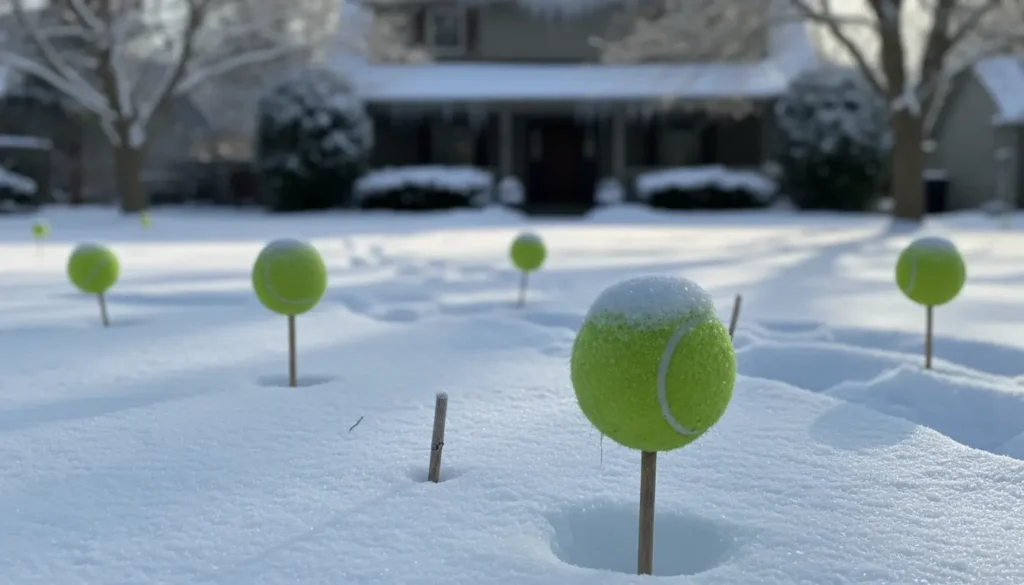
Shocking Reason Gardeners Are Putting Tennis Balls All Over Their Lawns in Winter
Every winter some gardeners scatter tennis balls across their yards. At first glance it looks odd, but there is a clear, practical reason behind the practice. This article explains what gardeners are protecting and how the tennis-ball trick works.
What the tennis balls are protecting
Most commonly, tennis balls are used as inexpensive markers for low-profile lawn fixtures such as sprinkler heads, irrigation valves, and shallow landscape lights. These items sit close to the soil surface and are easy to damage when snow blowers or shovels pass over them.

By marking vulnerable spots with bright, round objects, homeowners and landscapers can avoid accidental strikes that lead to costly repairs in spring.
Why tennis balls work
Tennis balls are cheap, visible in snow, easy to place, and resilient to moisture and cold. Their round shape sheds snow and stands out against a white backdrop, helping operators see and avoid fragile components buried in flakes or under drifted snow.
They also fit over common stakes and risers, making them a simple, no-tool solution for winter marking.
How to use tennis balls on your lawn this winter

Use short steps to make the process quick and effective. Follow these simple actions to protect hidden lawn features.
- Identify all sprinkler heads, irrigation boxes, and low lights before the first snowfall.
- Place a tennis ball over stakes or fit them on visible risers; for flat heads, install small stakes first and drop the ball over the stake.
- Use bright or new balls where possible; fluorescent or high-contrast colors are easiest to spot.
- Remove or replace balls in spring when you begin lawn maintenance to avoid trapping moisture against fixtures.
Materials and alternatives
Tennis balls work well, but other options exist depending on budget and longevity. Consider these alternatives:
- High-visibility flagging tape on stakes for lightweight marking.
- Pool noodles cut into sections placed over risers for cushioning.
- Commercial sprinkler markers designed specifically for heads and pop-ups.
Each option has pros and cons. Tennis balls are inexpensive and reusable, but commercial markers are often more durable and designed for a snug fit.
Placement tips to avoid common problems

Correct placement keeps markers effective without causing new issues. Follow these placement tips to get the best result.
- Keep markers upright and visible from driveway and walking paths where snow removal equipment will operate.
- Don’t press balls directly onto the sprinkler cap; allow a small gap so the fixture can expand or be serviced without removing a tight cover.
- Attach balls to stakes with a simple slit or drill hole to prevent them from blowing away in winter winds.
Used tennis balls can be reused as winter lawn markers for several seasons. They cost far less than the average repair bill for a damaged sprinkler head, which can range from $50 to over $200.
Real-world example: A Minneapolis homeowner case study
In Minneapolis, a homeowner named Maria began marking her lawn sprinkler heads with tennis balls after a January snow plow clipped a pop-up head, leaving it cracked. She bought a dozen used tennis balls for under $10 and placed them across her yard before the next snowfall.
When the neighborhood snow removal crew returned, they noticed the bright markers and avoided the heads. Maria reported no sprinkler repairs that season and saved several hundred dollars in potential replacement costs.
Further benefits and cautionary notes
Besides preventing equipment damage, marking fixtures reduces trip hazards and makes spring inspections faster. Landscapers also appreciate clear markings when they return for services after winter.
However, be mindful that leaving balls in place too long can trap moisture or hide problems like misaligned heads. Remove markers at the start of spring maintenance and check each fixture for leaks or damage.
Quick checklist before the first snow
- Map your sprinkler heads and low-profile fixtures.
- Gather tennis balls and stakes or use an alternative marker.
- Place markers visibly and secure them against wind.
- Notify any snow removal company about marked spots to ensure extra caution.
Using tennis balls across a lawn in winter may look odd at first, but the practice is an inexpensive, practical way to protect buried or low-profile garden fixtures from winter damage. With a little planning and simple placement, you can reduce repair costs and keep your irrigation system intact through the cold months.



