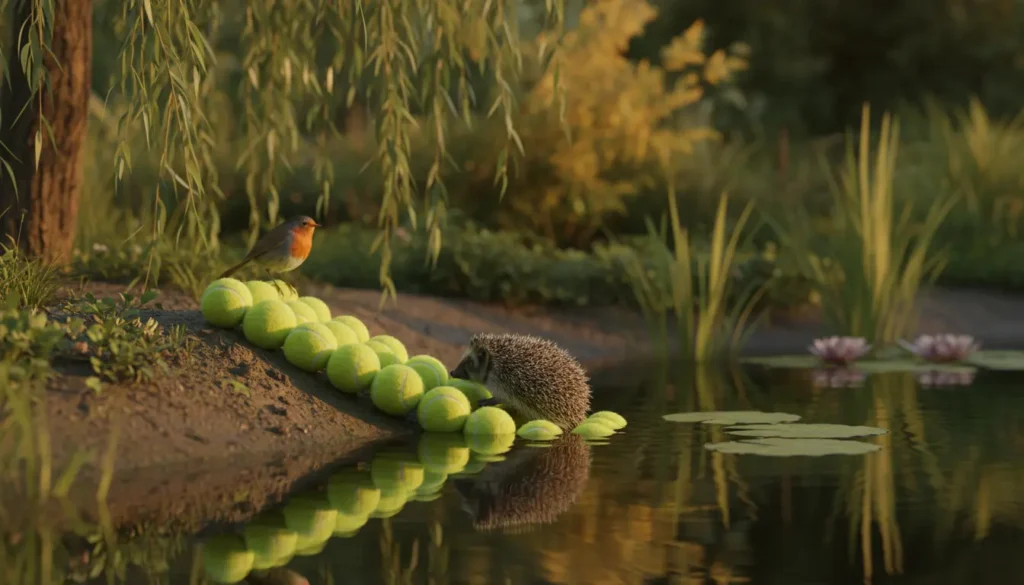
Winter brings hazards for small wildlife. With a little planning and inexpensive materials, you can reduce risks for garden birds and hedgehogs. Tennis balls are durable, float, and easy to repurpose — and they can be part of several practical solutions.
Why tennis balls help birds and hedgehogs this winter
Tennis balls are inexpensive, light, and weather-resistant. They float on water, catch attention when hung, and can be fixed to wood or wire as small scoops or bumpers.
These simple properties make tennis balls useful for reducing common winter threats: window collisions for birds and accidental drowning or entrapment for hedgehogs around garden ponds and drains.
How to use tennis balls to protect birds this winter
Birds often collide with glass because they see reflections or open sky. Hanging objects close to windows breaks up reflections and gives birds visual cues to avoid impact.
Hang tennis balls to prevent window collisions
Materials you need: clean tennis balls, strong thread or fishing line, scissors, and a hook or suction cup.
- Cut a small hole through the tennis ball with scissors and thread the string through it.
- Hang the ball on a short line in front of the window, about 10–20 cm from the glass. Space balls at 10–15 cm intervals for larger windows.
- Use several rows or staggered heights for wide panes. Replace balls if they become waterlogged or moldy.
This method is low-cost and reversible. It works best when objects are spaced so birds see a solid pattern rather than isolated reflections.
How to use tennis balls to protect hedgehogs this winter
Hedgehogs can fall into steep-sided ponds or get trapped in garden features. Tennis balls can improve escape options and reduce drowning risk.
Build a pond escape aid using tennis balls
Materials: wooden ramp or board, a few tennis balls, waterproof adhesive or cable ties, and a rock to secure the ramp.
- Attach 2–4 tennis balls under the outer end of a short wooden ramp to increase buoyancy and create a gentle slope into the pond.
- Place the inner end of the ramp on the pond edge and secure it with a rock so it stays in place but still floats slightly.
- Check regularly to ensure the ramp is stable, free of algae, and not creating entanglement hazards.

The floating support helps the ramp sit naturally against the bank and gives hedgehogs a textured surface to climb. Use untreated wood and avoid metal fastenings that can rust.
Use tennis balls as temporary rescue markers
If you discover a hedgehog trapped in a drain or tight space, a nearby tennis ball tied to a stick can be used to gently coax or distract while you create a safe exit. Always handle hedgehogs with care, wearing thick gloves if you need to move them.
Many hedgehogs hibernate through the cold months and can be disoriented by sudden access changes. Simple pond ramps and clear escape routes reduce winter deaths. Tennis balls float at roughly 60–70% of their volume, making them useful for small floating aids.
Safety and hygiene when using tennis balls for wildlife
Not every use is safe. Old tennis balls can carry chemicals, dirt, or mold. Follow simple precautions to keep wildlife safe.
- Use clean balls: wash new or used balls with mild soap and rinse thoroughly.
- Avoid loose parts: do not leave shredded balls or strings that can be swallowed or entangle animals.
- Monitor installations: check pond ramps and window hangings weekly, especially after storms.
- Keep food clean: if using halved balls as small feeding cups, clean them regularly and avoid moldy seed.
Small case study: a neighborhood winter project
In a small community garden group, volunteers noticed frequent robin and starling collisions on a long glass greenhouse. They hung strings of tennis balls across the panes at different heights and added a few floating ramps with tennis-ball supports to the adjacent wildlife pond.
After two months of observation, the group recorded fewer visible bird strikes and found no further hedgehog drowning incidents. The volunteers credited the low-cost tennis ball measures and weekly checks with improving outcomes during the coldest months.
Quick checklist: set up tennis ball wildlife aids this winter
- Inspect all tennis balls for damage before use.
- Hang balls in front of high-risk windows at close spacing.
- Install pond ramps with tennis-ball buoyancy supports at shallow angles.
- Use balls as small feeding cups only if cleaned and monitored.
- Check safety weekly and remove any hazards immediately.
Final practical tips
Tennis balls are not a cure-all, but they are a useful, low-cost tool in a winter wildlife toolkit. Combine them with other measures like native planting, safe feeding stations, and checked hibernation shelters for the best results.
Start small: test one window or one pond edge, monitor results, and expand what works. With a few balls and basic care, you can make your garden a safer place for birds and hedgehogs this winter.