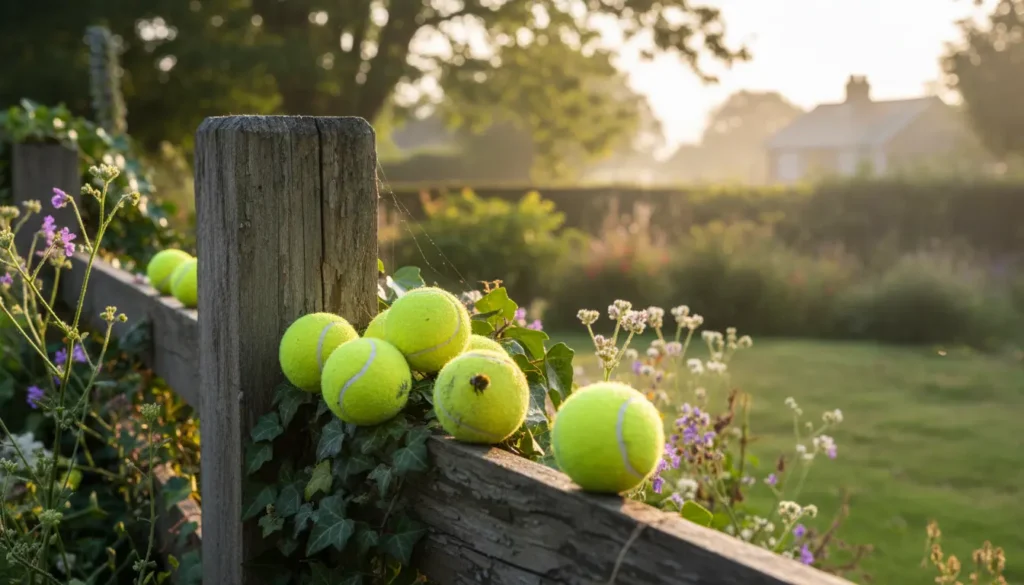
Small wildlife can get injured by exposed stakes, sharp wire ends and open mesh in gardens. A low-cost tennis ball trick is popular among gardeners because it reduces those risks quickly and uses recycled materials.
Tennis Ball Trick for Bird and Hedgehog Protection — What it Does
The trick is simple: convert old tennis balls into soft caps and attach them to the tops of posts, stakes and exposed wire ends. These soft caps cushion sharp points, make posts more visible to animals, and reduce accidental impalement or snags.

It works for both ground-level hazards (where hedgehogs forage) and higher hazards that birds or climbing mammals might hit.
Why gardeners use the tennis ball trick
There are a few practical reasons this method is widespread:
- Cheap and recyclable — uses worn tennis balls that would otherwise be discarded.
- Soft but weather resistant — rubber balls last outdoors and cushion impacts.
- Highly visible — bright colours help wildlife spot hazards sooner.
- Easy to fit — needs only a knife and basic fastening methods.
How the tennis ball trick helps birds
Birds often collide with thin wire, netting edges or narrow poles that aren’t obvious in low light. A tennis ball cap increases the target size and reduces the risk of injury to wings or feet.
How the tennis ball trick helps hedgehogs

Hedgehogs move at ground level at night and can become impaled on open-topped canes, jagged wire or exposed bamboo. A capped post gives them a soft surface to hit or nudge instead of a sharp edge.
Materials and tools you need
Collect the items below before you start. Most are already at home or easy to buy.
- Old tennis balls (cleaned)
- Sharp utility knife or heavy-duty scissors
- Gloves and eye protection
- Cable ties, strong glue or screw-in washers (for secure fixing)
- Sandpaper (optional, to roughen the ball interior)
How to make and fit tennis ball caps
Follow these short steps. Each step takes only a minute or two.
Step-by-step instructions
- Cut an X or small cross in the tennis ball with a utility knife. The slit should be large enough to push the ball onto the post but not so large it falls off easily.
- Work the slit open with your fingers until the ball will slide over the post top. For thick posts, you can cut a larger hole or slice the ball in half.
- Fit the ball onto the post, stake or wire end. Make sure it sits flush and covers the sharp point.
- Secure with a cable tie pushed through the ball base or add a dab of exterior-grade adhesive if wind is an issue.
- Check regularly for damage and replace when the ball becomes brittle or split.
Best places to use the tennis ball trick

Apply caps where wildlife and garden fixtures overlap. Typical locations include:
- Fence posts and gate tops
- Bamboo canes and plant supports
- Garden netting end-posts and pegs
- Pond edge stakes and low decking posts
- Compost bin corners and raised bed stakes
Safety and maintenance tips
The trick is low risk, but a few precautions make it safer and longer lasting:
- Use gloves and eye protection when cutting balls.
- Secure caps firmly so they don’t become litter or get chewed off by animals.
- Replace cracked or UV-brittle balls to avoid small pieces that wildlife could ingest.
- Check caps after storms — loose caps can entangle birds or small mammals if carried by wind.
Alternatives and when to use them
Tennis balls are a quick DIY fix, but there are alternatives when you need a longer-term or neater solution. Commercial post caps, rubber end caps and mushroom-shaped safety covers are durable and purpose-made for certain post diameters.
Use off-the-shelf caps where aesthetics, longevity or legal requirements (for public spaces) matter.
Real-world example
A community allotment in a suburban town introduced tennis ball caps on narrow metal and wooden posts after a volunteer found a hedgehog caught on wire. Volunteers fitted about 40 caps over a weekend and reported fewer incidents of snags near borders over the next season. The allotment manager kept a simple checklist to inspect and replace worn caps monthly.
Quick checklist before you start
- Gather old tennis balls and tools.
- Identify posts and pegs at hedgehog height or near bird flight paths.
- Cut, fit and secure each cap carefully.
- Inspect periodically and replace damaged caps.
Using the tennis ball trick is a practical, inexpensive way to lower everyday hazards for birds and hedgehogs. It’s an easy project for any gardener and can be part of a wider wildlife-friendly plan in yards, allotments and community green spaces.



