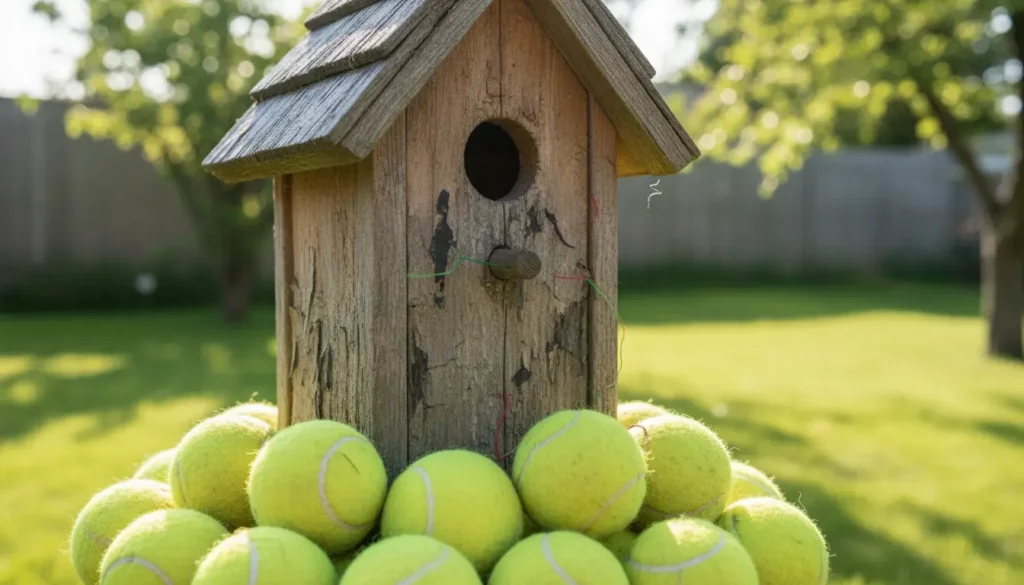
Winter is a challenge for many small animals. Cold nights, wet bedding and scarce food push wildlife to use any shelter and insulation they can find.
Repurposed items can help, and tennis balls are a surprising, low-cost option when used carefully. This article explains safe, practical ways to use tennis balls to help wildlife beat winter conditions.
How Tennis Balls Help Wildlife Beat Winter Conditions

Tennis balls are lightweight, durable and water-resistant. Their hollow core and felt layer trap small pockets of air that add insulation when used correctly.
Used thoughtfully, tennis balls can: reduce drafts, raise animals off damp ground, add thermal mass for short-term warmth, and provide enrichment in rehabilitation settings.
Key properties that make tennis balls useful
- Lightweight and non-absorbent surface that resists soaking.
- Rubbery core and felt layer that trap air for modest insulation.
- Durable: they withstand weather and handling better than some fabrics.
Practical, Safe Uses for Tennis Balls in Winter
Below are safe ways to use tennis balls around garden shelters, nest boxes and rescue enclosures. Always follow the safety tips in the next section.
1. Draft reduction in nest boxes and shelters

Cut a small slit in a clean tennis ball and use it as a removable plug for large gaps or owl-box ventilation that is causing drafts.
- Do not block species-specific entrance sizes—ensure the plug does not restrict intended access.
- Use the plug externally so animals cannot chew or swallow pieces.
2. Raised platform in ground shelters
Whole tennis balls or halves placed beneath a raised wooden platform keep straw or bedding off cold, damp soil. This helps the nest dry faster and reduces heat loss to the ground.
- Place balls inside a breathable bag or under a removable board to prevent direct contact with animals.
- Combine with natural bedding (dry straw or shredded untreated paper).
3. Emergency short-term warmth
In rehabilitation, warmed tennis balls can act as a quick, low-cost heat source for an injured small mammal or bird during transport.
- Heat gently in a towel-wrapped container on low heat; never use boiling or microwave methods that can create hot spots.
- Always place the warmed ball in a cloth cover and monitor to prevent burns.
How to Prepare Tennis Balls Safely for Wildlife Use

Not all tennis balls are suitable. Chemicals, bright dyes, or loose felt fibers can harm animals. Follow these steps to prepare balls safely.
- Choose plain, non-fluorescent balls with no visible chemical coating.
- Wash gently with mild detergent and rinse thoroughly to remove residues.
- Inspect for cracks or loose pieces; discard any that shred easily.
- Encapsulate cut or whole balls in breathable fabric or canvas pouches to prevent chewing and ingestion.
- Label any items used with wildlife so they are only reused for that purpose.
What to avoid
- Do not use balls that are heavily dyed or have fuzzy, detachable fibers.
- Never leave small fragments or uncontained halves where animals could ingest them.
- Avoid synthetic stuffing alone as a substitute for natural bedding; tennis balls should be an aid, not the main bedding.
Tennis balls trap small pockets of air in their core and felt cover. Those air pockets add modest insulation, which is why they are sometimes used to reduce drafts in outdoor boxes and shelters.
Step-by-Step Example: Creating a Safe Raised Bed for Hedgehog Shelters
This short example shows a simple, low-risk way to use tennis balls in a hedgehog hibernaculum.
- Select 8–12 plain, clean tennis balls and wash them with mild soap. Rinse well and let dry.
- Sew a durable canvas sleeve that holds the balls in a single layer, leaving ends open for ventilation.
- Place a wooden platform (10–15 cm tall) over the sleeve inside the hedgehog box. Add dry straw on top.
- Check the shelter regularly through winter to ensure bedding stays dry and the sleeve remains intact.
This method keeps straw off the cold ground, improves drainage and reduces heat loss without exposing animals to loose synthetic fibers.
Small Real-World Case Study
A community wildlife group ran a winter pilot in which volunteers used canvas-encased tennis-ball layers under bedding in ten hedgehog boxes. They monitored boxes for dampness and use through the season.
Results after one winter showed drier bedding and continued occupancy in most boxes. The group emphasized strict preparation and containment of balls as critical to success.
This small-scale approach suggests tennis balls can help when combined with good shelter design and monitoring, but it is not a replacement for thorough, species-appropriate habitat management.
Final Guidelines and Safety Reminders
Tennis balls can be a useful, low-cost tool to help wildlife beat winter conditions when used safely and conservatively. They work best as a supplement to natural bedding and proper shelter design.
Always prioritize animal safety: avoid loose pieces, monitor shelters regularly, and consult local wildlife experts if you care for injured animals or protected species.
With careful preparation and common-sense precautions, a stack of donated tennis balls can become a surprisingly helpful resource in winter wildlife care.



