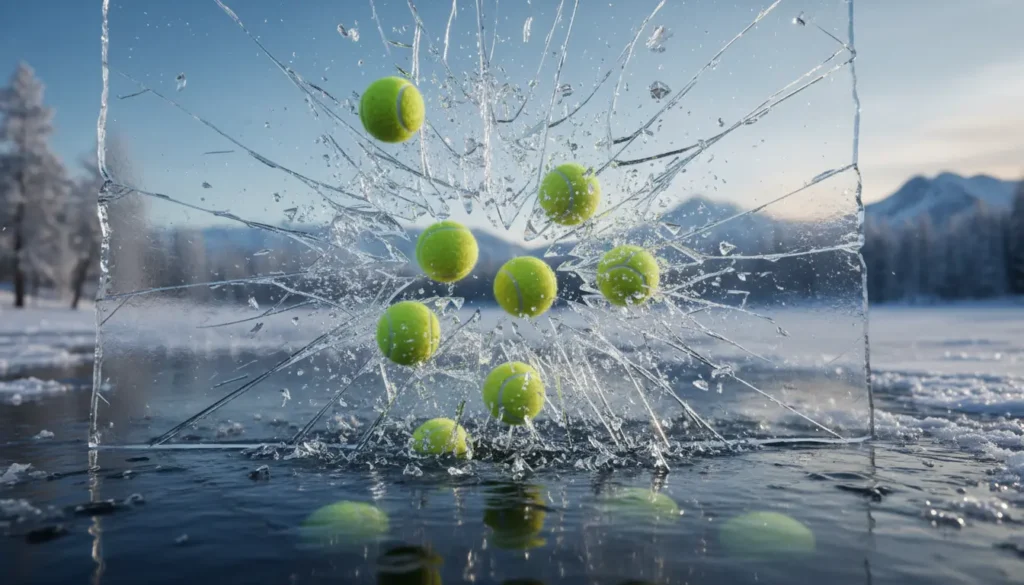
Winter freezes small water sources and that can be fatal for birds, hedgehogs, and other small wildlife. Knowing simple, low-cost ways to open small clearings in ice can make the difference between life and death.
How tennis balls break up ice
Tennis balls can break thin surface ice through a combination of kinetic impact and focused pressure. A soft, rounded object transfers enough energy to crack brittle ice without the sharp shards a heavy tool can create.

Because they float, tennis balls can also be used to keep a small area moving once a hole is made, reducing quick re-freezing in very small containers like birdbaths.
Using tennis balls to help birds and hedgehogs
Birds and hedgehogs need open water for drinking and, in hedgehogs’ case, occasional bathing or rehydration. Shallow birdbaths and puddles are the most practical places to use this method safely.
This is a low-cost, low-skill technique suitable for gardens, allotments, and community green spaces where more elaborate solutions (heated birdbaths, de-icers) are not available.
Step-by-step: safely breaking ice with tennis balls
- Choose the right spot: Only use on shallow birdbaths, small puddles, or shallow edges of water where birds or hedgehogs would drink. Do not use on deep or fast-moving water.
- Check ice thickness: If the ice is thick (more than 1–2 cm), do not attempt this method. Thick ice may shatter unpredictably or indicate larger bodies of water nearby.
- Use an old, clean tennis ball: Wash it before use to remove dust, oils, or chemicals. Avoid using new balls with chemical or fluorescent coatings where possible.
- Technique: From a safe distance, toss the tennis ball gently so it lands on the ice surface. Aim for thin ice areas or the center of a birdbath. A firm but not violent throw is enough to crack thin ice.
- Repeat as needed: Multiple light impacts are safer than one hard strike. Work slowly and check for sharp ice edges after the hole opens.
- Keep water accessible: If possible, gently agitate the water within the hole (with the ball or a stick) to slow refreezing. Replace the ball if it becomes waterlogged or starts shedding fibers.
Materials and preparation
Use these materials to keep the process safe and reliable.
- Old tennis balls (cleaned in hot, soapy water)
- Rubber gloves for handling cold objects
- A long-handled scoop or stick to remove loose ice if necessary
- A thermometer (optional) to check surface temperatures
When not to use tennis balls
Avoid this method when ice is very thick, when there are signs of large or deep water bodies nearby, or when wildlife is already stressed and could be driven into danger by noise and activity.
Do not use on frozen garden ponds where breaking the surface can create hazards for animals that fall in or for children and pets.
Safety and welfare considerations for birds and hedgehogs

Always watch for nearby animals before making noise or movement around frozen water. Disturbing birds during heavy snow or prolonged cold can cause them to flee and expend critical energy.
If you are unsure, provide alternative water sources first. Use shallow dishes with warm (not hot) water placed in sheltered, predator-safe locations.
Pros and cons
- Pros: Cheap, quick, uses household items, gentle on thin ice, helps provide water access fast.
- Cons: Not suitable for thick ice or deep water, tennis balls can shed fibers, repeated use may require replacement and cleaning.
Some wildlife groups recommend placing several floating objects in a birdbath to keep water moving. The gentle movement prevents a solid crust of ice forming as quickly as on still water.
Real-world example: a small garden rescue
In a neighborhood community garden, volunteers noticed fewer birds visiting a central birdbath during a cold spell. The shallow bath had a thin sheet of ice each morning.
Using an old tennis ball, they gently cracked the morning ice and left a shallow dish of lukewarm water nearby. Within two days, the number of bird visits increased and a hedgehog was seen investigating the extra water in the evenings.
The volunteers kept a simple log: morning ice broken with a tennis ball, water refreshed twice a day, and the ball washed weekly. This low-effort routine kept the small population of birds and visiting hedgehogs supplied with water through the cold spell.
Quick checklist before you start
- Is the water shallow and safe? Yes/No
- Is the ice thin (under 1–2 cm)? Yes/No
- Do you have an old, cleaned tennis ball? Yes/No
- Can you disturb the area without stressing animals? Yes/No
When used carefully and thoughtfully, tennis balls are a small but effective tool in winter wildlife care. They are not a replacement for long-term solutions, like heated birdbaths or creating safe, unfrozen water sources, but they can give birds and hedgehogs a fighting chance on very cold mornings.