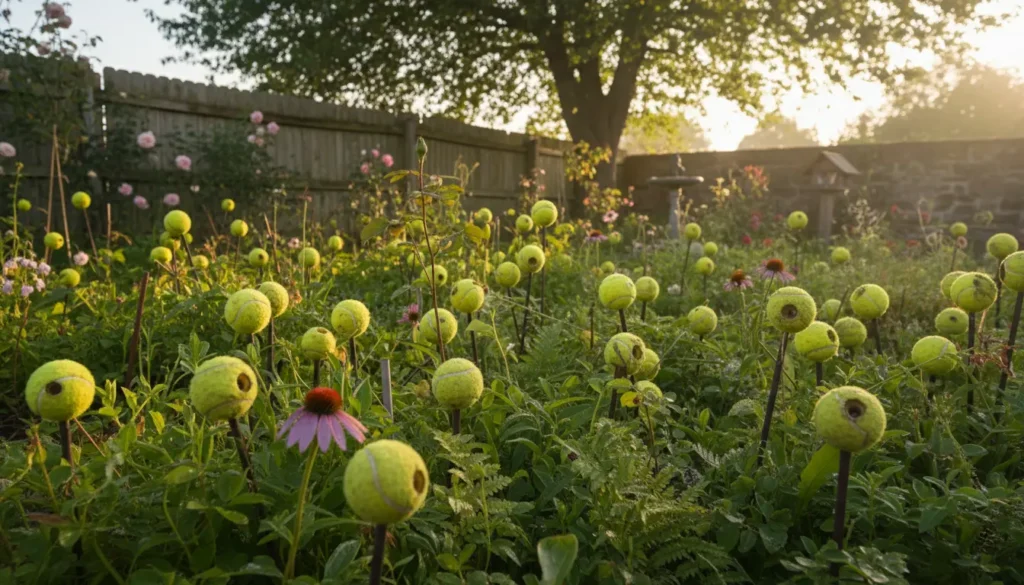
Across gardens and allotments, a simple reuse idea has spread: repurposing old tennis balls to reduce risks for small animals and to protect nesting spots. This article explains the practical reasons the tennis ball trend helps garden wildlife and gives step-by-step guidance on safe, effective uses.
Why the tennis ball trend helps garden wildlife
The tennis ball trend works because old balls are flexible, visible, and easy to modify. Garden wildlife—hedgehogs, frogs, birds and small mammals—are often harmed by sharp edges, open drain pipes, and hidden gaps.

Placing or altering tennis balls can block dangerous holes, cushion exposed stakes and mark hazards so animals and people avoid them. The approach relies on reuse, low cost, and simple tools anyone can handle.
Tennis ball benefits for gardens
- Soft cushioning on stake ends or posts reduces injury risk for animals that bump or climb.
- Cut balls can cap small openings (drain holes, pipe ends) to stop animals falling in.
- Bright colors increase visibility of hazards at night when torpor or slow movement makes animals vulnerable.
- Recycling reduces waste while supporting local biodiversity.
Common uses of tennis balls to protect wildlife
Here are practical, low-effort ways gardeners are using tennis balls to save wildlife. Each use is easy to try and requires minimal tools.
1. Pipe and hole covers
Small ponds, water butts and compost heaps sometimes have exposed pipe ends or holes that can trap small animals. Cutting a slit in a tennis ball and fitting it over the opening makes a simple removable cap.

Tip: Use a shallow cut and secure with a cable tie or elastic band so the cap stays in place but can be removed for maintenance.
2. Cushioning for stakes and posts
Garden stakes, forked posts and metal rods can injure hedgehogs and birds. A tennis ball pressed over the end provides a soft buffer and reduces the chance of serious harm.
3. Marking hazards and entrances
Placing whole or halves of tennis balls on visible poles, low fencing or around water features makes those hazards easier to see at night. This simple visibility trick helps slow-moving animals avoid danger.
4. Temporary nest box insulation or perch padding

Cut tennis ball halves can be fixed inside or around nest box entrances as padding that isolates drafts and reduces sharp edges. Use non-toxic, clean balls only and ensure the interior remains dry.
How to make a tennis ball wildlife guard (step-by-step)
Follow these steps to prepare a safe tennis ball guard. Keep tools basic and work on a stable surface.
- Clean the ball: Rinse and scrub to remove dirt and chemicals. Let dry fully.
- Inspect condition: Discard any balls that are crumbly or have loose stuffing.
- Cut carefully: Use a sharp craft knife to make a shallow slit or half-cut depending on use.
- Secure: Use weatherproof cable ties, garden twine or glue rated for outdoor use.
- Place and monitor: Fit the ball over the hazard and check weekly for wear or animal interaction.
Safety and environmental cautions with the tennis ball trend
While tennis balls can help, there are precautions to avoid creating new hazards.
- Do not use balls that are breaking apart; loose rubber and felt can be eaten by wildlife.
- Avoid balls with chemical coatings or heavy dyes if possible; rinse them thoroughly.
- Don’t seal off essential access points for animals unintentionally—always leave escape routes for trapped creatures.
- Regularly check any fitted ball covers so they don’t become lodged or block drainage.
Small case study: A community allotment project
A volunteer group at a local allotment began capping small drain pipes and topping stakes with tennis balls after a volunteer found a hedgehog trapped in a pipe outlet. Within three months the team reported fewer incidents of trapped animals and no new small animal injuries around the capped areas.
The project was simple: after collecting donated balls, volunteers cleaned and fitted them over common hazards. They also labeled a few with reflective tape to test visibility at dusk. The allotment now recommends the practice to neighboring sites as a low-cost safety measure.
Old tennis balls are often made from rubber and felt that can be repurposed for garden safety tasks. When used correctly they can reduce small animal injuries from sharp posts and open pipes.
Examples and quick projects you can try
- Cover the ends of metal tent pegs or tomato supports with whole tennis balls to prevent impalement for hedgehogs.
- Cut slits in balls to make removable caps for small open pipes on raised beds.
- Place halves of balls around pond edges where sloped access is narrow to reduce slips and snags for frogs and toads.
Each project takes only a few minutes and can be customized for your garden layout. Keep a small toolkit handy so you can replace or adjust pieces as needed.
Final checklist before you start
- Collect only balls in good condition and wash them well.
- Plan placements to avoid blocking necessary outlets or ventilation.
- Use non-toxic fasteners and avoid small detachable parts that could become litter.
- Monitor and maintain installations seasonally.
The tennis ball trend is a practical, low-cost way gardeners can reduce common threats to small wildlife. With a little care and regular checks, reused tennis balls can be a helpful part of a wildlife-friendly garden toolkit.



