Why tennis balls help wildlife
Old tennis balls are common household waste but they have useful physical properties: soft, lightweight, and durable. Rescue centres and community volunteers have found several low-risk ways to reuse them to reduce stress for birds and hedgehogs and provide enrichment.
Safety first: clean and inspect tennis balls before reuse
Before any reuse, clean tennis balls thoroughly and inspect them for loose seams or crumbly felt. Use mild dish soap and warm water, rinse well, and air dry in a shaded spot.

Discard any ball with exposed rubber pieces, broken seams, or chemical smells. If in doubt, recycle or dispose of the ball safely rather than risk harming an animal.
Cleaning steps
- Fill a basin with warm water and a small amount of mild dish soap.
- Gently scrub the ball with a soft brush; avoid harsh solvents or bleach.
- Rinse until all soap is gone and let air dry completely.
How rescues use tennis balls for birds
Wildlife rehabilitators use tennis balls in non-contact ways that reduce injury risk and improve comfort during transport. The soft, slightly springy surface makes a good cushion in carriers and recovery boxes.
Common uses include padding to stabilize small birds, soft perches for injured birds that must be kept still, and enrichment items for species that safely interact with objects.
Practical uses for birds
- Carrier padding: cut a few balls in halves or quarters and line the bottom of a transport box to prevent eggs or chicks from rolling.
- Perch cushioning: place a cleaned whole ball under a towel in a carrier to lower slip risk for weak birds.
- Visual markers: hang tennis balls on strings near large windows to reduce bird collisions by breaking up reflections (securely mount outside).
How tennis balls help hedgehogs
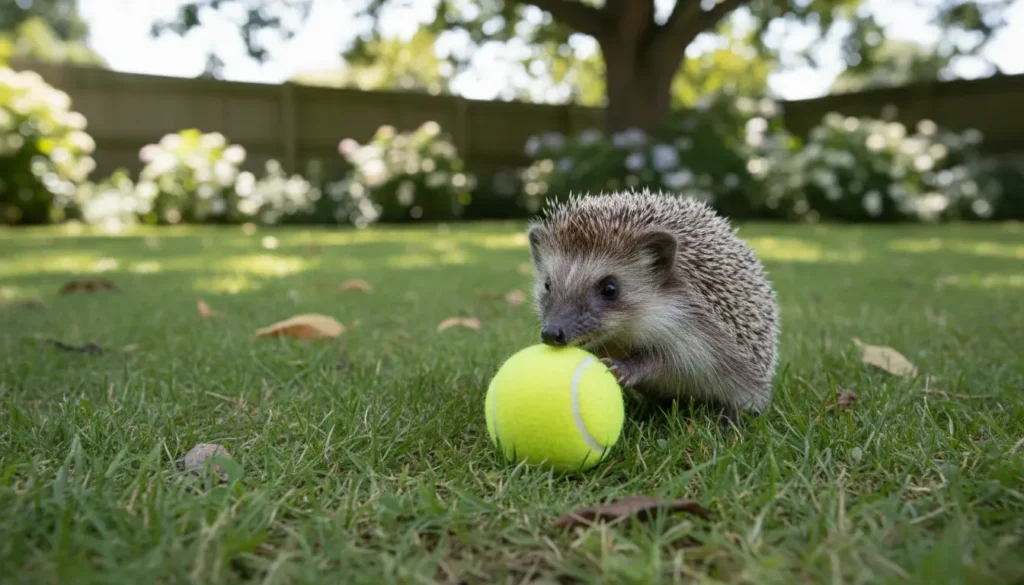
Hedgehogs benefit from soft enrichment and low-cost materials in rescue settings. Clean tennis balls are used for gentle exploration exercises and to create low-impact enrichment that encourages natural behaviours.
Always supervise hedgehogs with any added object to avoid the risk of getting trapped or injured. Use tennis balls only as recommended below.
Practical uses for hedgehogs
- Foraging games: hide treats near or under balls to encourage safe sniffing and foraging.
- Floor cushioning: use halves under towels in a temporary transport carrier to reduce rolling and add comfort.
- Enrichment stations: place several cleaned balls in an exercise area so hedgehogs can nudge and explore them under supervision.
DIY projects and ideas that are safe
If you want to reuse tennis balls at home for wildlife-friendly projects, choose non-invasive, supervised activities. Avoid painted balls, glued additions, or very small pieces that could be ingested.
- Window markers: tie a string to a ball and hang it outside near the window to make glass more visible to birds.
- Carrier liners: cut balls into halves and tuck them under a towel in a pet carrier for extra cushioning when transporting wildlife to a vet or rehab centre.
- Enrichment bundles: place clean balls in a sheltered area for supervised wildlife discovery sessions; remove them after use.

Tennis balls are made from rubber and felt; many animal rescues prefer donated, lightly used balls because the felt helps grip and the rubber provides gentle support without hard edges.
Dos and don’ts for helping wildlife with tennis balls
- Do clean and inspect every ball before use.
- Do supervise animals interacting with tennis balls.
- Do consult a local wildlife rehabilitator before using balls with injured animals.
- Don’t use painted or chemically treated balls.
- Don’t leave balls outdoors where they might break down and create small plastic pieces.
Case study: a small community reuse effort
A small volunteer group in a suburban neighbourhood organized a tennis ball drive and collected 300 used balls in two months. Cleaned and checked by volunteers, balls were donated to a nearby wildlife rehab centre.
The centre used the balls as carrier padding and enrichment for hedgehogs and small birds. Staff reported that reusable padding cut their need for single-use soft materials and provided a low-cost enrichment option.
Where to donate or recycle old tennis balls
If you don’t have a personal use, many animal rescues, kennels, and sports charities accept clean, usable tennis balls. Check local guidelines first.
If a ball is worn out beyond safe use, look for a specialized recycling program for rubber sports goods. Do not place broken balls in compost or leave them where wildlife can gnaw at them.
Final practical checklist
- Inspect and clean before reuse.
- Use balls for padding, enrichment, or visual markers—avoid direct contact with vulnerable animals unless supervised by trained staff.
- Donate usable balls to local rescues or sports programs.
- Recycle or responsibly dispose of unusable balls.
Repurposing tennis balls is a simple, practical way to reduce waste and support local wildlife efforts when done safely. Small, considered steps can help birds and hedgehogs without introducing new risks.