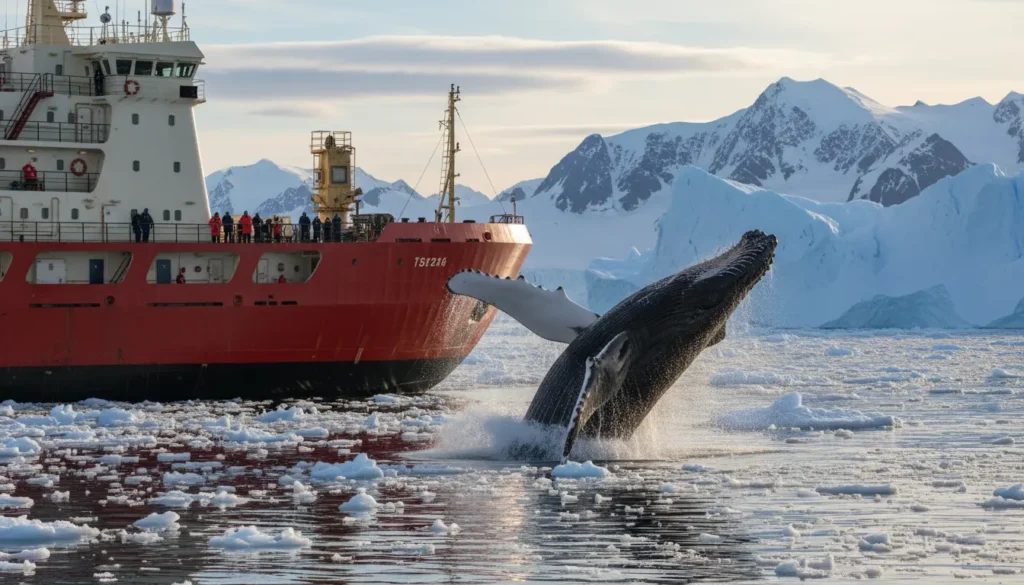
Researchers and mariners are reporting a rise in interactions between large whales and vessels in Arctic waters. As sea ice retreats and traffic increases, encounters are becoming more frequent and sometimes hazardous.
This article explains what has been observed, why whales may be moving into shipping corridors, and practical steps that ship operators and route planners can take to reduce risk.
Whales Declaring War on Arctic Shipping Routes: What scientists observed

Observers describe groups of whales approaching transiting vessels, surfacing near bows, and producing strong vocalizations that can last minutes to hours. These behaviors increase the chance of collision and damage to both animals and ships.
Acoustic monitoring, vessel logs, and satellite tracking together show higher encounter rates in recently opened passages. The pattern is not uniform, but the trend points to growing overlap between whale habitats and shipping lanes.
How whales change behavior near Arctic shipping routes
Several behavioral changes have been noted when whales are near ships. These may be responses to noise, curiosity, feeding opportunities, or social dynamics.
- Approaching or circling vessels for extended periods
- Surfacing close to hulls, increasing collision risk
- Altering vocalizations that can mask ship noise or attract other whales
- Using shallow or narrow passages that coincide with navigation channels
Why this is happening in the Arctic now

Three main drivers explain the rise in whale and ship encounters. Understanding these helps planners and crews create effective responses.
- Reduced sea ice opens new routes and extends the navigation season
- Changes in prey distribution lead whales into areas used by ships
- Increased ship noise and presence can change whale movement and social behavior
Risks for vessels and marine life
Ship strikes can injure or kill whales and cause hull damage or delays for vessels. Noise can disrupt feeding and migration, with consequences for whale populations and ecosystem health.
Collision risk is higher for slow maneuvering ships, for vessels in narrow channels, and during periods of low visibility.
Practical steps for reducing conflicts on Arctic shipping routes

The following measures are practical, actionable, and already being used in some Arctic operations. They balance safety, efficiency, and conservation goals.
- Speed reductions in known whale areas to lower collision probability
- Route adjustments that avoid high-density feeding grounds when feasible
- Use of passive acoustic monitoring to detect whale presence before visual contact
- Bridge procedures that include dedicated whale watches during high-risk stretches
- Improved crew training on whale detection and avoidance protocols
Combined measures reduce risk more than single actions alone. Planning that integrates seasonal whale patterns with commercial schedules is most effective.
Technology and monitoring that help
Modern tools improve situational awareness. These are practical options for ship operators and regulators to consider.
- AIS based alerts linked to whale sighting reports from research networks
- Real time acoustic buoys and towed hydrophones for early detection
- Satellite tags on whales and near real time maps for route planners
- Machine learning systems that flag high-risk encounters using past data
Some whale species can detect and respond to ship engine noise from several kilometers away. Noise can change their patterns long before visual contact occurs.
Case Study: Monitoring along a northern route
A recent monitoring program along a northern transit corridor combined passive acoustic sensors and vessel reports. The program found clusters of prolonged whale presence coinciding with reconfigured shipping traffic after ice melt.
Implementing temporary speed zones and rerouting around identified hotspots reduced close encounters by more than half for the season. The effort required cooperation between research teams, shipping companies, and local authorities, and it demonstrated that early detection plus simple operational changes work.
Step by step checklist for ship operators
Before transit
- Review seasonal whale distribution maps and recent sighting reports
- Plan potential detours and determine acceptable speed limits for risk areas
During transit
- Assign lookout duties focused on marine mammals in high-risk stretches
- Use acoustic detectors when available and heed network alerts
- Reduce speed at first sign of whales and communicate with nearby traffic
After transit
- Log any whale encounters and share data with regional monitoring networks
- Assess outcomes and update route plans based on new information
Conclusion
Reports of whales increasingly interacting with Arctic shipping routes are a sign of shifting ocean dynamics. The phrase declaring war is a useful headline, but the reality is nuanced and manageable.
With coordinated monitoring, practical vessel procedures, and adaptive route planning, shipping can continue while reducing harm to whales and limiting operational risk. The key is timely data, prepared crews, and simple precautionary steps that can be implemented now.



