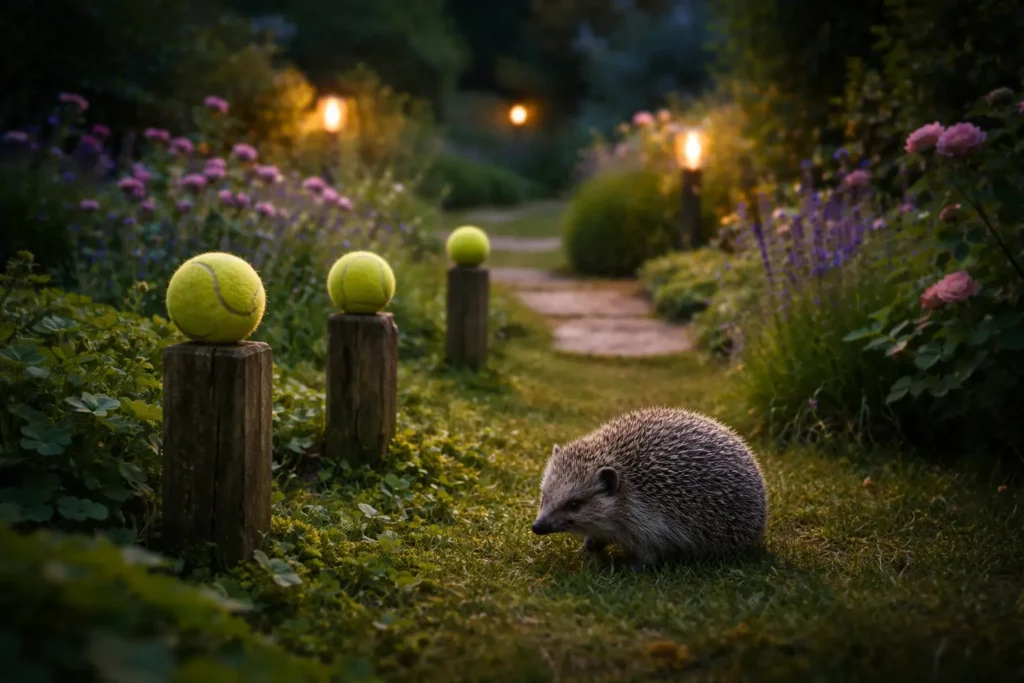
How placing tennis balls in your garden helps birds and hedgehogs this winter
Small, low-effort actions can reduce harm to wildlife over cold months. Tennis balls are cheap, weatherproof, and versatile. Used correctly, they help make hazards visible, cover sharp edges, and protect small animals from injury.
What this method does
The basic idea is to use tennis balls as physical markers or soft covers. They add visibility to thin netting, blunt dangerous stakes and protrusions, and mark risky areas like ponds or tarpaulins.
Why tennis balls help birds
Birds often collide with reflective glass or thin netting they cannot see. Hanging or placing tennis balls near such hazards breaks up reflections and draws attention to obstacles.
Practical uses for birds
- Hang a tennis ball on string in front of large windows to reduce bird strikes.
- Thread several balls along low garden netting to make it visible to flying birds.
- Place brightly colored balls near orchard netting or fruit covers to deter accidental collisions.
These approaches are low cost and do not harm birds when installed at a height and distance that allow birds to see and avoid the obstacle.
Why tennis balls help hedgehogs
Hedgehogs move at night in gardens and can get injured by sharp stakes, open pipes, or thin netting. Soft tennis balls can blunt sharp points and mark hazards so garden machinery operators and people can spot them during the day.
Practical uses for hedgehogs
- Cut a small slit in a tennis ball and push it onto the tip of a sharp stake or post to blunt the end.
- Use balls along the lower edge of netting to increase visibility and reduce entanglement risk.
- Place balls near uncovered garden pits, compost openings or pond edges to mark danger zones for both humans and animals.
How to install tennis ball protections safely
Follow a few simple steps to make sure the tennis balls help without creating new hazards.
- Inspect the area: find stakes, netting, ponds, or reflective windows where animals might be harmed.
- Choose durable balls: older tennis balls are fine but check for loose felt or parts that could be chewed off.
- Secure method: hang on strong string for window markers, push over posts for blunt ends, or tie along netting at regular intervals.
- Place at appropriate heights: for windows hang balls 10–30 cm from the glass and 30–60 cm apart, depending on window size.
- Check regularly: ensure balls remain attached and are not creating entanglement risks themselves.
Materials and tools
- Tennis balls (used or new)
- Strong garden string or twine
- Sharp knife or box cutter (for making small slits)
- Gloves for safety
Practical examples and variations
You can adapt the idea to suit your garden layout. For small windows, hang a single ball on a short cord. For long stretches of netting, space several balls evenly to create a visible barrier.
Quick checklist
- Mark known hedgehog routes with visible markers.
- Blunt any exposed sharp ends with cut tennis balls.
- Hang balls near reflective windows to reduce bird collisions.
- Remove or reposition anything that could tangle hedgehogs, such as loose netting.
Simple visual markers near windows and netting can cut the number of accidental bird collisions and entanglements. Small winter changes in the garden make it safer for roaming wildlife.
Safety notes and what to avoid
Tennis balls are useful, but they are not a one-size-fits-all solution. Avoid creating new hazards with loose parts or small pieces animals could swallow.
- Do not leave loose cut pieces where birds or hedgehogs could ingest them.
- Avoid using balls as the only measure for dangerous water features—install a ramp or secure cover for ponds.
- Check that balls attached to netting don’t create loops where an animal could get caught.
Short case study: Community garden winter proofing
In one suburban community garden a volunteer group noticed both bird collisions on a poorly marked greenhouse and hedgehog tracks near an uncovered compost pit. Volunteers reused old tennis balls to mark the greenhouse panes and fitted blunted balls to the tops of compost pegs.
Over the winter they observed fewer near-miss incidents and felt the garden was safer for wildlife. The intervention was low-cost and easy to maintain, and the group added the practice to their yearly winter checklist.
Final steps and recommended routine
Add these checks to a monthly garden routine during autumn and winter: inspect netting, check pond covers, and replace or reattach tennis ball markers as needed.
Small, practical steps like these help birds and hedgehogs survive the hazards of cold months. Tennis balls are a simple tool—used thoughtfully they reduce risk and make your garden safer for the wildlife that visits.