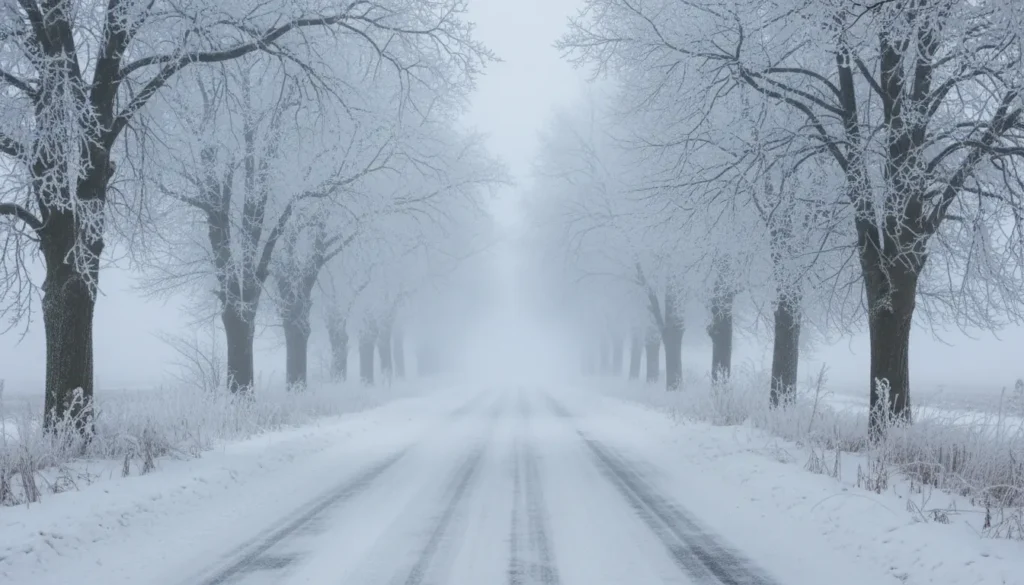
Tomorrow’s forecast shows conditions that create a freezing fog trap. This article explains what that means, why it can be unusually dangerous, and practical steps you can take to reduce risk for yourself and others.
What Is a Freezing Fog Trap?
A freezing fog trap occurs when fog forms while surface temperatures are at or below freezing. Water droplets in the fog land on roads, bridges, and surfaces and turn to a thin glaze of ice very quickly.

That glaze is often transparent and appears like wet pavement, so drivers and pedestrians can underestimate the hazard.
How the Freezing Fog Trap Forms
Freezing fog typically forms under calm winds, clear skies overnight, or when moist air moves over a cold surface. The key elements are moisture, cold surface temperatures, and little wind to disperse droplets.
When droplets strike a surface at or below 32°F (0°C), they freeze on contact and form a smooth glaze that creates slipping and skidding risks.
Why Tomorrow’s Conditions Could Be the Deadliest

Several factors can combine to make a freezing fog event more dangerous than usual. Watch for this pattern:
- Temperatures hovering just below freezing across road surfaces while air aloft is near freezing.
- High humidity and persistent fog reducing visibility to a few hundred feet or less.
- Light or no wind, letting the glaze form undisturbed on bridges and overpasses.
- Heavier traffic at commute hours amplifying crash risk.
When these elements align during morning or evening travel periods, a brief period of glaze can create multiple collisions in a short time and overwhelm emergency response.
Common Locations for the Freezing Fog Trap
Some places are more prone to this hazard:
- Bridges, overpasses, and shaded roadway sections.
- Low-lying valleys and river corridors where cold air pools.
- Rural roads with limited salt or sand coverage.
Practical Safety Steps If a Freezing Fog Trap Is Forecast

Prepare ahead and adjust travel plans. Follow these practical actions to reduce danger.
Before You Travel
- Check the latest local forecast and state DOT alerts for freezing fog, black ice, or road closures.
- Delay nonessential trips until fog lifts and temperatures rise above freezing.
- Ensure your vehicle has good tires, windshield fluid rated for cold, and a full tank of gas.
While Driving in Freezing Fog
- Reduce speed significantly and increase following distance to 6–10 seconds when visibility is low.
- Use low-beam headlights and fog lights; high beams reflect off fog and reduce visibility.
- Avoid sudden braking or steering; apply brakes gently to prevent a skid.
- Watch for warning signs of glaze: vehicles ahead sliding slightly, bridge approaches that look wet but are cold.
For Pedestrians and Cyclists
- Wear high-visibility clothing and avoid routes with bridges or untreated sidewalks.
- Use walking poles or traction aids on shoes if you must go out.
- Cross roads only at well-lit intersections and allow extra time for vehicles to stop.
How Local Authorities Often Respond
Public works and DOT teams typically treat bridges and high-risk corridors first with anti-icing agents or sanding. Watch for posted restrictions and lane closures.
Community alert systems may issue travel advisories; follow official channels rather than social media rumors.
Freezing fog can create a nearly invisible layer of glaze called black ice. It often looks like ordinary water on the road but is almost as slick as polished glass.
Small Case Study: Local Response to a Freezing Fog Event
In a recent regional event, a stretch of highway experienced dense freezing fog during the morning commute. Visibility dropped quickly and bridges iced before drivers adjusted speeds.
The local DOT prioritized treating bridge decks and issued rolling closures while emergency services staged at key interchanges. The early warnings and fast treatment minimized severe injuries, but several minor collisions and a multi-vehicle delay still occurred.
Key lessons from the case:
- Early DOT road treatment focused on bridges reduced the length of closure by hours.
- Drivers who delayed travel avoided the highest-risk window and saw no incidents.
- Coordinated messaging over radio and highway signs cut traffic through the affected corridor by nearly half during the event.
Quick Checklist If You Face Tomorrow’s Freezing Fog Trap
- Check forecasts and road conditions before you leave.
- Delay travel if possible, especially during peak fog hours.
- Drive slowly, use low beams, and allow extra stopping distance.
- Expect black ice on bridges and shaded spots—assume surfaces are slick.
- Listen to local DOT and emergency alerts for closures and treatment updates.
Freezing fog traps are often short-lived but highly dangerous. A cautious approach—delaying travel when possible, reducing speed, and watching for treated routes—will reduce the chance of being caught in a serious incident. Stay informed and prioritize safety over speed during tomorrow’s critical window.



