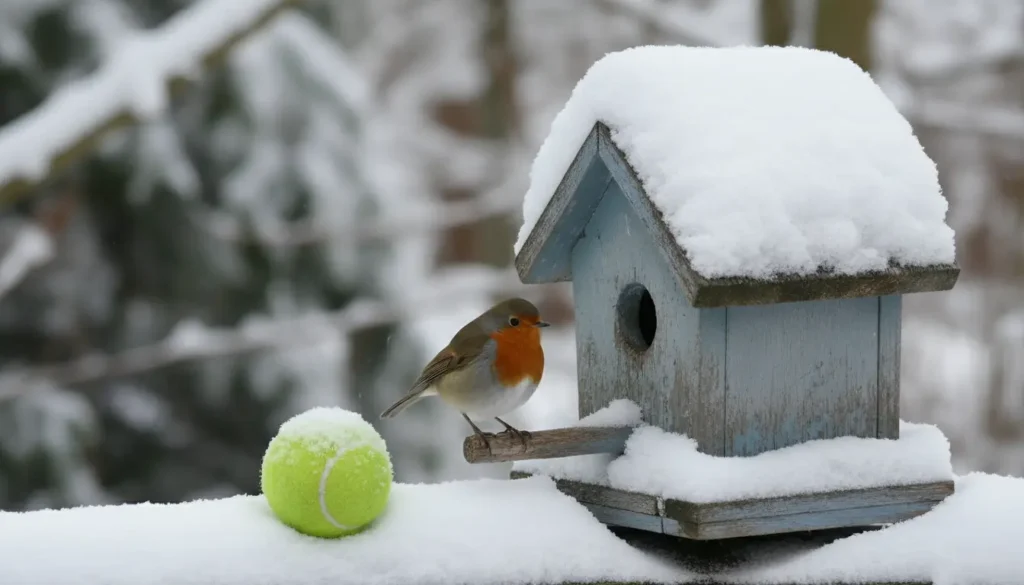
Cold weather can harm small birds by causing frostbite on toes, beaks, and exposed skin. Simple, low-cost tools like tennis balls can reduce direct exposure to ice and wind on perches and nesting boxes. This guide explains why tennis balls help, how to prepare them safely, and practical tips you can use this winter.
How tennis balls shield birds from frostbite
Tennis balls add a soft, insulating barrier around hard perches and edges where birds land. They reduce contact with metal or frozen wood and break wind that carries cold into nesting box openings.

Key mechanisms are insulation and wind reduction. The rubber and felt slow heat loss and create a small microclimate near the contact spot. That lowers the risk of tissue freezing when temperatures drop quickly.
Where tennis balls work best
- Perches on feeders and birdhouses
- Edges of wooden nest boxes
- Open ledges that birds use to rest
- Temporary wrap for outdoor roosting pockets
How to use tennis balls to protect birds this winter
This section gives step-by-step, safe methods for preparing tennis balls. Follow the safety points to avoid creating hazards for wildlife.
Materials you will need
- Used or new tennis balls (clean, no mold)
- Sharp utility knife or heavy-duty scissors
- Staple gun or heavy-duty glue (wildlife-safe)
- Drill with a small bit for mounting (optional)
- Sandpaper (to remove fluffy outer fibers if needed)
Step-by-step guide: Make a perch cover
- Cut one tennis ball in half cleanly so each half fits over a perch or narrow edge. Keep cuts smooth to prevent snagging feathers.
- Remove loose fibers around the cut with sandpaper; loose fuzz can stick to feathers.
- Test-fit the ball halves on the perch. If needed, trim the inside so they sit flush without wobbling.
- Fasten the halves with staples or a small amount of wildlife-safe adhesive. Aim for secure mounting but avoid glues that release volatile fumes.
- Leave the cover removable for cleaning and replacement when wet or soiled.
For edges or openings, you can attach a whole tennis ball with a hole drilled to slip it over a metal rod. Make sure openings are large enough that birds cannot get their feet or beaks trapped.
Safety and maintenance for tennis ball bird protection

While tennis balls can help, they must be used carefully. Soft materials can collect moisture and freeze, which creates the opposite risk.
- Check covers regularly for ice buildup and remove if they become coated in ice.
- Replace balls that crack, mold, or become waterlogged.
- Avoid leaving adhesives that can become brittle in cold and break free.
- Do not use brightly colored or highly reflective paint on balls; natural colors are better.
Risks to avoid
Never create small cavities that can trap feet or beaks. Also avoid materials with heavy chemical treatments or oils that could harm feathers or skin.
Benefits of using tennis balls for frostbite prevention
The method is low-cost, easy to install, and reversible. Tennis balls are durable and provide cushioning that reduces direct contact with frozen metal or wood.
- Quick to install on existing feeders and boxes
- Inexpensive and widely available
- Reusable if kept dry and clean

Birds reduce heat loss by tucking feet into body feathers. Adding a soft perch lets them hold less heat in an exposed foot while still landing safely.
Real-world example: Backyard rehab using tennis balls
A small suburban wildlife caregiver started adding modified tennis ball covers to perches around heated roost boxes after seeing minor frostbite injuries to feeder birds. Within two winters, they reported fewer reports of frost-related foot injuries among small songbirds using their feeders.
The changes were simple: half-cut balls placed on the most-used perches, cleaned monthly, and removed during thaw cycles. The caregiver emphasized routine checks and quick removal of any ball that collected ice.
Practical tips and alternatives
Use these quick tips to make the solution more effective and safer.
- Combine tennis ball covers with windbreaks around feeders to reduce chilling winds.
- Offer unfrozen water nearby to help birds maintain body temperature and prevent dehydration.
- Consider natural alternatives like untreated wooden dowels wrapped in burlap if you prefer not to use synthetic materials.
Tennis balls are a clever, low-effort option that can reduce localized frostbite risk when used thoughtfully. Regular checks and simple maintenance make them an effective part of winter bird care.
If you maintain bird feeders or nest boxes, try one or two perch covers this season and monitor how birds respond. Adjust placement and remove any that collect ice or become hazardous.



