What the UK’s Tempest Fighter Unveiling Means
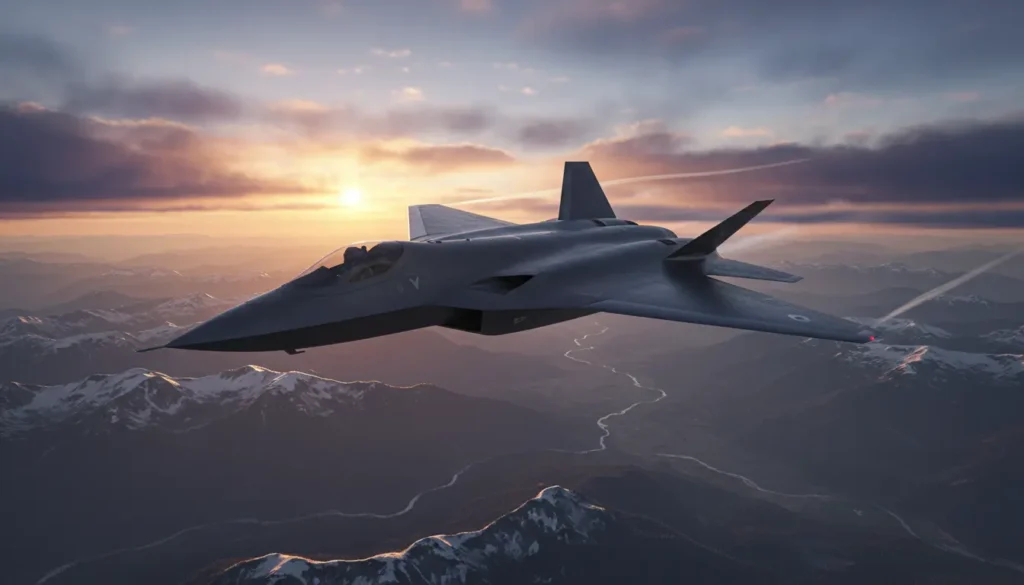
The UK’s Tempest fighter is a planned sixth-generation jet developed by a UK-led industrial team. It aims to introduce advanced sensors, artificial intelligence, and unmanned teaming to future air combat.
This article explains the Tempest features, how the jet could challenge US dominance, and what military planners and industry should watch next.
Core design aims for the Tempest sixth-generation jet

Tempest designers are pursuing five broad goals: increased situational awareness, tighter human-machine teaming, survivability in contested environments, flexible payloads, and reduced operating cost.
Key technical areas include new engines, active electronically scanned arrays (AESA), sensor fusion, secure data links, and support for loyal wingman drones.
Expected capabilities of the Tempest fighter
- Sensor fusion combining radar, IRST, and passive sensors for long-range detection.
- AI-assisted decision aids to reduce pilot workload and speed targeting decisions.
- Stealth design elements and electronic attack suites to operate in contested airspace.
- Open systems architecture for rapid updates and third-party payload integration.
- Integration with unmanned platforms for distributed sensing and strike.
How the Tempest could challenge US dominance
US air dominance has rested on fifth-generation fighters and networked force multipliers. Tempest seeks to close gaps by focusing on distributed systems, autonomy, and modularity.

Rather than matching existing platforms one-for-one, Tempest emphasizes force multiplication through connected assets and rapid software updates.
Competitive areas versus US programs
- Architecture: Open, modular systems that let allies and suppliers add capabilities quickly.
- Unmanned teaming: Emphasis on loyal wingmen drones to extend reach and lower risk.
- Software-driven upgrades: Faster iteration cycles for sensors and tactics compared with hardware-only upgrades.
- Export strategy: A multinational industrial base could broaden user adoption and economies of scale.
Practical implications for air forces and planners
Planners should treat Tempest as a systems-of-systems project, not just a new aircraft. Decision makers must plan logistics, secure data links, and training for manned-unmanned operations.
Procurement timelines, interoperability with existing fleets, and industrial partnerships will determine how quickly Tempest affects air power balance.
Checklist for military planners
- Define data-link and encryption standards for coalition operations.
- Plan pilot training that includes human-machine teaming scenarios.
- Invest in ground support and software update pipelines for rapid fielding.
- Evaluate doctrine changes to use unmanned assets in contested airspace.
Technology and industry partners behind the Tempest fighter

The Tempest program brings together major UK firms and international partners. Publicly named partners include aircraft integrators, engine makers, and weapons developers.
Collaborative work across industry and academia focuses on propulsion, sensors, secure networks, and autonomous systems.
What industry must deliver
- Scalable digital engineering tools for rapid prototyping and testing.
- Common software standards that allow third-party modules.
- Resilient manufacturing supply chains to support steady production.
The Tempest program is designed from the start to operate with autonomous ‘loyal wingman’ drones, turning one manned jet into a mini-squadron.
Case study: How a Tempest-equipped flight might operate
Consider a routine scenario where a Tempest flight faces a defended target area. Instead of a single jet penetrating air defenses, the lead Tempest coordinates with two unmanned wingmen.
The wingmen perform electronic attack and forward sensing, while the Tempest manages engagement decisions. Sensor data streams back in real time, and AI prioritizes threats for the pilot.
Operational steps in the case study
- Detect and classify threats using distributed sensors.
- Assign tasks: wingmen suppress radars, Tempest authorizes strike.
- Execute mission with dynamic retasking through secure links.
- Debrief via automated logs and software updates for tactics.
What to watch next for the Tempest program
Key milestones will include prototype flights, integration tests with drone assets, and formal decision points on production. Watch for announcements on partner nations and export deals.
Regulatory and training frameworks for autonomous weapon systems will also shape how quickly Tempest can enter service.
Short-term indicators of progress
- First demonstrator flights and publicly released test results.
- Trials of pilot-assist AI in live or simulated environments.
- Contracts for engines, sensors, or software delivery awarded to prime suppliers.
Conclusion: A measured view of Tempest’s impact
The UK’s Tempest fighter is an ambitious approach to sixth-generation air combat. It blends new aircraft design with autonomous systems and rapid software upgrades.
If executed well, Tempest could alter force structure and present meaningful competition to US programs. Success will depend on systems integration, multinational cooperation, and sustained investment in software and training.



