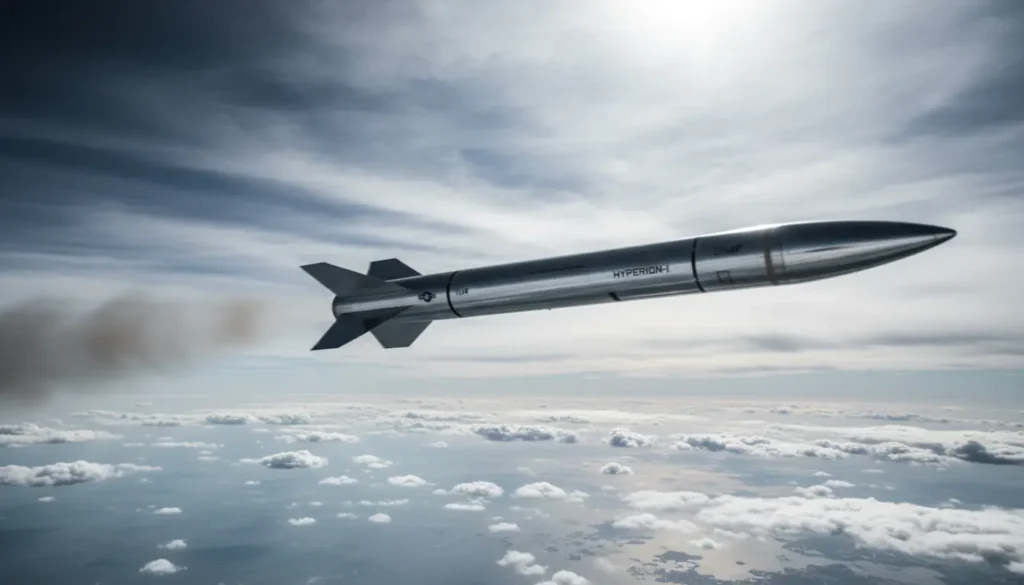
Recent reports and official statements claim upgrades to Russia’s Kinzhal missiles that increase their hypersonic speed and operational envelope. This article explains what the Kinzhal is, summarizes the reported improvements, and outlines practical implications for analysts, planners, and defense professionals.
What are Kinzhal missiles?
The Kinzhal name refers to a Russian air-launched ballistic missile derived from the Iskander ground-launched missile family. It is intended for high-speed, long-range strike missions when launched from aircraft such as the MiG-31K.

Kinzhal has been described as a maneuverable, high-speed weapon with a ballistic or quasi-ballistic trajectory and terminal guidance. Public reporting mixes official claims with contested open-source analysis.
Reported upgrades and the hypersonic speed boost
Officials and state media have described incremental and specific upgrades to the Kinzhal system. The central claim is an increase in maximum speed and reduced interceptability due to higher terminal velocities.
Key reported upgrade areas include propulsion tuning, thermal protection, and guidance updates. Each area affects speed, range, and survivability in different ways.
Propulsion and aerodynamics

Upgrades focused on propulsion can mean engine tweaks or better fuel/oxidizer management for higher burnout velocity. Aerodynamic refinements and revised nose shapes can reduce drag at hypersonic regimes.
Higher speeds at terminal phase increase kinetic energy at impact, but also raise heat loads and structural stress. These trade-offs require stronger materials and improved thermal shielding.
Guidance and targeting improvements
Enhanced guidance may include updated seekers, inertial navigation systems (INS), and more robust terrain or satellite-based updates. These changes can maintain accuracy at higher speeds and during complex maneuvers.

Software updates to guidance algorithms can improve mid-course corrections and evasive trajectories against defensive systems.
What hypersonic means for Kinzhal missiles
Hypersonic flight refers to speeds above Mach 5. Moving from high supersonic toward sustained hypersonic regimes changes engagement physics and detection timelines.
For defenders, faster targets reduce reaction time, shorten engagement windows, and may exceed the performance envelope of some interceptors designed for slower threats.
Limitations and realistic constraints
Upgrades that increase speed do not eliminate physical and operational limits. Thermodynamics, sensor constraints, and command-and-control factors remain significant.
- Thermal stress: Sustained hypersonic flight requires advanced heat-resistant materials and cooling approaches.
- Sensor signature: Higher speeds can alter radar and infrared signatures in ways that both help and hinder detection.
- Range and payload trade-offs: Increasing speed often reduces payload or range unless propulsion and fuel capacity are improved.
- Operational reliability: New components and software need testing; early deployments may show mixed reliability.
Countermeasures and defense considerations
Defenders adapt by improving layered sensors, faster interceptors, and integrated battle management. No single technology solves the problem, but combinations reduce risk.
Practical countermeasures include:
- Expanding radar and infrared sensor coverage to detect high-speed approach earlier.
- Deploying or upgrading interceptors with higher closing speeds and improved kill assessment.
- Improving electronic warfare and decoy methods to complicate guidance locks.
- Hardening critical infrastructure and dispersing assets to reduce vulnerability to single strikes.
Practical guidance for analysts and planners
When evaluating claims about Kinzhal upgrades, use open-source verification, multiple intelligence sources, and physics-based plausibility checks. Treat official performance numbers cautiously until confirmed by independent data.
Checklist for assessment:
- Compare declared range and speed with known propulsion limits.
- Analyze available imagery or telemetry from tests for hardware changes.
- Monitor operational patterns for evidence of new tactics enabled by speed increases.
- Assess logistics and production: upgrades require supply chains and validation time.
Case study: Reported use in recent conflicts
Public reports indicate that Kinzhal missiles have been used in several operations since their first public display. Analysts have examined strike patterns, satellite imagery, and debris to evaluate effectiveness.
Example: In a recent deployment reported by open sources, a Kinzhal-class launch was claimed to have struck a hardened facility with limited pre-warning. Analysts combined radar tracks, satellite imagery timestamps, and damage assessments to estimate the missile’s approach vector and speed.
This case shows how rapid post-event forensic work—triangulating sensor data and imagery—can validate or question performance claims and refine defense posture.
Conclusion: How to interpret the upgrade claims
Claims of a hypersonic speed boost for Kinzhal missiles are plausible in incremental form, but independent verification is important. Practical analysis emphasizes physics, engineering trade-offs, and operational evidence over single-source assertions.
For defense planners, the priority is layered sensing, tailored countermeasures, and resilient infrastructure rather than relying on a single new technology to change the strategic picture overnight.
Further reading: seek technical journals on hypersonic aerothermodynamics, open-source intelligence guides, and official military statements for the most recent verified information.



