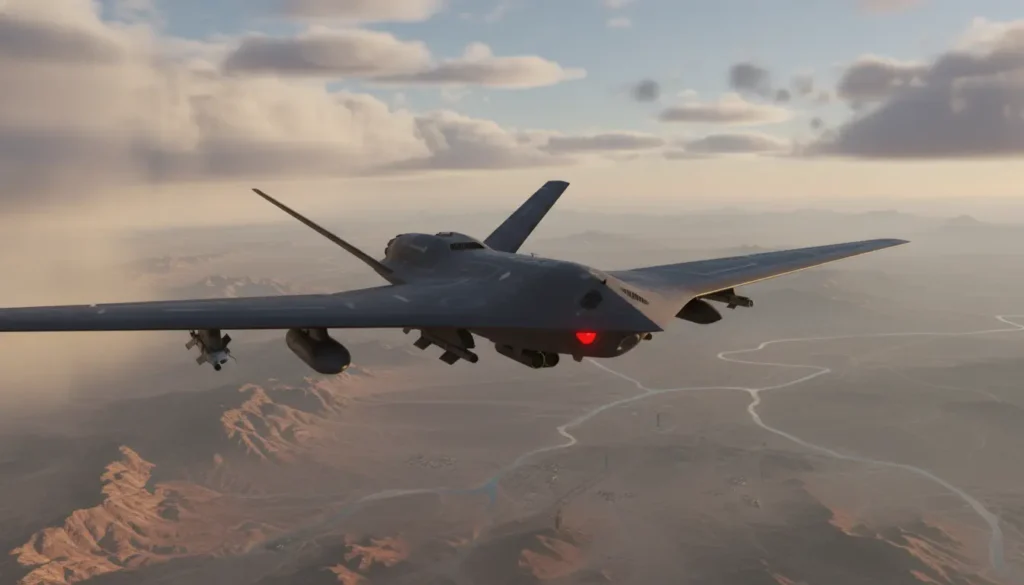
Ukraine’s push to field longer-range unmanned aerial systems (UAS) has practical implications for military planning, defense posture, and civilian risk management. This article explains the technical features, operational consequences, and realistic limitations of long-range drones in clear, actionable terms.
How Ukraine Develops Long-Range Drone Capability
Developing a long-range drone requires integration of airframe, propulsion, navigation, and communications systems. Each component affects range, payload, and survivability.

Work typically proceeds in stages: prototype design, flight testing, crew training, and operational deployment. Ukraine’s recent efforts have focused on extending endurance and improving secure navigation beyond line-of-sight.
Key technical features of a Long-Range Drone
- Efficient airframe and lightweight materials to maximize fuel or battery efficiency.
- Reliable propulsion (turboprop, piston, or high-efficiency electric motors) for sustained cruise.
- Redundant navigation using GPS plus inertial navigation systems (INS) to maintain course if signals are jammed.
- Satellite or high-frequency datalinks for control and real-time intelligence over long distances.
- Modular payload bays to carry reconnaissance sensors or guided munitions depending on the mission.
Operational Impact: Moscow in Range
Extending drone range to cover deep targets — potentially including Moscow-area approaches — changes operational calculations on both sides. Planners must reassess warning times, air defense postures, and critical infrastructure protection.
Long-range drones add persistent surveillance and precision effects at distances previously dominated by cruise missiles or manned aircraft. They can be lower cost per sortie and more flexible in tasking.
What changes for defense planners
- Air defenses need layered detection: radar, acoustic, and optical sensors to pick up smaller UAS signatures.
- Electronic warfare capabilities must adapt to jam or spoof long-range datalinks and navigation sources.
- Critical civilian and military infrastructure requires hardened redundancy and passive protections.
- Rules of engagement and escalation control mechanisms must be updated to incorporate increased drone activity.
Limitations and Practical Constraints

Range alone is not a complete indicator of capability. Weather, electronic interference, maintenance cycles, and supply lines all limit operational tempo.
Long-range missions usually involve trade-offs: adding fuel reduces payload; added communications hardware increases weight and complexity. Each trade-off affects reliability and mission success rate.
Common operational limits
- Sensor degradation in adverse weather reduces target acquisition effectiveness.
- Long comms paths are vulnerable to interception, jamming, and latency issues.
- Logistics and spare parts constrain sustained deployments far from home bases.
Countermeasures and Defensive Steps
Defending against long-range UAS combines technical, procedural, and policy actions. Effective defense blends detection, neutralization, and resilient design.

Typical countermeasures include kinetic interceptors, directed-energy systems, electronic warfare, and passive infrastructure hardening.
- Deploy multi-sensor detection networks to increase detection probability at distance.
- Integrate short-range point defenses with longer-range interceptors for layered protection.
- Use electronic warfare to sever command links or corrupt navigation inputs.
- Harden facilities and provide redundancy for critical services like power and communications.
Case Study: Reported Deep-Range Reconnaissance Mission
Real-world reporting in 2023–2024 described instances where Ukrainian forces employed extended-range drones for reconnaissance over deep target areas. Open-source analysts noted adaptations in navigation redundancy and satellite datalinks to support these sorties.
In one reported instance, a multi-hour flight provided imagery that allowed planners to update target sets and timing without committing higher-cost platforms. The mission highlighted the value of endurance and modular sensors over raw speed.
Lessons from the example
- Endurance and persistence often yield more operational value than a single high-speed run.
- Secure communications and fallback navigation are essential for mission continuity.
- Accurate intelligence from drones shortens decision cycles and reduces risk for manned assets.
Practical Advice for Stakeholders
Military planners, policymakers, and civilian managers should prioritize layered detection, redundancy, and clear escalation protocols. Practical steps reduce risk and maintain stability.
Recommended actions include supplier vetting for critical components, regular drills for air defense and civil protection, and international transparency measures to reduce miscalculation.
- Establish rapid information-sharing channels between military and civil authorities.
- Conduct realistic drills for long-duration drone incursions and infrastructure resilience.
- Invest in combined electronic and kinetic defenses where budgets allow.
Long-range drones combine navigation redundancy and satellite communications to operate hundreds of kilometers from base, but they remain vulnerable to electronic attack and adverse weather.
Conclusion: Tactical Reality, Not Instant Game-Changer
The arrival of Ukrainian long-range drones into operational use is significant but not decisive by itself. These systems extend capabilities and complicate defense planning, yet they operate within clear technical and logistical limits.
For planners on both sides, the practical path is clear: adapt layered defenses, improve resilience of critical infrastructure, and maintain measured escalation controls to reduce unintended consequences.



