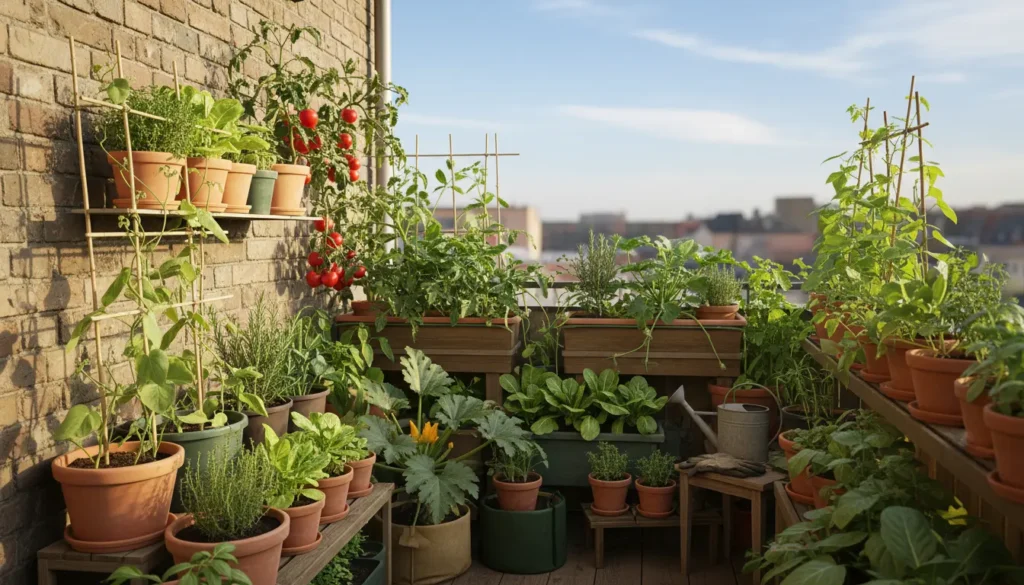
Why a balcony vegetable garden works
A balcony vegetable garden is a practical way to grow food when you have limited space. Containers fit small areas and give control over soil, water, and plant choice.
This guide shows step-by-step planning, planting, and care so you get reliable harvests without overcomplicating things.
Plan Your balcony vegetable garden

Start with a clear plan that matches your balcony’s light, weight limits, and access to water. Measure the space and note sun patterns for at least a week.
Choose plants that fit the space and your cooking habits. Herbs and salad greens are faster from seed; tomatoes and peppers take more room but yield more calories.
Choose plants for a balcony vegetable garden
Select compact or container-friendly varieties. Look for words like dwarf, patio, or bush on seed packets and plant tags.
- Easy starters: lettuce, spinach, radish, herbs (basil, parsley).
- Containers that work well: dwarf tomatoes, compact peppers, bush beans.
- Vertical options: peas, pole beans, cucumbers trained on a trellis.
Containers, soil, and drainage

Good containers are key. Use pots with drainage holes and a saucer or tray to protect the balcony floor.
Choose lightweight materials when possible to reduce strain on the balcony structure.
Soil mix for a balcony vegetable garden
Use a high-quality commercial potting mix formulated for containers. These mixes combine peat or coir, perlite, and compost for drainage and nutrients.

A simple recipe if you mix your own: 40% compost, 40% coir or peat substitute, 20% perlite or pumice. Add slow-release fertilizer according to package directions.
Sunlight, positioning, and microclimate
Most vegetables need 6 or more hours of direct sun. East and south-facing balconies tend to be best. West-facing spaces can work with heat-tolerant plants.
Observe where shadows fall and place sun-loving crops accordingly. Use plant stands or shelves to avoid shading smaller pots.
Maximize light in a balcony vegetable garden
- Place taller plants to the north or back so they don’t shade smaller ones.
- Use reflective surfaces like light-colored walls or weather-resistant reflective panels to boost light.
- Rotate pots every week so all sides get light and even growth.
Watering and feeding basics
Containers dry faster than garden beds, so check moisture daily in hot weather. Stick your finger 2 inches into the soil to test for moisture.
Water until excess drains from the pot hole. Avoid frequent shallow watering; deep, less frequent watering encourages strong roots.
Feeding schedule for a balcony vegetable garden
Use a balanced liquid fertilizer every 2–3 weeks or a slow-release granular fertilizer at planting. Leafy crops benefit from extra nitrogen; fruiting crops need more potassium during fruit set.
Common problems and simple solutions
Pests and diseases happen even on balconies. Watch for yellowing leaves, holes, or sticky residue and act early.
- Snails and slugs: hand-pick or use traps in the evening.
- Aphids: spray with water or use insecticidal soap.
- Powdery mildew: improve air flow by spacing pots and remove affected leaves.
Harvesting and crop rotation
Harvest frequently to encourage continued production. Pick lettuce leaves as they reach usable size, and harvest tomatoes when they turn color rather than waiting for full size on the vine.
Rotate crops each season if space allows. Fresh soil and a change in plant family reduce disease and nutrient depletion.
Case study: A small successful balcony vegetable garden
Maria has a 5-foot-wide east-facing balcony. She planted three 12-inch pots of mixed lettuce, one compact tomato in a 5-gallon container, two herb pots, and a hanging basket of cherry tomatoes.
By placing the tomato against the railing and the lettuces on a shelf, she avoided shading. She watered deeply every other day in summer, added liquid feed every three weeks, and harvested salad leaves weekly.
Result: steady salad greens for two people through the season and a reliable dozen cherry tomatoes each week at peak.
Quick checklist to start your balcony vegetable garden
- Measure space and sun exposure for a week.
- Choose compact varieties and a mix of fast and slow crops.
- Use quality potting mix and containers with drainage.
- Water deeply and feed regularly for containers.
- Monitor for pests and rotate crops where possible.
Final tips for long-term success
Start small to learn what works on your balcony. Keep a simple notebook of plant dates, fertilizing, and problems so you improve every season.
With modest effort and regular attention, a balcony vegetable garden will supply fresh herbs and vegetables and make the most of limited outdoor space.



