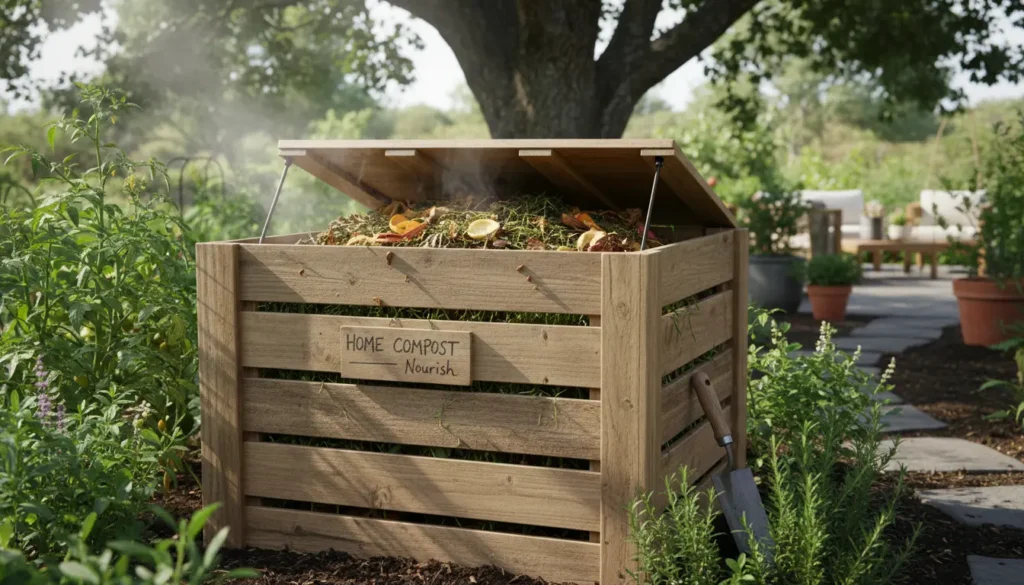
Why composting at home matters
Composting at home reduces landfill waste, improves garden soil, and lowers yard care costs. It is a simple, practical way to recycle kitchen scraps and yard trimmings into a nutrient-rich soil amendment.
Small households and apartment dwellers can both benefit. Even basic systems cut household trash volume and help plants use water and nutrients more efficiently.
What you need to start composting at home
Getting started does not require expensive gear. Choose a bin type, gather basic tools, and separate compostable materials from non-compostable waste.
- Compost container: tumbler, stationary bin, or an open backyard pile.
- Tools: garden fork, small shovel, and a bin with lid for kitchen scraps.
- Materials: Greens (nitrogen) and Browns (carbon) — balanced to speed decomposition.
Greens and Browns explained
Greens are moist, nitrogen-rich inputs like fruit and vegetable scraps, coffee grounds, and fresh grass clippings. Browns are dry, carbon-rich items like fall leaves, straw, and shredded paper.
A useful rule is about 2–3 parts browns to 1 part greens by volume. If your pile smells sour, add more browns; if it is too dry, add greens and water.
Step by step composting at home
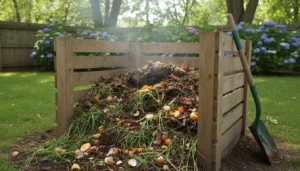
Follow a few straightforward steps to build and maintain a functioning compost system. Regular attention keeps the process efficient and odor-free.
- Location: pick a level, well-drained spot with partial shade and easy access from the kitchen.
- Base layer: start with coarse browns (twigs or straw) to promote airflow and drainage.
- Layering: add alternating layers of greens and browns, keeping pieces small for faster breakdown.
- Moisture: keep the pile like a wrung-out sponge; water during dry periods, but avoid waterlogging.
- Turning: aerate the pile every 1–3 weeks by mixing or turning to introduce oxygen and speed decomposition.
- Temperature: a hot active pile reaches 120–140°F (50–60°C), but cool piles will compost more slowly without heat peaks.
How long until compost is ready?
Time varies with method and conditions. A well-managed hot pile can produce usable compost in 2–4 months. Low-maintenance or cold piles may take 6–12 months.
Vermicompost (worm composting) and bokashi produce amendments faster or handle certain scraps, but the finished products differ in texture and use.
What to compost and what to avoid
Knowing what to include helps prevent problems like odors, pests, and slow decomposition. Use the right mix for a healthy pile.
- Compostable: fruit and vegetable scraps, coffee grounds, eggshells, yard trimmings, paper, and cardboard (shredded).
- Avoid: meat, dairy, oily foods, diseased plants, and pet waste from carnivores. These attract pests and create odors.
- Optional: woody material can be composted if chipped; add extra browns to balance moisture.
Compost improves soil structure and can increase water retention. Adding compost to soil can reduce irrigation needs and reduce erosion.
Troubleshooting common problems
Most issues are easy to fix with simple adjustments. Smells, pests, and slow breakdown are common early challenges.
- Bad odors: typically caused by too many greens or lack of oxygen. Turn the pile and add dry browns.
- Pests: avoid meat and keep food scraps covered; use a closed bin or bury fresh scraps in the center.
- Slow decomposition: chop materials smaller, increase moisture slightly, and turn more often.
Composting options for small spaces
Apartment residents can compost successfully without a yard. Choose a system that fits space and lifestyle.
- Vermicompost: uses worms in a bin to convert kitchen scraps into nutrient-rich castings.
- Bokashi: a fermentation process that accepts cooked food and meat, requiring a follow-up burying or composting step.
- Community composting: join a local drop-off or community garden program if home space is limited.
How to use finished compost
Finished compost is dark, crumbly, and smells earthy. It can be used as a top dressing, soil amendment, or mixed into potting soil.
Apply 1–3 inches of compost to garden beds or mix 10–20% compost into potting mixes for improved drainage and fertility.
Making compost tea
Soak a bag of mature compost in water for 24–48 hours, aerate, and use the liquid to water plants. Compost tea supplies soluble nutrients and beneficial microbes.
Small real-world case study
Case study: Emma and Mark, a suburban two-person household, started with a single 3-bin system and a small kitchen caddy. They collected most food scraps and yard waste throughout spring and layered materials consistently.
They turned the active bin every two weeks and adjusted moisture during a dry summer. After six months they had a large supply of crumbly compost used to top-dress vegetables and amend flower beds. Their tomato plants showed fuller leaf growth and better fruit set the next season.
Final checklist to start composting at home
- Choose a bin type and location.
- Collect a mix of greens and browns and chop materials small.
- Maintain moisture and aerate the pile regularly.
- Avoid meat and dairy, and troubleshoot odors early.
- Use finished compost to feed soil and reduce water needs.
Composting at home is practical and rewarding. Start small, learn from the pile, and expand your system as you gain confidence. With consistent, simple steps you will turn waste into a valuable resource for your garden.