Why Home Composting Matters
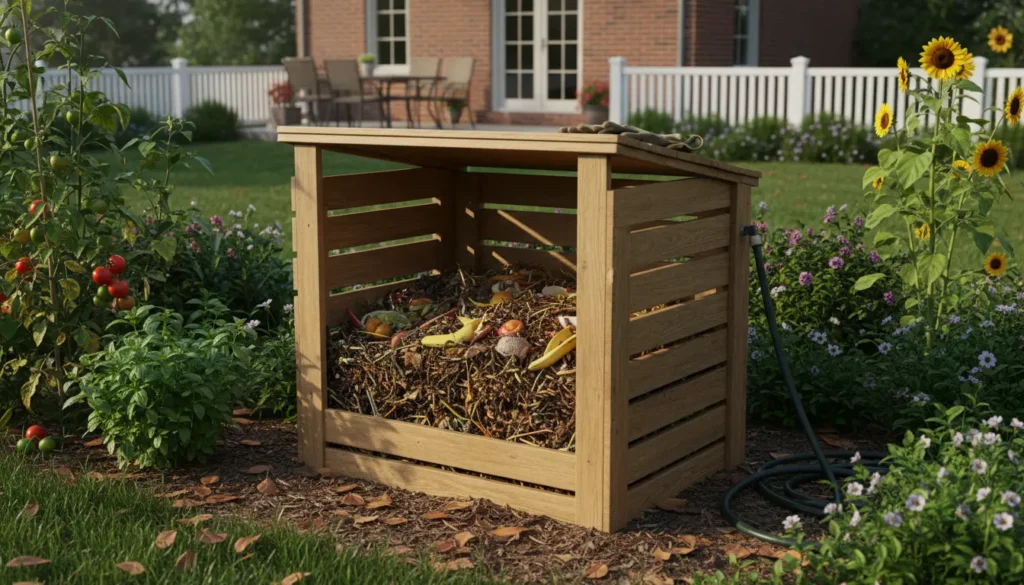
Home composting reduces kitchen and yard waste and returns nutrients to soil. It lowers trash volume and supports healthier gardens without chemical fertilizers.
For beginners, composting is a practical way to close the organic loop at home. You can start with minimal space and basic tools.
Basics of Home Composting

Compost is made by mixing organic materials that break down into humus. Balance, moisture, air, and time control how fast that happens.
Key categories are “greens” (nitrogen-rich) and “browns” (carbon-rich). Keeping them in the right proportion prevents odors and speeds decomposition.
What to Put in a Compost Bin
- Greens: fruit and vegetable scraps, coffee grounds, fresh grass clippings.
- Browns: dry leaves, shredded paper, cardboard, straw.
- Small amounts of yard trimmings and eggshells are fine; avoid meat, dairy, and oily foods.
Basic Compost Ratio
A practical starting point is roughly 3 parts browns to 1 part greens by volume. Adjust based on smell and moisture.

If the pile smells sour, add more browns. If it is dry and slow, add greens and water.
How to Start Home Composting: Step-by-Step
Starting composting is simple. Follow these steps to set up a reliable system that fits your space.
- Choose a bin: Select a tumbler, stationary bin, or a simple heap. For apartments, pick a small lidded bin or worm bin.
- Find a location: Place the bin on soil or a stable surface with some shade and drainage.
- Layer materials: Begin with a layer of coarse browns, add alternating layers of greens and browns.
- Maintain moisture: Keep material as damp as a wrung-out sponge.
- Turn weekly: Aerate the pile by turning or tumbling to speed composting and prevent odors.
- Harvest: Mature compost is dark, crumbly, and earthy-smelling—ready in a few months to a year depending on method.
Best Composting Methods for Homes
Choose a method based on space, time, and how fast you want compost.
Cold Composting

Low-effort approach where you add materials and wait. It takes longer but needs minimal turning.
Good for large yards or if you don’t need compost quickly.
Hot Composting
Hot composting reaches higher temperatures and breaks down materials faster. It requires a large enough pile, balanced materials, and regular turning.
Use this if you want finished compost in a few months.
Vermicomposting (Worm Bins)
Ideal for apartments and small spaces. Red worms eat kitchen scraps and produce nutrient-rich worm castings.
Keep the bin dark, moist, and avoid citrus or spicy foods in large amounts.
Troubleshooting Common Composting Problems
Problems are usually easy to fix with small adjustments to balance, moisture, or aeration.
- Smelly pile: Add browns and turn the pile to introduce air.
- Pile too dry: Add greens or water and mix.
- Pests or fruit flies: Bury food scraps under browns or use a closed bin.
- Slow decomposition: Chop materials smaller, increase turning, and check moisture.
Small Case Study: Apartment Vermicompost Success
Case: Sarah, a city renter, started a 20-liter worm bin under her kitchen counter. She used shredded paper and food scraps and fed the bin 2–3 times a week.
Within six months she harvested dark castings and used them on balcony herbs. Her food waste to landfill dropped noticeably and her plants thrived.
Tools and Supplies to Get Started
You don’t need a lot to begin. Here are practical items that speed results and reduce mess.
- Compost bin or tumbler
- Pitchfork or compost aerator
- Kitchen pail with a lid for scraps
- Garden gloves and a moisture meter (optional)
- Worms for vermicomposting (Eisenia fetida)
How to Use Finished Compost
Apply finished compost as a top dressing, soil amendment, or mix into potting soil. It improves soil structure and nutrient content.
Use a thin layer around plants, or blend 1 part compost to 3 parts soil for planting mixes.
Final Tips for Successful Home Composting
- Start small and expand as you learn what works for your space.
- Keep materials varied and chopped to speed decomposition.
- Monitor moisture and aeration—these two factors control most issues.
- Record what you add for the first few months to see what speeds or slows the process.
Home composting is accessible, low-cost, and environmentally beneficial. With a simple bin and consistent habits, beginners can produce rich compost and reduce household waste.



