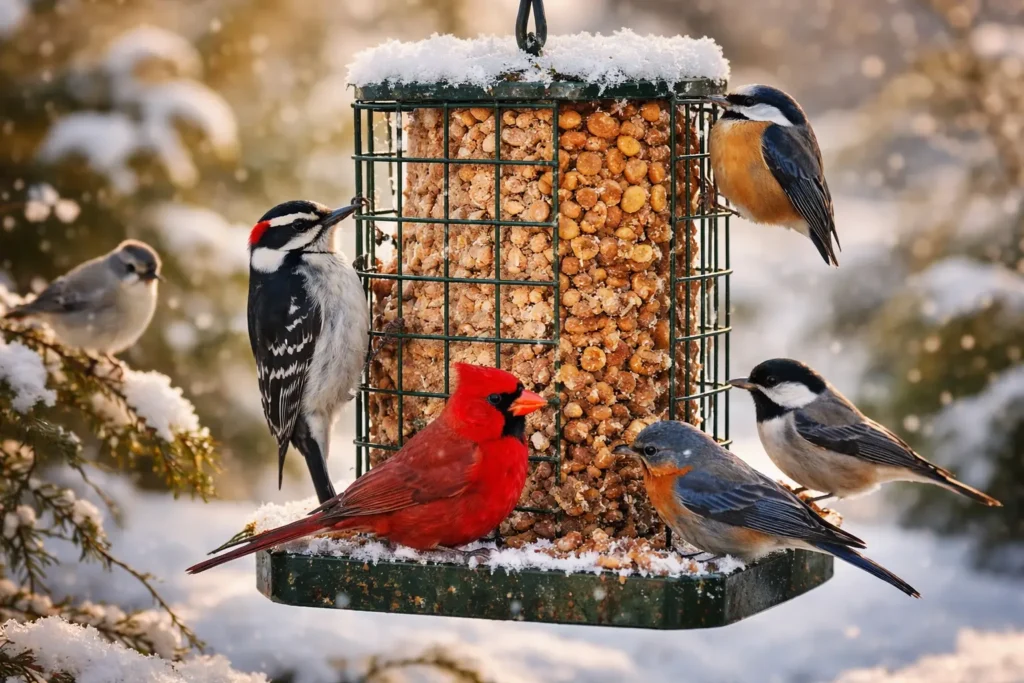
Late winter is a tough time for backyard birds. Natural food is scarce, and many species need high-energy supplements to get through cold mornings.
Why this cheap February treat works
The inexpensive treat many bird lovers use is a simple suet-based mix or suet substitute made from rendered fat, crushed peanuts, and seeds. It is high in calories and easy for small birds to digest during cold spells.

Suet and peanut-based treats deliver concentrated energy, which helps insectivores and seed-eaters maintain body heat and activity. They are especially attractive in February, when insects are rare and natural fat stores are low.
Keeps feeders packed every single morning
When you add a fresh suet or peanut butter suet block to a feeder, birds quickly learn the reliable food source. Visits increase because the treat provides quick energy first thing in the morning.
- Attracts chickadees, nuthatches, woodpeckers, and many finches
- Works in cold and slightly snowy conditions where seed feeders may be less used
- Remains available for longer periods than fresh fruit or mealworms
How to make the cheap February treat
This simple recipe uses common ingredients and a microwave or stove. It is low-cost and keeps well if refrigerated or frozen.
- 1 cup rendered beef suet or vegetable shortening
- 1 cup crunchy peanut butter (no xylitol)
- 2 to 3 cups mixed birdseed (sunflower, millet, cracked corn)
- Optional: 1/2 cup oats or cornmeal for texture

Gently melt the suet or shortening and mix with peanut butter until smooth. Stir in seed and optional ingredients. Press into molds, small containers, or even empty milk cartons and chill until firm.
Break into pieces and place in suet cages, mesh feeders, or press into pinecones wrapped in twine. Keep a few frozen blocks to rotate during thawing days.
Practical feeding tips
- Use suet cages or metal feeders to prevent mess and make birds safer while feeding.
- Hang feeders in sheltered locations to slow thawing and to give birds cover from predators.
- Change out suet regularly in warm spells to prevent rancidity; refrigerate extras.
- Avoid peanut products that contain artificial sweeteners like xylitol; they are toxic to wildlife.
Small songbirds may double their metabolic rate in cold weather. High-fat foods like suet provide the quick calories these birds need to stay warm and active.
Where to place feeders to attract birds to the garden

Placement is as important as the treat itself. Place feeders where birds feel safe and you can watch them easily from a window.
Try to vary heights and types: a suet cage on a tree trunk, a platform feeder for mixed seed, and a tubular feeder for finches. Birds have species-specific preferences and will use the outlet that suits them best.
Safety and hygiene
Clean feeders every 2–4 weeks and more often in wet weather. Remove any moldy or rancid food to prevent disease spread.
Use gloves when handling old suet and wash hands afterward. If you see sick birds, take down feeders temporarily and consult a local wildlife rehabilitator.
Small real-world case study
Case study: In early February, a homeowner in Vermont started offering homemade suet blocks alongside existing seed feeders. Before the change, morning visits averaged 4–6 birds. Within two weeks, visitor counts rose to 15–20 birds each morning.
Species observed included black-capped chickadees, white-breasted nuthatches, downy woodpeckers, and house finches. The homeowner reported fewer empty seed feeders because the high-energy suet kept smaller birds occupied and fuller for longer.
Alternatives and variations
If rendered fat is not available, use vegetable shortening as a plant-based alternative. Replace peanuts with sunflower seeds or chopped walnuts for nut-allergy concerns in households with pets.
Commercial suet cakes and plugs are also effective and save preparation time. Look for products with whole seeds and minimal additives.
Seasonal adjustments
- Late winter (February): prioritize high-fat suet and peanut mixes for energy.
- Spring: reduce suet as natural insects return and to avoid nest interference.
- Summer: use fewer fatty treats and switch to fruits or nectar for specialized visitors.
Summary
A cheap February treat based on suet and peanut butter is a reliable way to keep feeders packed and attract birds to your garden every morning. It is low-cost, easy to prepare, and highly effective in winter.
Follow placement, hygiene, and safety tips, and consider small variations or commercial options if needed. With consistent feeding, you can create a dependable morning hotspot for local backyard birds.



