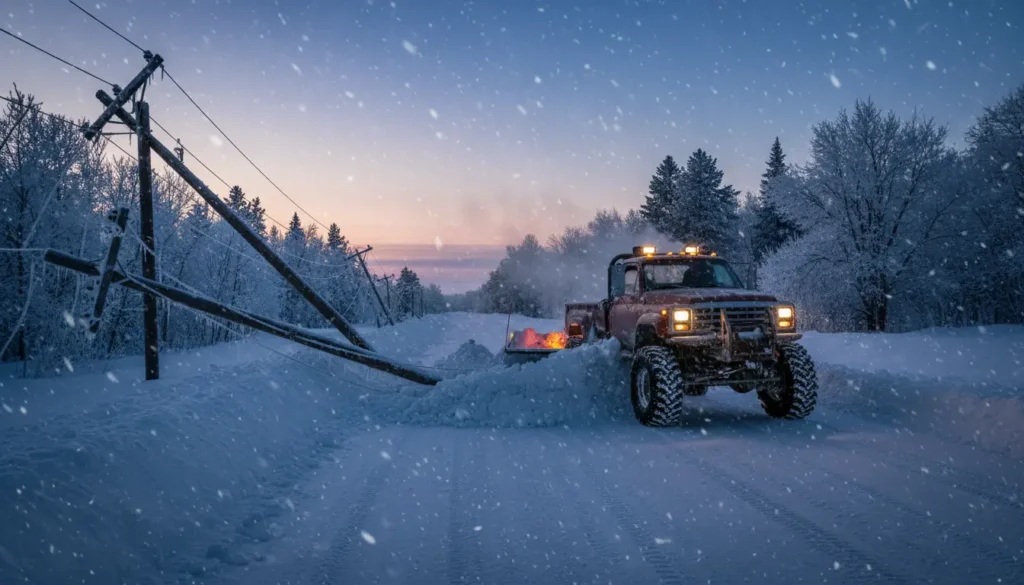
Deadly Ice Storm Brewing: What to expect
An approaching ice storm can bring heavy freezing rain, downed trees, and dangerous travel conditions. Local forecasts may change quickly, so plan for longer outages and limited services.
Authorities often warn of widespread power outages. That means you should act now to secure supplies and safety measures for your household and neighbors.
Power Outages Expected: Why this storm is dangerous

Freezing rain coats trees and power lines with ice. Even a quarter inch of ice can add significant weight and cause lines to snap. Wind and falling branches make restoration slow and difficult.
Outages often affect large areas and can last for days. Roads may be impassable, delaying crews and deliveries. That makes stockpiling essential items a priority.
Stock Up Before It’s Too Late: What to buy first
Focus on essentials that keep family safe and comfortable. Prioritize items you cannot replace if roads close or stores sell out.
- Water: 1 gallon per person per day for 3–7 days.
- Nonperishable food: canned goods, ready-to-eat meals, and items that require minimal cooking.
- Battery-powered lights: flashlights, headlamps, and extra batteries.
- Portable chargers and power banks: fully charged before the storm hits.
- Warm blankets and clothing: wool or thermal layers, hats, and gloves.
- First-aid kit and necessary medications: at least a week’s supply.
- Manual tools: battery-free can opener, multi-tool, and shovel for clearing ice.
- Fuel and heating backups: recommended only if operated safely outdoors or in well-ventilated spaces.
Stock Up Before It’s Too Late: Tips for food and water

Choose shelf-stable foods that are calorie-dense and easy to prepare. If you rely on electric appliances, plan meals that require no power or only a camp stove.
Store water in clean containers and rotate stock every six months. If you have a water heater, you can draw from it in an emergency—turn off the gas or circuit first and use caution.
Practical Safety Steps During Power Outages
Power loss affects heating, refrigeration, lighting, and medical devices. Follow a short checklist to reduce risks and stay informed.
- Keep refrigerator and freezer doors closed to preserve food.
- Use generators outdoors and away from windows to avoid carbon monoxide poisoning.
- Have a battery radio or phone with emergency alerts enabled.
- Maintain a safe indoor temperature: close off unused rooms and use layered clothing before turning to alternative heating methods.
- Check on vulnerable neighbors and those with medical needs.
Generator and heating safety

If you plan to use a generator, ensure it is in good working order and has fuel stored safely. Never run a generator inside a garage or home, even with doors open.
Propane heaters must also be used with strict ventilation and carbon monoxide detectors. Keep combustible materials away from heat sources.
Even a short outage can cause food spoilage: a full freezer can keep food frozen for about 48 hours if unopened. Plan meals and storage accordingly.
Communications and Power Management
Power outages often mean limited cell service and overloaded networks. Conserve phone battery and use text messages when possible to reduce network strain.
Learn which circuits control key systems in your home. Label your electrical panel so you can safely switch circuits during partial restoration or when using backup power.
Medication and medical device planning
If you or a family member depends on electrically powered medical equipment, notify your local utility and emergency services. They may prioritize locations for restoration.
Have backup power options or a relocation plan to a facility with reliable power if needed.
Preparing Your Home and Vehicle
Trim tree branches near power lines and clear gutters to reduce ice load. Park vehicles in a garage or away from trees where possible.
Keep an emergency kit in your car with blankets, food, water, and a scraper. Avoid travel until authorities clear roads and issue all-clear advisories.
Small real-world case study
In a small New England town hit by an ice event, residents who stocked basic supplies and battery lighting stayed safe during a 72-hour outage. One household used a portable power bank and a propane camp stove outdoors, keeping food and a child’s medical device functioning until local crews restored power.
Neighbors pooled fuel and helped clear ice-laden branches, reducing further damage and speeding recovery. Local coordination proved as important as individual preparation.
Checklists to Follow Right Now
Use this quick checklist to prepare in the next few hours. Prioritize safety and reasonable purchases rather than panic buying.
- Fill containers with water and finalize your 72-hour supply.
- Charge all phones, power banks, and essential electronics.
- Gather warm clothing, blankets, and a flashlight for each household member.
- Move vehicles away from trees and cover outdoor equipment.
- Inform family and neighbors of your plans and check on vulnerable people.
Final steps before the storm arrives
Stay tuned to official weather alerts and follow evacuation or shelter advice from authorities. Avoid risky travel and keep a calm, practical approach to stocking up.
Reasonable preparation now reduces danger and stress later. Stock up on essentials, secure your home, and prioritize safety over convenience.



