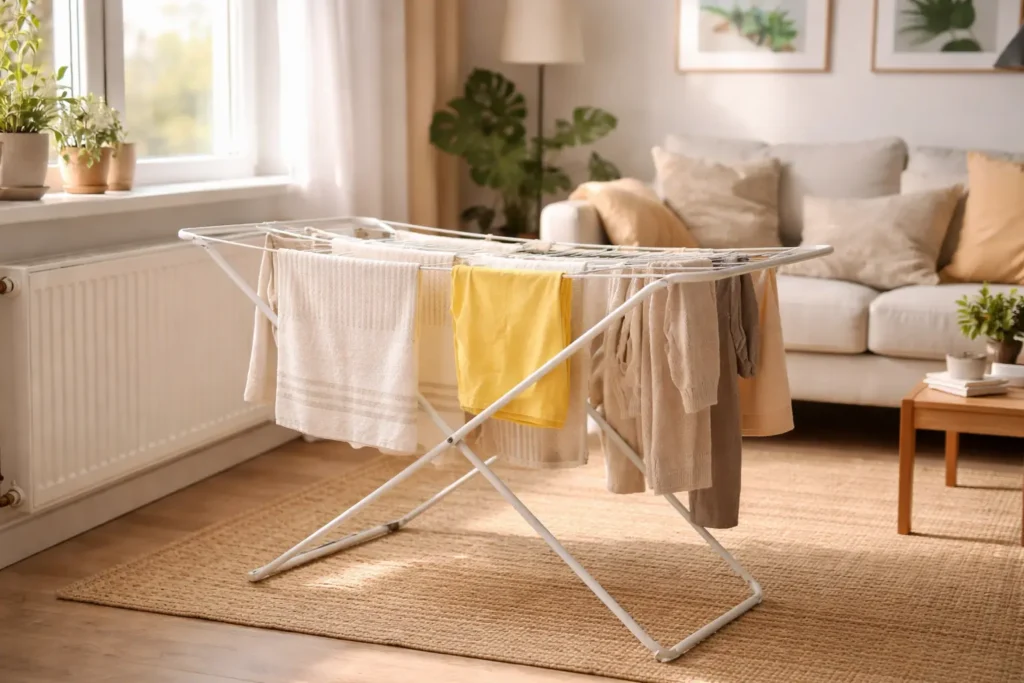
Why drying clothes near radiators increases indoor dust
Drying clothes on or near radiators is a common habit in colder months. It speeds drying, but it also changes how dust moves and settles in a room.
Understanding the causes helps you stop extra dust without giving up indoor drying entirely.
How drying clothes near radiators increases indoor dust: four mechanisms

Warm air from a radiator creates strong convection currents. These currents lift settled dust from floors and surfaces and send it into the breathing zone.
Wet fabrics release lint, fibers, and tiny particles as they dry. That debris becomes airborne more easily when heated and passes into the room’s air.
Higher local humidity from evaporating water supports dust mites and can make particles stick together and then settle in different places. That look of more dust is often a redistribution effect.

Finally, radiators are often dusty themselves. Drying clothes nearby disturbs that dust and sends it into the room, especially behind and under radiators where cleaning is infrequent.
How to stop indoor dust when drying clothes near radiators
Reducing dust is a combination of changing where you dry, improving airflow, and keeping surfaces clean. These steps lower the amount of dust released and speed its removal.
Immediate actions to reduce dust
- Move the airer at least 1 metre from the radiator when possible to reduce direct convection effects.
- Use a raised drying rack so clothes do not touch dusty skirting boards or radiator tops.
- Open a window briefly while drying to improve ventilation and dilute dust and humidity.
- Wipe and vacuum around radiators weekly to remove built-up dust that will otherwise blow into the room.
Longer-term fixes for indoor dust from drying clothes
Consider alternatives and upgrades that cut dust and improve air quality over weeks and months.
- Switch to a vented tumble dryer or heat-pump dryer with correct external venting to remove moisture and lint outside the house.
- Use a dehumidifier in the drying room to capture moisture before it spreads humidity and encourages dust mite activity.
- Install or run a small HEPA air purifier during and after drying to reduce airborne particles.
- Improve general ventilation — a simple extractor fan or trickle ventilator makes a notable difference.
Practical laundry habits to reduce lint and dust

Small changes in how you wash and dry clothes reduce the material that becomes dust when drying.
- Run a full spin cycle to remove as much water as possible before drying; less moisture means less airborne lint.
- Clean dryer lint traps and washing machine filters regularly to prevent lint entering the room.
- Use mesh bags for small items like socks to reduce fiber loss.
- Choose lower-lint fabrics where possible and avoid overloading the washer, which causes more abrasion and loose fibers.
Warm air rising from radiators increases dust circulation. Dust mite populations also prefer higher humidity, so more indoor moisture can mean more allergen activity.
Cleaning and maintenance to fight dust
Regular cleaning reduces the reservoir of dust that drying disturbs. Focus on hot spots and hidden places.
- Vacuum behind and under radiators, furniture, and airers at least once a week.
- Wipe radiator surfaces with a damp cloth to trap dust instead of spreading it into the air.
- Use a vacuum with a HEPA filter for best removal of fine particles.
Quick checklist to follow when drying clothes near radiators
- Place the airer at least 1 metre from the radiator when possible.
- Open a window for 10 minutes during drying or run an extractor fan.
- Use a dehumidifier or air purifier if drying indoors regularly.
- Clean around radiators and vacuum weekly.
Small real-world case study
Case: Sarah, a two-bedroom flat in Manchester, dried clothes on a radiator during winter. She noticed a film of dust on surfaces and more sneezing.
Actions: She moved the rack 1 metre away, ran a portable dehumidifier while drying, and cleaned behind the radiator weekly. She also installed a small HEPA air purifier in the living room.
Result: Within two weeks her visible dust dropped and allergy symptoms improved. She still dries indoors sometimes, but dust levels are much lower thanks to these practical changes.
When drying near radiators is unavoidable
If you must dry clothes near a radiator, take focused steps to reduce dust production and spread.
- Use a drying rack that keeps garments off the floor and away from dusty surfaces.
- Run the radiator at a moderate temperature rather than very high heat to reduce strong air currents.
- Vacuum and wipe surfaces after each drying session to remove any displaced dust.
Final summary: simple steps for less dust
Drying clothes near radiators increases indoor dust by lifting settled particles, releasing fibers, and affecting humidity. The solution is a mix of placement, ventilation, cleaning, and better drying methods.
Try the checklist above, consider a dryer or dehumidifier for frequent indoor drying, and keep radiators and nearby areas clean. Small changes cut dust and improve indoor air quality quickly.



